Showing posts with label BRCA1. Show all posts

Monday, September 19, 2016

p53: The gene that cracked the cancer code - a review

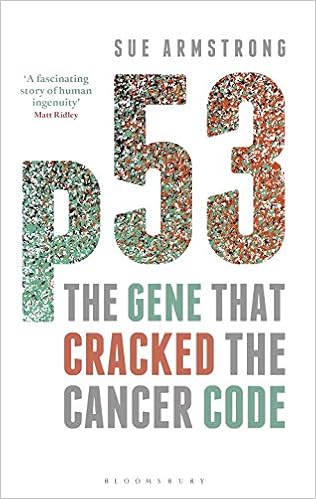
I wouldn't think that an entire popular science book could be written about one protein, unless that protein is p53. As of this writing, a PubMed search reveals 82,179 scholarly articles about p53. Thus, p53 The Gene That Cracked the Cancer Code by Sue Armstrong has an abundance of source material. Even with the all that information to cover, the author does an excellent job explaining the relevant research in a clear and concise way, using a chronological structure with the main source being interviews with the scientists that did the original research. Unlike many popular science books, Armstrong relies more on the direct quotes from the primary source, ensuring that she gets everything right.

Briefly, p53 (named because the protein is about 53 kilodaltons on a protein gela naming convention that swept through some circles of scientific research, but has since been eclipsed by more colorful naming styles) was discovered in 1979. While David Lane is typically credited first, Arnold Levine, Lloyd Old, and Pierre May also deserve acknowledgement for the discovery. Considered to be a tumor suppressor, p53 has cellular roles in genome stability, DNA repair, apoptosis/cell death, and cell metabolism. This book primarily focuses on p53's role as the "guardian of the genome", a term penned to describe that ability of p53 to keep the cell's DNA free of mutations. This role is the primary connection of p53 to cancer: normally, p53 induces cellular suicide (apoptosis/cell death) in cells with DNA damage. p53 is the most commonly mutated gene in cancer and when p53 is mutated, it loses its ability to protect from DNA damage, which can lead to excessive cell growth, a hallmark of tumorigenesis.

Like so many of the books on cancer that I have covered before, this book hit many of the key topics in the area of cancer research. What is unique about this book is that it leads the reader through the sometimes winding roads of scientific research. This includes an in-depth discussion of the p53 mutation database, which collects all the mutations in p53 that have been linked to a variety of cancers. This database has been a rich source of information for researchers over the years. For example, in 1996 researchers showed that lung cancer cases showed p53 mutations in a particular hotspot on the p53 gene. Interestingly, these same mutations were shown by the Pfeifer lab to be induced by the carcinogenic substance in cigarette smoke, benzopyrene diol epoxide (BPDE). This publication was a major win for the 1998 class action lawsuit against Big Tobacco.

Map of p53 mutations and their frequency.
The p53 database has also helped reveal the link between liver cancer, Hepatitis B, and aflatoxin, a poison produced by a fungus that grows on peanuts and other grains when they are stored without adequate ventilation. Typically, HepB causes liver cancer only after many years. However, in places like Asia and Africa, the risk is compounded by the exposure to aflatoxin, a carcinogen known to cause DNA damage. Aflatoxin can induce a mutation in p53 (at codon 2449), which can essentially turn p53 from a tumor suppressor into an oncogene.

The book delves into several of the most damaging p53 mutations. For example, Li-Frameni syndrome (LFS) is a genetic disordered characterized by the early and frequent acquisition of cancer at "every conceivable site in the body". The disease was first described in the early 1980s, but the connection to p53 was not established until the 1990s. A variety of mutations in p53 have been associated with LFS, but the most common hotspot connected to LFS is involved in p53's ability to bind to DNA.

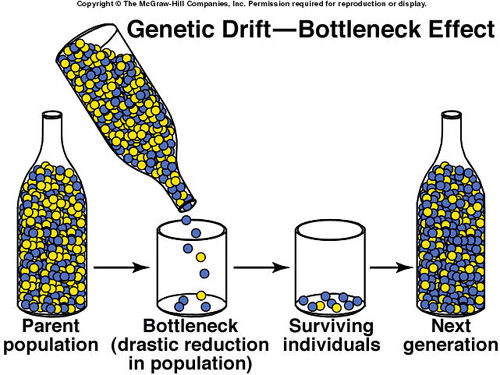
Perhaps the most interesting story in the book describes the cancer clusters in Brazil. Sue Armstrong contributed the story of "Brazil's Cancer Curse" to Mosaic Science; it is a fascinating story and gives a great sense of her writing style. As discussed in the book Toms River, cancer clusters are typically assumed to be caused by a pollutant. Likewise, the Brazilian doctors wondered if that might be the case. However, the research about LFS was starting to garner attention, leading Brazilian clinicians to suspect p53 was also be responsible in the Brazilian cancer cluster. Indeed, sequencing of the p53 gene in affected individuals reveals a mutation at codon 337 to be the most common. Where the story gets really interesting is when scientists attempt to understand how an uncommon mutation fixed in the population at such high frequency. While the source is still debatable, the p53 mutation is now thought to be the result of a founder effect and bottleneck (as described for BRCA mutations in The Wandering Gene).
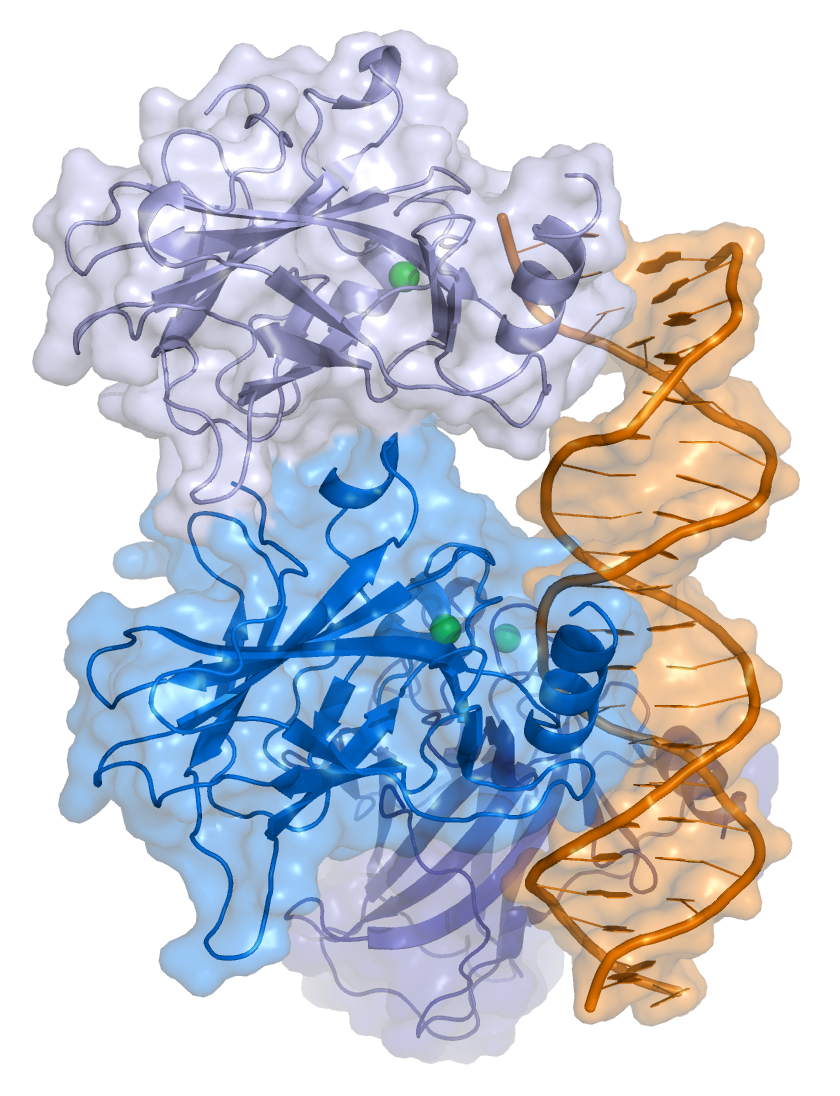
p53 structure (Wikipedia)
I think I learned the most in the section about the clinical approaches to treating p53 mutations. Here, Armstrong has done a deep dive into the literature about the latest drugs and trials connected to p53 function and dysfunction. Thus, the book is up to date on the available p53-related drugs (as of its publication in November 2014). Armstrong describes several different approaches to treating p53-related cancers, including drugs like Advexin, which uses a viral vector to induce cells to express wild type p53. For reasons that are unclear, Advexin has had mixed success in the US and is still awaiting FDA approval. Perhaps more interesting, is the research on PRIMA-1 (an acronym for p53 re-activation and induction of mass apoptosis), a drug designed to work on mutants of p53 that no longer bind DNA. Essentially, PRIMA-1 induces mutant p53 into its wild type shape, allowing it to re-activate and bind DNA. Thus, PRIMA-1 should target a wide range of p53 conformation mutants and leave wild type p53 alone. Both of these have been major roadblocks in the deisng of previous p53 therapies, especially since p53 is at the center of so many regulatory pathways. The drug is currently in Phase 2 trials. (Here, Armstrong takes a tangent into the history of chemotherapy, specifically its connection to the German use of mustard gas in WWII. This was a fascinating story that I recommend reading more about, for example here or here.) 

Sue Armstrong's p53 book distills a large amount of scientific literature into an interesting and readable book. I don't think I would recommend this as the first book to read if you are just starting to learn about cancer research. To me, the best starting place would be The Philadelphia Chromosome (some might recommend Mukherjee's The Emperor of All Maladies). However, this is an excellent book for those familiar with cancer and looking for the next level of science writing on the topic.

Friday, July 31, 2015

Pandora's DNA: One woman's experience with a BRCA mutation

In Pandora's DNA: Tracing the Breast Cancer Gene through History, Science, and One Family Tree, Lizzie Stark describes her experience with a BRCA mutation, which has left its mark on generation after generation of women in her family. Like The Cancer Chronicles, Stark explores the science to understand the causes and consequences of the BRCA mutation. As a child, Stark watched her young mother as well as many of the women in her family endure breast and ovarian cancer and the subsequent treatments. In the nineties, when the BRCA gene test was first available, Stark accompanied her mother to appointments with a genetic counselor, who informed them that her family has a mutation in the BRCA1 gene called 3600del11 (a truncation mutation where 10 DNA bases are deleted from exon 11), a mutation that seems to be more prevalent in French families (for more on the population genetics of BRCA mutations, check out The Wandering Gene and the Indian Princess).

Upon learning of her mother's BRCA status, Stark realizes that she has a 50% chance of having the same mutation. Thus, she decides to learn more about the history of breast and ovarian cancer diagnosis and treatment to inform her decisions about her own treatment options. The radical mastectomy was introduced by the unusual and innovative surgeon William Halsted. Halsted (the basis for the drug-addicted surgeon on The Knick) started his career in 1880; he developed the first blood transfusion, pioneered the use of rubber gloves (through a partnership with the Goodyear rubber company) for surgery, and performed the first mastectomy in the US. Because patients regularly relapsed after this treatment, Halsted decided that a more extensive mastectomy was the solution to the problem; the radical mastectomy was designed to carve out the root of the cancer. However, the procedure, which takes both the breasts and the pectoral muscles, still has a recurrence rate of 60%. Despite these grim statistics and the fact that the procedure negatively affected women's posture and arm mobility, the radical mastectomy was the standard for care for breast cancer for nearly a hundred years.

A med student named Emil Grubbe experimented with the use of radiation to treat cancer recurrence following mastectomy; Grubbe reasoned that radiation might kill rapidly dividing cells like those in cancer. His treatment worked well for many patients, but cost the doctor his own life to radiation-induced cancer. Dr. Geoffrey Keynes (brother to the economist John Maynard Keynes) became a strong proponent the lumpectomy, a more conservative surgery that removes only the tumor and a bit of surrounding tissue, in combination with radiation therapy. In 1935, Keynes started comparing survival rates for patients receiving the combined treatment with those who had a radical mastectomy. Surprisingly, survival rates were nearly identical. Despite the fact that this less aggressive treatment was just as effective, the medical community ignored the results. It wasn't until a study published in 1981 confirmed these results that the Halsted method was finally called into question. In fact, until the 1970's, if a woman had a suspicious lump in her breast, she would be taken in for exploratory surgery, where the surgeons would biopsy the tumor and, if necessary, remove the breast without waking her up. Thus, women would go into surgery and not know whether they would wake up "with a band-aid or without breasts". This practice added psychological difficulty to the radical mastectomy. However, the women's health movement of the 1970's helped give women more power in this process and improve the life of women after treatment.

Location of the BRCA1 gene (Wikipedia)
One hero of the story is Mary-Claire King, who identified the BRCA1 gene's connection to inherited breast and ovarian cancers. (King has led an extraordinary life. In addition to her role in the BRCA story, her lab helped UN war crimes tribunals identify victims when DNA testing was still in its infancy. She tells a great story at The Moth about the connection between BRCA and Joe DiMaggio.**) After King announced her findings, a competing group formed Myriad Genetics, a company that would later patent the BRCA1 and BRCA2 genes, which allowed the company to set the price for the mutation screening. A 2013 Supreme Court decision eliminated this patent, which lowered the price for the test. Myriad Genetics has become the big bad in the BRCA story. Stark's interview with a patent attorney points out that by monetizing the BRCA test, the company was able to make it more widely available. This interview also includes an interesting discussion of the pros and cons of patenting a gene. Despite the patent ruling, Myriad Genetics has refused to share all of the data obtained from their BRCA testing, which could impede research on identifying additional BRCA mutations linked to cancer.

Stark is in the first cohort of women (along with Angelina Jolie) who are able to choose to test for the BRCA mutation. When Stark learns of her BRCA status, she then considers her treatment options: constant cancer screenings or preventative mastectomy and oopherectomy. Here, the author discusses her thought process as well as the published research as she comes to terms with her BRCA status and the health decisions she must make. Stark does an excellent job describing the research, especially considering she is not trained in science. Overall, I found the book both readable and informative; thus, it will be a useful read for a person whose family is affected by a BRCA mutation.

-------------------------------------------------------------------------------------------------------------------------
** For more on the story of Mary-Claire King and her research in hereditary breast and ovarian cancer, check out the film Decoding Annie Parker

Sunday, December 1, 2013

The Wandering Gene: BRCA1 mutations and population genetics

For some time I have been searching for a book similar to Rebecca Skloot's book about Henrietta Lacks. After some searching on Amazon, I found The Wandering Gene and the Indian Princess: Race, Religion, and DNA, which a number of review suggested was just as good. Because it was on the shelves of my local library, I picked it up immediately. Jeff Wheelwright's book examines the population genetics of a particular BRCA1 mutation. The BRCA1 and BRCA2 (breast cancer 1 and 2) genes were first linked to heritable breast and ovarian cancer (HBOC) in the early nineties. Since the initial discovery of the genes, scientists have identified many mutations in BRCA1 and 2 that are linked with HBOC as well as other cancers.

When functioning properly, the BRCA tumor suppressor genes produce proteins (breast cancer type 1/2 susceptibility protein) that are primarily involved in DNA repair. These proteins ensure that cells with errors in their DNA sequence either fix the mistakes or are destroyed. When a BRCA mutation is present, there is still a wild type ("normal") copy of the BRCA gene on the matching chromosome. Thus, the presence of a BRCA mutation is not necessarily an assurance of getting cancer (cancer risk rates for BRCA mutation carriers range from 35-80%, depending on the study and the type of cancer). If something occurs to alter the function of the wild type copy of the gene, then the cell is left with no functional BRCA1 or 2. Thus, DNA errors become more prevalent, which makes it more likely that a healthy cell will become a cancer cell. BRCA mutations account for only 10% of breast cancers; the majority of cancers are sporadic, caused by random rather than inherited mutations.  

The Wandering Gene focuses on the BRCA1 185delAG mutation; this mutation is due to the deletion (del) of two DNA residues (A and G, or adenine and guanine) at position 185, which results in a frame shift (or misreading) in the DNA sequence and ultimately the sequence of the protein that the DNA encodes**. This particular BRCA1 mutation has been linked to Ashkenazi or Eastern European Jews. Here, the author meets the Medinas, an Hispano family from New Mexico, as they receive genetic counseling and testing for the 185delAG mutation. The family is descendants of Native Americans and Spanish Catholics; thus, they were surprised to learn that they carry a mutation that has been linked to Ashkenazim. Geneticists and historians think that the 185delAG mutation in this group likely arose from a population of Jews from Spain, who were persecuted during the inquisition, converted to Catholicism, and then established themselves in the Americas.


The most interesting element of the book examines where the 185delAG mutation arose and how it became fixed in one particular population. There is evidence that a 2500-year-old Jewish founder could be the source of the mutation. Two particular characteristics of Jewish history (the cultural isolation and the large losses of population, such as from pogroms, forced relocation, and mass murders) led to frequent genetic bottlenecks. Bottlenecks occur due to the loss of genetic variability in a population; dramatic losses of population size can cause deleterious mutations (such as the BRCA1 mutation) to become fixed in a group. The founder effect can also explain the presence of other heritable diseases that are linked to the Jewish population, such as Tay-Sachs disease (carried by one in 25 Ashkenazim) and more than forty other genetic disorders.  It is important to note here that Jews are not more susceptible to genetic mutations; it is simply that, for a variety of reasons, they have been studied more thoroughly than other population groups. There are other examples of founder effects in small, isolated populations, including the Amish and fundamentalist Mormons.

The book also discusses the rise in genetic screening in certain populations where BRCA mutations are more common. Interestingly, such large-scale screening programs began in an effort to control Tay-Sachs disease as early as the 1980s. A group called Dor Yeshorim  screens Orthodox Jews for the most common genetic disorders and informs couples looking to wed whether or not they are a good genetic match. This approach has decreased the incidence of Tay-Sachs disease. The blood samples from Dor Yeshorim were useful for determining the prevalence of the 185delAG mutation in the Jewish population (1%). A recent story in the New York Times highlights the efforts in Israel, where one in 40 women carry a mutation in BRCA (compared to one in 100 women in the population as a whole), to begin universal screening for the mutations. The June 2013 Supreme Court decision, which ruled that naturally occurring human genes and mutations cannot be patented, should decrease the cost of the test in the United States. Prior to that decision, Myriad Genetics held patents on BRCA1 and 2, which led to high costs (more than $3000) for the test.

The subtitle of the book is definitely a good representation of what is inside; each of these topics seemed to get equal treatment. When the focus was on the DNA or race, the book held my interest. However, when the focus was more on religion, I found myself skipping pages. I didn't see how the history and beliefs of the Jehovah's witnesses helped the reader understand the genetics of this mutation. There were some surface similarities with Rebecca Skloot's book, as both have a very strong human angle. The book was a quick read, it taught me some new things about population genetics and BRCA mutations, and it served as an excellent jumping-off point for me to learn more.


**Footnote: If you imagine DNA as a sequence of three letter words, the phrase "The fat cat has the hat" becomes a very different sentence if two letters (at of cat) are eliminated and the spacing stays the same: "The fat cha sth eha t".