Showing posts with label human genetics. Show all posts

Sunday, February 19, 2017

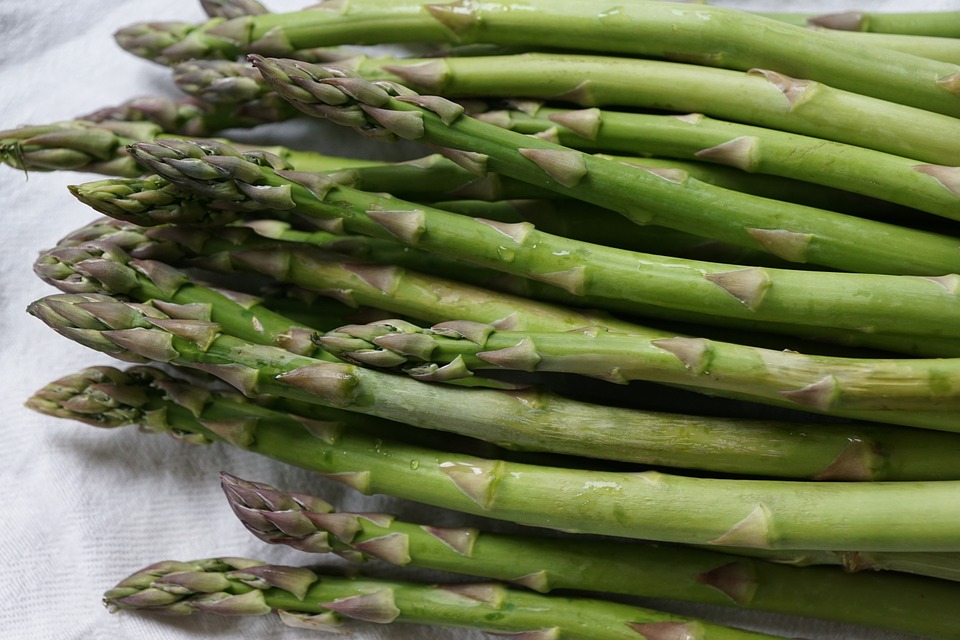
The great asparagus experiment: investigating the genetic basis for asparagus anosmia

After the great success of the cilantro experiment, we decided to undertake a similar approach with asparagus. As you probably know, some people find that asparagus makes their urine smell funny, while others experience no effect. In fact, observations on the effect of asparagus have been made as early as the 1700s. Ben Franklin included some negative comments about asparagus ("A few Stems of Asparagus eaten, shall give our Urine a disagreable Odour") in his essay on flatulence (I think my son's budding interest in Franklin will increase greatly knowing that Ben was equally interested in lightning and farts!)

In contrast to the cilantro experiment, where I dislike the taste of the test food, I have no idea what the big deal is with asparagus, but my husband tells me of the foul smell that is the result of enjoying this verdant spring vegetable. Depending on the study, 33-60% of people cannot detect the smell. In our experiment, we all enjoyed a side of asparagus that was lightly pan seared with olive oil. Our son was not too excited by the taste of the vegetable, but he ate it for the sake of science. Frankly, I think he was curious what the outcome would be. After our next bladder evacuations, we compared notes on the smell. It seems my son has inherited his father's perception of asparagus smell. Unfortunately for us, this fun experiment did not encourage our boy to eat more asparagus. Rather, he can now use the smell as an excuse to avoid it.

Next came the moment in the experiment to explain what happened and why. The first question is what it is about asparagus that makes urine smell different. Luckily, that one is firmly based in chemistry, so it is relatively straightforward to answer. The odor is the result of the metabolism of a chemical unique to asparagus: asparagusic acid. The infographic below from Compound Interest on the Chemistry of Asparagus includes the specifics on the chemical structures if you are curious. Asparagusic acid breaks down into four other sulfur-containing compounds, which happen to be volatile, evaporating quite readily and giving up their pungent odors in the process. Methanethiol and dimethyl sulfide are thought to be the culprits for the smell; this was determined by giving people purified forms of either compound, which can induce the smell without eating asparagus. It is thought that asparagusic acid helps asparagus keep pests away in the wild; the compound can prevent the growth of fungi as well as parasitic nematodes; consistent with this, the concentration of asparagusic acid is highest in the emerging shoots and other parts of the plant that are likely to be infected.


The second question is why only some people experience the smell while others don't. The answer to this question is based in genetics and sense perception, so it is a bit more complicated. As with so many phenotypes, there is not one simple genetic explanation. There are two main physiological issues here: the metabolism of the asparagus and the perception of the smell of those metabolic byproducts. For some time, scientists thought that everyone was an excreter (meaning they could produce the smell in their urine), but that some people could not perceive the smell (the scientific term is anosmia). As more scientists started to ask people about their experience with asparagus, the story became murkier. There is variation in how people perceive the smell (from strong to mild) and there is also a small population of people that that do not metabolize asparagus the same way. 

There have been a number of papers looking at the genetic connection between anosmia and asparagus. A 2010 PLOS Genetics paper published by the personal genomics service 23andme seems to be the first paper linking asparagus anosmia to a particular genetic variation. The paper showed that several single nucleotide polymorphisms (SNPs) occurring near genes encoding for odor receptors were correlated with asparagusic acid anosmia. The most significant association was seen in a gene encoding olfactory receptor 2 (OR2M7), where the variation acted in a dominant fashion to decrease the likelihood of anosmia.

genome-wide association study (GWAS) published in the journal BMJ in 2016 looked at a group of nearly 7000 Europeans. Their results suggest that a majority of this group (60%) had anosmia, with it being slightly more common in women than in men. Consistent with the results from 23andme, they found several SNPs in the olfactory receptor 2 gene. Thus, there is good evidence for the genetic basis for asparagus anosmia.What is still unknown is what SNPs (if any) are associated with the inability to excrete aspargusic acid. In addition, it is unclear if the ability to detect this smell has any evolutionary basis or if it is just a random mutation.

These experiments taught me a lot about the science of food and taste perception. There are lots of opportunities to experiments with food in the future, While most of my previous experiments with food involve baking, there are lots of opportunities to experiment with food in the future. For example, this post from Discover Blogs talks about the large variety in how humans perceive tastes and the opportunity for citizen science to unravel that. I will be sure to post an update about our next foray into human genetics and food.
Friday, November 25, 2016

Herding Hemingway's Cats: the perfect primer in genetics for a novice and a fun read for an expert

Herding Hemingway's Cats: Understanding How Our Genes Work has been on my reading list for a few months. When I saw the author Kat Arney tweet that the Kindle price was only $1.99, I took advantage of the price drop and downloaded it right away. I was glad I did, but I do feel a little guilty that I didn't pay full price because it really would have been worth it!

I have reviewed many books on the subject of genetics (I  particularly enjoyed The Violinist's Thumb, Junk DNA, and Inheritance). Nonetheless, I found Hemingway's Cats to have a refreshing take on some well-covered topics; of course, it also taught me some new things and discussed the most recent research. Thus, I recommend this book as an excellent introduction to genetics because it would be suitable for people with little knowledge of genetics; it would also be great for someone who knows the field, but wants to expand or refresh their knowledge.

It seems that one requirement for a book about genetics is an extended analogy for the genome. Sometimes these are clever and useful, but run their course rather quickly (e.g., Matt Ridley's Genome talks about the genome as a book with 23 chapters/chromosomes). Here, Arney makes the occasional comparison between the genome and a set of recipe books. The collection contains thousands of recipes for cake, soups, and casseroles. In her analogy, the librarian never lets the recipes out of her sight, so you have to copy the recipe in the library (the nucleus) and then export the recipe to make it in your kitchen. Sometimes, you need lots of one thinglike a large batch of cupcakes for a bake sale, but other times you just make a single serving. Arney revisits this analogy over the course of the book and it always seems to fit perfectly and it doesn't get overused.

At the start of the Human Genome Project, a  betting pool began among the scientific community to guess the number of proteinencoding genes in the complete human genome (the winner was Lee Rowen, who bet on 25,947, the actual number was 24, 847). Of course, the amount of our genome that is actually of use and the reason humans have so much extra DNA is still a matter of debate. Humans (owing perhaps to our inflated sense of self) figured that the size of the genome would correlate with the complexity of the organism. This turned out to be false for example, "water fleas the size of a grain of rice have 30,000 genes." One hypothesis to explain all that extra DNA is that some of it protects the important parts of our genomes from mutationsthe biological equivalent of bubble wrap. Here, she makes some great comparisons with moving house, making cookies, and television programming. This is a strength throughout the book, which is peppered with fun and useful analogies that help clarify the scientific concepts.  

Arney also hits new and hot topics, like epigenetics/epigenomics, imprinting, CRISPR, and the ever-expanding list of RNAs. In addition, she covers some of the "wow science" one would expect from a popular science book. She describes why the eponymous polydactyl cats have extra toes (mis-regulation of the Sonic Hedgehog gene) and writes about the newest large-scale genome sequencing project (The 100,000 Genomes Project), which aims to sequence the exomes from cancer patients and children with rare diseases and to expand the geographical representation of genomes sequenced thus far. She also speculates on what the future of genetics might be, in particular she focuses on the next dimension of genome sequencing: time. By sequencing the genome of the same individual over time, in combination with the very specific data that can now easily be collected by a smart watch, we might be able to understand how the genome changes as we age and in the context of our lifestyle. It is an exciting time in the field of genetics and molecular biology, and we are particularly lucky to have a writer like Kat Arney to help us understand all the cool things that are happening.

Wednesday, July 13, 2016

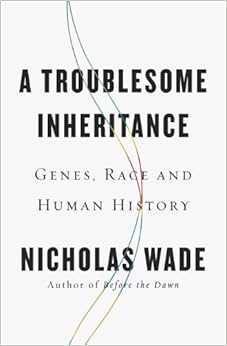
The trouble with A Troublesome Inheritance by Nicholas Wade


I started to worry about my choice to read A Troublesome Inheritance by Nicholas Wade as soon as I began the preface, which detailed the controversies surrounding the book. Despite my hesitation, I soldiered on.

Wade sets out to challenge the idea that race is solely a social construct, and he aims to show that there are genetic differences between different races (geographical groups or clines) of humans. The author argues that humans are still evolving and have done so since the time humans started to separate geographically. I think most biologists would agree with this premise; a recent story in Science confirms that humans are still evolving in an observable way. If this idea is true, then there should be genetic differences between the human populations that resulted from this geographical separation. What makes this topic "troublesome", of course, is that the history of scientists attempting to understand race in a biological context has been fraught with prejudice, to say the least. Wade acknowledges these concerns and says that he thinks that any genetic differences between races cannot and should not be the basis for a judgment about the worth of one group over another. However, he then proceeds to speculate on why European populations have fared so much better in economics and history than Asian and African populations; he concludes that Europeans simply have higher IQs and stronger work ethics. These conclusion led many scientists to criticize his work as scientifically inaccurate (some of the best examples are herehere, and here). In a style typical of James Watson, Wade essentially dismissed his critics as PC police.

I expected the book to detail what exact genes are found to differ between human populations. I figured these genes would be interesting, but biologically unimportant. Unfortunately, Wade gives only a few specific examples, which I will discuss here with more detail. He starts with the genes MC1R and SLC24A5; variations in these genes are linked to changes in skin and hair color and affect the ability to absorb vitamin D from the sun. I discussed MC1R extensively in my post about red hair; MC1R essentially initiates a cascade of cellular events that turns on the production of pigment synthesizing genes. Likewise, SLC24A5 also affects melanin pigment production (Science 2005). Single nucleotide polymorphisms (SNPs), such as the A111T allele, are found in 98-100% of the SLC24A5 genes sequenced in European populations.

Graphical Abstract from Kamberov et al., 2012 (Cell)
Another gene that shows population-based differences is EDAR; SNPs in EDAR in East Asian populations are linked with thicker hair and changes in tooth structure. A recent study in Cell showed that mice with the East Asian EDAR variant (V370A) had thicker hair as well as smaller mammary glands and fewer sweat glands. It is unclear how this variant arose; some scientists speculate that smaller breasts were chosen via sexual selection, while others argue that the decrease in sweat glands would have been an advantage in the cold environment of Asia when the variant appeared (additional coverage of this cool paper in the NY Times).

A surprising phenotypic difference in East Asian populations is the presence of dry ear wax, which is caused by variants in the ABCC11 gene, which encodes a protein transporter that helps the cell transport various substances across cellular membranes. SNPs in ABCC11 are also linked with decreased body odor (find out more on the Discover Magazine Gene Expression blog). In this case, scientists argue that changes in ABCC11 were caused either by the advantage of lacking body odor in sexual selection or the advantage of decreased body odor in a cold environment; the ear wax phenotype was merely a hitchhiker.

In the end, I was disappointed that the book discussed so few genetic variants and did not detail these genes very well. There is a definitely an interesting topic here; unfortunately, A Troublesome Inheritance is not the place to read about it. Perhaps if Wade (a science writer for the New York Times and Nature) had enlisted the assistance of a anthropologist or a population geneticist, the book would be more successful.  I have started writing a follow-up post on this topic; in particular, I
want to address these genetic differences in light of advances in genome sequencing and personal genomics. 

Sunday, May 22, 2016

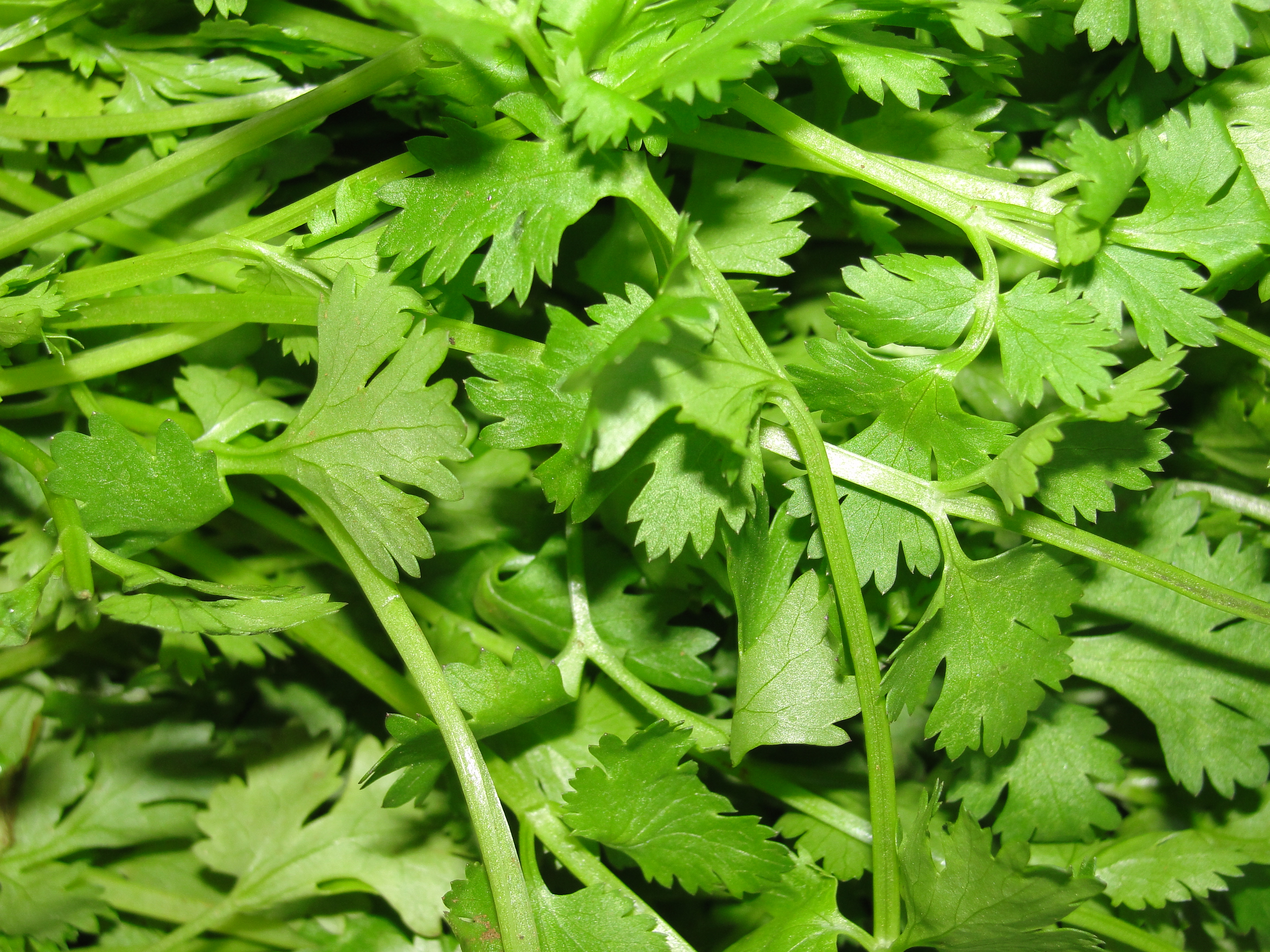
Using cilantro's foul flavor to teach my son about human genetics

We are struggling to incorporate variety into the diet of our seven year old, who is not interested in having anything green on his plate. My husband, the cook of the house, has found some ingenious ways to sneak extra veg into dishes (e.g., finely chopped cauliflower disguises itself as meat in chili con carne). My contribution to this effort has been to tackle the problem with a little home-based scientific investigation. (I guess my scientific training is helping my parenting skills as well as my baking skills.) How random genetic variations can affect taste perception was one of the many interesting topics in both Sharon Moalem's Inheritance and Sam Kean's The Violinist's Thumb. Like most couples, my husband and I have some major differences in how some foods taste. This gave me the idea of using these genetic variations to our advantage to talk to our son about human genetics and genetic diversity.

Thamizhpparithi Maari (CC-BY-SA) Wikimedia Commons
I had previously introduced my son to the concept of DNA with Have a Nice DNA, a fun book from Cold Spring Harbor Laboratory Press suitable for elementary-aged children. This set the table for the first experiment: cilantro (or coriander). I find that cilantro tastes a bit soapy, but my husband thinks it tastes great. Before our dinner of black beans and rice with raw cilantro sprinkled on top, I told our son about the differences in how his father and I perceive the taste of this herb. I told him that he would be part of an important experiment to determine whose genes he had inherited. In the spirit of the good nerd we are raising, he was fascinated and curious. The experiment revealed that our son had not inherited my taste perceptions of cilantro. In fact, it made him laugh to hear that I thought it tasted like soap (kids love to see their parents suffer), especially since it was so different from what he thought it tasted like.

Once we learned the outcome, I wanted to teach him more about the genetic basis of this difference. Lucky for me, cilantro is a hot topic on the internet. The prevalence of dislike ranges from 3-21% depending on the ethnic group (21% of east Asians, 17% of Caucasians, 4% Hispanics, and 3% Middle Easterners). While in the minority, the group is quite vociferous in their hatred of the herb. The consumer genetics company 23andme looked at DNA sequence data for ~30,000 users who were asked about their preference for cilantro. Variations in a gene called OR6A2 were linked to differences in cilantro preference. This gene encodes an olfactory receptor that recognizes certain aldehydes, which happen to be the molecular basis of cilantro's smell. Aldehydes are also present in soap. Thus, people with the genetic variant are more likely to sense cilantro's soap-like aldehydes; the sense of smell is a major player in how we perceive flavor. Two other studies found two different explanations for the soapy phenotype (one showed a connection to a different olfactory receptor and the other to a bitter taste receptor); these differences in results could be due to the large variation in the phenotype. My literature searches did not find any more recent stuies in the genetics of cilantro taste perception, suggesting that the work is difficult to fund.

I think my favorite find in my exploration of cilantro was the Gastropodcast, which examined the science behind these differences. Another interesting piece was from New York Times food science writer Harold McGee, who explored the evolutionary basis for taste perceptions. He also discussed how changing the preparation of cilantro can change its flavor; one study showed that crushing cilantro speeds the rate at which plant enzymes break down aldehydes. As a result, fine chopping of cilantro or cooking it a bit can get rid of the soapy flavor for some (this definitely works for me). Based on the success of the cilantro experiment, we will definitely be searching for future food science to explore during family dinners.

Tuesday, August 18, 2015

The genetic wonders of red hair

I recently finished reading Armand Leroi's Mutantswhere I learned about some of the polymorphisms (small changes in DNA sequence) linked to variations in human skin and hair color, particularly red hair. With two different types of redheads in the house, I have always been curious about the genetic basis of this relatively rare trait.


red-haired mouse (from Flickr)
Hair and skin color are determined by the relative proportions of the two types of melanin pigment: eumelanin (dark brown) and pheomelanin (red/yellow). Large amounts eumelanin result in darker hair and very little produces blond hair. People with more pheomelanin have red hair. Red hair phenotypes can range from pale red to bright red or reddish brown, which is due to a balance of the two melanin types. Polymorphisms in the melanocortin 1 receptor gene (MC1R) are associated with variations in hair and skin color in mammals. The MC1R protein is a membrane receptor found only in melanin-producing cells (melanocytes). In response to melanocyte-stimulating hormones (MSHs), MC1R initiates a cascade of cellular events that turns on the production of pigment synthesizing genes, including pheomelanin or eumelanin. Essentially, MC1R determines pigmentation by regulating the relative proportion of eumelanin and pheomelanin.


The ancestral form of the MC1R allele produces eumelanin; variant alleles are less functional, decreasing eumelanin production or increasing the amount of yellow/red melanin. Variations in MC1R contribute to a spectrum of phenotypes, including freckling, red hair color, and sun sensitivity. MC1R alleles that disrupt function are present in ~80% of individuals with red hair and ~20% with brown-black hair. More than 80 MC1R allele variations have been identified in European populations. Association studies have shown that certain MC1R variants (p.D84E, p.R151C, p.R160W, p.D294H, p.R142H, and p.I155T) are linked with the red hair color phenotype.

One unanswered question is why these polymorphisms are more prevalent in Eurasians than in Africans. The current hypothesis is that paler skin permits better synthesis of Vitamin D in environments with less sunlight. A recent study using data from the 1000 Genomes Project revealed that the polymorphisms are also more common in Northern Europe than Southern Europe, which supports the Vitamin D hypothesis. Interestingly, a MC1R variant has been observed in Neanderthals, indicating that red hair and pale skin were also present in this population. A recent paper has shown that the Neanderthal MC1R variant is rare in Europeans, but can be found in East Asian populations. This result suggests that mutation of MC1R was a common mechanism to adapt to changes in sunlight intensity.

from David Fisher's lab


Some MC1R variants are associated with an increased risk of melanoma. Due to increased sun sensitivity and freckling of people with pale skin, this relationship seems obvious. However, darkly pigmented Caucasians with certain MC1R variants also show an increased incidence of melanoma. This result suggests that the MC1R pathway may have another role in the development of melanoma beyond differences in the ability to filter UV rays in light and dark skin. In fact, scientists think that MC1R may play a pigment-dependent and a pigment-independent role in skin carcinogenesis. There are a few hypotheses to explain the link between MC1R and melanoma. First, after UV exposure, cells with more pheomelanin show increases in DNA damage, which is correlated with increases in abnormal cell growth and proliferation, a hallmark of cancer. Second, a recent paper in Molecular Cell suggested that UV light triggers the interaction of a tumor suppressor called PTEN with MC1R. The tumor suppressor can interact with wild type MC1R, but not the red hair alleles of MC1R. The PTEN-MC1R interaction protects PTEN from degradation, which suppresses an oncogenic signaling pathway (PI3K/Akt). In contrast, MC1R variants do not interact with PTEN, allowing increased levels of oncogenic signaling pathways after UV irradiation. Unfortunately for redheads, sun exposure alone is not the sole mechanism for skin cancer. A Nature paper from David Fisher’s lab used a red-head mouse model with inactive MC1R to investigate a possible UV-independent pathway. They found that in the presence of the most common melanoma oncoprotein (BRAF 600E), ginger mice developed melanoma without UV exposure, while MC1R wild-type mice did not. Thus, shielding easily freckled skin from the sun may not be enough to protect from skin cancer for people with certain MC1R variants.


The association between red hair and melanoma suggested that there may be a scientific basis for the headline from 2014 that climate change was putting the red hair gene in danger of extinction. The story was exposed as alarmist and scientifically inaccurate. One of the many problems with the article is that they label the red hair gene as recessive. Because hair color is a complex phenotype, it is not surprising that the genetics of red hair are also complex. Red hair is usually inherited in a recessive manner, but it can also be dominant. A 2000 study showed that the inheritance pattern depends on the MC1R allele that is present: most alleles are recessive, but some alleles can be dominant. Individuals that are heterozygous for a mutant MC1R allele show variations in red hair color, beard color, or freckling. Thus, there is a dosage effect of MC1R variants on hair and skin color, which explains why some men have red beards and brown hair. These results also explain how two red-haired parents can (on rare occasions) have children that don't have red hair. Thankfully, the many variations in MC1R and the complex inheritance patterns mean that red hair isn't likely to die out any time soon.

**************************

For more information, I recommend the following links:

Red heads feel pain differently A blog post from 23andme about the population genetics of red hair.

Saturday, June 27, 2015

Armand Leroi's Mutants: where the Mutter Museum meets Geek Love

Mutants: On Genetic Variety and the Human Body by Armand Marie Leroi explores the genetic and developmental reasons for variations in the human form. I thought this book would be a good follow up from Inheritance, which focuses on rare genetic disorders that often have a relatively minor physical abnormality, such as eyes that are widely space (hypertelorism). Based on the cover and title, I expected the book to be a bit of a carnivalesque spectacle part Mutter Museum, part Geek Love. In fact, the text treated these "mutants" respectfully and with due scientific diligence. The focus was generally on the developmental pathways that were altered in the mutations observed, but there was some exploration of the toll these mutations took on their bearer.

The book begins with the historical observations of mutants and the explanations for why these mutations arose. In the beginning, "monsters" were thought to be caused by the wrath of God. Eventually, scientists began to understand the developmental causes for these variations. In a chapter called "A Perfect Join", Leroi writes about conjoined twins, specifically how they form. Interestingly, conjoined twins are more likely to have a condition called situs inversus, where the internal organs are inverted on the left-right axis. In fact, the rare singleton birth with this condition has been useful in teaching us why our organs are oriented the way they are. Situs inversus is one symptom of Kartagener's syndrome, which is caused by a mutation in one of the proteins (dynein's outer arm) that control the movement of cilia (tiny projections on the surface of many different cell types). The other symptoms are chronic bronchitis (cilia are important for clearing the lung and nasal passages) and sterility in males (the same proteins are required for the movement of sperm). I always find it amazing how a small mutation in one protein can have such profound consequences. My favorite lines from the book describe how scientists study gene function: "It is actually quite hard to prove that a gene...does what one supposes. One way...is to eliminate the gene and watch what happens. This is rather like removing a car part...to see why it's there. Sometimes only a rear-view mirror falls off, but sometimes the car dies."

A funny story arises in the explanation of the Hox genes, which essentially control the pattern of embryonic development such that Hox1 makes a head, Hox2 makes a torso, etc. Mutations in Hox genes can lead to abnormal body plans, even changes in the number of vertebrae and ribs. About one in every ten adults has an extra pair of ribs, an abnormality that was first observed in a woman, leading the doctors on the case to conclude that it was evidence of the truth of Adam and Eve. In reality, the physiological variation occurs at equal rates in men and women.

The chapter on skin color explores the mutations that lead to albinism, piebaldism, and even red hair. Dozens of different mutations in MC1R (melanocortin 1 receptor), a protein that helps control pigmentation, have been described in red heads. (Because my house has three different types of red heads, I really fell into an Internet rabbit hole on this subject. I think I will write something more about this later.) The genetics of skin color are also complex and have been difficult to study due to the complicated social issues surrounding the subject. Leroi tells the story of a white woman living in Apartheid-era South Africa. Following a diagnosis with Cushing's disease, her adrenal glands were removed, which led to hyperpigmentation due to an abundance of the hormone melanotrophin. As her skin darkened, her social status and living conditions quickly changed. To me, the story highlights the problem with thinking that we can biologically define race. (A Troublesome Inheritance was released recently and covers this very topic, so watch this space for my review.)

Leroi also discusses the genetic basis for aging; in the simplest terms, aging is due to the "inability of natural selection to act against the mutations that cause disease in the very old." This hypothesis explains why dominant mutations like Huntington's can fix in the population. An experiment in fruit flies explored what would happen if only aged flies were reproducing; the effect should be an increase in genetic changes that promote longevity and fertility at an advanced age. After ten generations, the longevity of these flies increased by 30%; after fifty generations, life expectancy doubled. The flies were generally hardier, but the increased life expectancy came at a cost: the fruit flies were less active in their youth as they needed to preserve themselves to ensure survival and mating. This experiment supports the idea that aging comes at the expense of vitality in youth.

Overall, Mutants was quite readable; it had a nice balance of the science behind the mutations and the descriptions of the lives of the people who were affected with these mutations. I should note that the book was released in 2003, so some of the science is a bit out of date. For me, a good read is one that teaches me new science and spurs me to read and write more. Mutants definitely fits the bill in that regard. 

Thursday, April 9, 2015

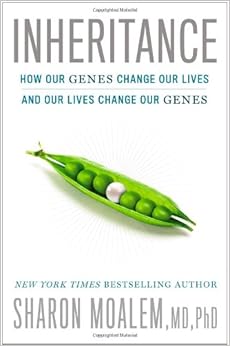
Inheritance by Sharon Moalem: an excellent new perspective on human genetics and epigenetics

Inheritance: How Our Genes Change Our Lives
and Our Lives Change Our Genes, by Sharon Moalem, offers a unique perspective on the subject of human genetics. Moalem is a physician-scientist who specializes in rare diseases; his specialty has given him a keen eye for discerning subtle physical differences (phenotype) that are frequently linked to genetic differences (genotype). In some cases, the differences are insignificant. For example, if you have an extra row of eyelashes, you share something with Elizabeth Taylor, specifically a mutation in a gene called FOXC2. Other differences can serve as a diagnostic for rare genetic conditions. In one chapter, Moalem describes being at a dinner party when he noticed several physical traits that suggested that his hostess may have Noonan syndrome, which can be associated with heart disease and blood clotting. Another example is orbital hypertelorism, where the space between the eyes is large enough to accommodate another eye. This trait can be associated with Fanconi anemia, a blood disorder linked with an increased incidence of cancer. Wide-set eyes are commonly found in actresses and models (famous examples include Jackie Onassis and Michelle Pfeiffer). Our preference for certain physical traits may be explained by our interest in ensuring a good developmental and genetic history in our mates; Moalem suggests that facial features are an obvious indicator that brain and body development occurred properly.

Inheritance also highlights how minor differences in the sequence of our DNA can cause major differences in phenotypes. For example, congenital polycythemia (PFCP) is a genetic condition caused by a mutation in the EPOR gene that results in a greater number of red blood cells. This mutation gave Finnish athlete Eero Mäntyranta a distinct advantage in aerobic competition because his blood can carry more oxygen (essentially it's like he always has doped blood). However, PFCP can also lead to an increased risk of stroke. Thus, evolution took a different approach to solving the low oxygen problem for Sherpas: a mutation in the EPAS1 gene causes lower production of red blood cells, but increases the efficiency of oxygen delivery.  Interestingly, this mutation fixed in the population relatively quickly: Sherpas moved into their current low altitude environment around 1500. (This is a really fascinating story; if you want to read more, I recommend this Ed Yong piece.) These examples also underscore that while humans are ~99% similar, there is still a lot of variability in DNA sequence. In fact, in the 14 years since the first human genome was sequenced, we have learned that there really is no average genome. As I highlighted in my previous post on genomics, large-scale genomics projects (e.g., The 1000 Genomes Project) aim to get samples from a highly diverse set of people to remove the background noise so that significant differences can be identified.

Moalem also has an informative discussion of epigenetics (i.e., changes to DNA that do not occur at the sequence level). A great example in the book is the queen bee. Every bee in a colony is completely identical in their DNA sequence. How then does a queen bee become so different in size and function? Larval queens are fed royal jelly, which changes their DNA to allow them to express queen-specific genes. The protein DNA methyltransferase (Dnmt3) can methylate DNA and change its expression. In fact, if you shut down Dnmt3 in bee larvae, all of them become queen bees. The field of epigenetics is relatively young. However, there are already many fascinating ways in which our daily activities can alter the expression of our genes. The epigenome is dynamic and can be impacted by the things we eat and drink, the exercise we do, and, most surprisingly, the experiences we have. Accumulating evidence suggests that stress can alter your genome; in some cases, these changes can be inherited. The Radiolab episode Inheritance highlights a Swedish study that suggests that the eating habits of your grandfather could have an effect on your longevity. Geneticists are just beginning to find ways to track these changes and, more importantly, how to reprogram the methylated genes. As you can imagine, methylation is a very useful way for a cell to alter its gene expression. However, methylation can also mean the difference between a benign growth and a malignancy, making it an attractive target for therapeutic development.


Moalem makes an excellent argument for the support of the study of rare diseases. Most funding bodies think that funding diseases where many people are affected (e.g., cardiovascular disease, Alzheimer's) is the most cost-effective approach. However, studying the mutations and physiology of people with rare diseases can often shed light on the basic underpinnings of how normal cells work. For example, the study of familial hypercholesterolemia (FH) gave us insights into the function of LDL and HDL ("bad" and "good" cholesterol); these results facilitated the development of Lipitor, which has helped many people with elevated levels of LDL who do not have FH.

In short, Inheritance is immensely readable. The author uses clever and pertinent analogies. For example, he compares our cells to the production style of Toyota and Apple in that they stock only the supplies they need to avoid waste (an approach called production leveling). Another great example is when he is explaining a genetic condition that turns muscle into bone; he writes, "Osteoclasts are the Wreck-it Ralphs of the skeletal system. Osteoblasts are the Fix-It Felixes." Overall, the book is very topical and up to date; it would be an informative read for those who are well versed in genetics as well as those who are just becoming interested in the subject. Inheritance is definitely one of the best books I have read on the subject (a close second to Sam Kean's The Violinist's Thumb) and will be added to my list of great science reads.