Showing posts with label Radiolab. Show all posts

Wednesday, December 13, 2017

Caesar's Last Breath: Sam Kean brings his keen eye for storytelling to explore the air around us

I just finished reading Sam Kean's new book Caesar's Last Breath: Decoding the secrets of the air around us. I wasn't planning to write a review, but when I realized my blog has covered every other book by Sam Kean (including Dueling Neurosurgeons and The Violinist's Thumb), I felt like it deserved some attention.

The theme of the book is understanding the molecules that make up our air. Each chapter is devoted to a component or two that is found in the air we breathe. This approach means there is some overlap with Kean's brilliant debut, The Disappearing Spoon. Luckily, the overlap seems only to include the best stories in the history of chemistry and Kean is able to explore the stories further. For example, we get more background on the German chemist Fritz Haber inventor of the process to make ammonia from nitrogen and hydrogen, thus spurring the development of agriculture and chemical weapons. I don't want to spoil it, but if you want a taste, you can check out Kean discussing the story on Radiolab.

Not all of the stories are as serious as Haber's. For example, Kean's chapter on methane allows a moment of silliness in the details of the life of the French performer Le Pétomane, a man who trained himself to fart at will. At his peak, he was the highest paid performer in France, bringing bigger crowds to the Moulin Rouge than even Sarah Bernhardt. 

It is difficult to choose a favorite among the chapters, but if I had to pick just one, it would probably be "Controlled Chaos", which focuses on water and its role in the Industrial Revolution, through the work of James Watt and others to develop steam power and the work of Alfred Nobel to make explosives. Nobel's legacy now is pretty securely tied to the prizes bearing his name. However, during his life time, Nobel's work cost many lives and left him in poor health, guilty and haunted by his reputation as a merchant of death. In fact, this guilt was the impetus for his starting the Nobel prize, much to the chagrin of his family who fought to inherit the wealth.

Because I read so many science books, I often have a sense of déjà vu when reading. However, Caesar's Last Breath included lots of new and interesting tidbits, like the surprising connection between Albert Einstein and refrigerators and the strange history of the manipulation of the weather. Perhaps my only complaint with the book would concern the final chapter on the air on other planets, which felt a bit disconnected both in subject and style.

I highly recommend Caesar's Last Breath for people interested in chemistry or the periodic table as well as those interested in the history of science.

Monday, December 4, 2017

How to Tame a Fox (and Build a Dog): a long term experiment and a story of perseverance and hope

The story of Dmitry Belaraev's long-term experiment in fox domestication was beautifully covered by Scientific American and The Discover Blogs as well as on Radiolab. I found the story and the science behind it fascinating, but I wasn't sure a book was needed to delve further in the story. After I read How to Tame a Fox (and Build a Dog), I learned how wrong I was.

Lee Alan Dugatkin co-authored the book with one of the original researchers, Lyudmila Trut. The authors are able to tell the story of Belaraev's seemingly Quixotic plan to tame foxes in a way that is compelling, even when I knew the major plot points.

The project's hypothesis was simple: continuous breeding of the tamest/gentlest foxes would lead to foxes that behaved like dogs. I found it amazing that they were so committed to scientific rigor that they ran a parallel experiment where they chose the most aggressive foxes. At the time, Belaraev faced obstacles from the ruling Communist party. Today, scientists would also question funding such a long-term experiment. Most geneticists use animals with short lifespans (e.g. fruit flies, C. elegans, yeast) so they can get results quickly and at lower costs. The experiment started producing results far earlier than even the principal investigators would have guessed. Even after a few generations, they found that the foxes showed more dog-like traits (floppy ears, tails, and other classic signs of neotony.) After 10 generations, they found that females went into estrus earlier and some male pups showed changes in fur color.

These changes were all predicted by Belaraev, who had a pretty revolutionary idea at the time, which he called "destabilizing selection". He suggested that the changes that occur in the course of domestication aren't simply due to the accumulation of mutations, but rather changes in the expression of existing genes.

Graphical Abstract from Parker et al Cell Reports 2017
Once genome sequencing arrived on the scene, the domesticated foxes were soon the subject of several studies. The first approach was to compare 700 genetic markers that had been used in the initial dog genome sequence with both the wild and domesticated foxes.  The researchers found several cases of convergence between the two domestication events, which included genetics variations that would ultimately lead to changes in the appearance and behavior of the tame animals. In 2010, a paper in Nature reported the genomic changes that accompanied the domestication of dogs from wolves.  Of course, the research is still in progress. One recent paper in Science suggests that dogs were domesticated in Eurasia and Eastern Asia from 14000 to 6000 years ago. The most recent data (published in my journal Cell Reports) suggest that different breeds of dogs had origins in different geographical locations. Importantly, the work published so far suggests that Belaraev was right: changes in gene expression not just mutations were key to domestication.

Perhaps the most fascinating parts of the book were the details concerning the barriers to science in Soviet-era Russia. These included the domination of genetics by a non-scientist named Trofim Lysenko, who was staunchly opposed to the ideas of Darwin and Mendel; these ideas were gaining acceptance at the time in the West. Lysenko even convinced Lenin that putting seeds in the cold would make crops grow better at low temperatures (they don't). Lysenko fabricated data to support his ideas and those of the party, which devastated Soviet agriculture for decades. Lysenko was celebrated by the Communist party simply for being a peasant and for going against "bourgeois Western science".  Interestingly, Khrushchev's daughter Rada, a journalist who trained as a biologist, argued against Lysenkoism and fought to protect science and the work of Belaraev. I think this serves as another example of why it's best to keep politics out of science (but not science out of politics!) The stories of the suppression of science in the height of soviet Russia are evocative of current anti-science rhetoric in these United States.
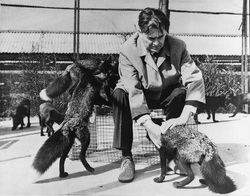
One of the reasons that Belaraev was able to persevere in the face of such odds was his enthusiasm and charisma. Belaraev was a social chameleon, who could easily adapt to his audience. These traits made people gravitate towards him and helped him argue for the benefits of the fox experiment to the powers that be. Officially, the rationale of the experiment was to breed foxes that would have more variety in their colors, which would help fetch higher prices for their fur. The domestication experiment was funded despite the crackdown on work in genetics. This isolationism crippled Russian scientists, who were cut off from the science in the rest of the world.

In the late 1980s the fox experiment was 30 years old. The farm started to have some trouble with funding and the researchers had to scale back the experiment. The situation was made worse in 1998 when the Russian economy collapsed. The scientists started sacrificing some of the foxes and selling their pelts. Shortly after this, they contacted a few select media outlets to cover the story, which helped them secure some funding for the project. Today, the experiment has been going on for 60 years, which is a long time for a laboratory experiment, but a short time frame for evolution.

How to Tame a Fox (and Build a Dog) was a fascinating and ultimately hopeful story. Even in such a difficult political climate, this scientist and his visionary experiment were able to persevere with some patience and ingenuity, a message that I think will resonate with scientists that are struggling to stay afloat in 2017.
Saturday, October 7, 2017

She's a brainiac: taming my amygdala's response to neuroscience

Cerebellar neurons by Ramón y Cajal
The study of the brain has always seemed so inaccessible to me. There is something so meta about it that, frankly, it seems to me that only super advanced beings could think about how our thoughts are formed. I felt comfortable in my single cell universe of cell biology, and I felt like neuroscience was far too intricate and complicated for my brain to handle.

Last year, I started working at Cell Reports, which is a broad science, open access journal. We get submissions from every field of biology. I am a cell biologist by training, so my comfort zone is there, but by new journal has really pushed me to read even more broadly than my previous experience at BBA.

For me, neuroscience papers are harder to access, especially because I have a hard time distinguishing my lateral habenula from my amygdala. To solve this shortcoming, I decided it was time to do some immersion therapy. I've read a few popular science books about the brain beforemost memorably Sam Kean's Dueling Neurosurgeons. More recently, I read The Genius of Birds, which taught me a lot about how scientists are approaching experiments with the brain and behavior. These experimental designs are ingenious (more evidence that neuroscientists are just smarter beings), but they can seem a bit funny at times (e.g., mouse behind the wheel). Recently, using high resolution brain imaging like fMRI has allowed researchers to map changes in the brain as people think about people or listen to different types of music or are under the effects of LSD.


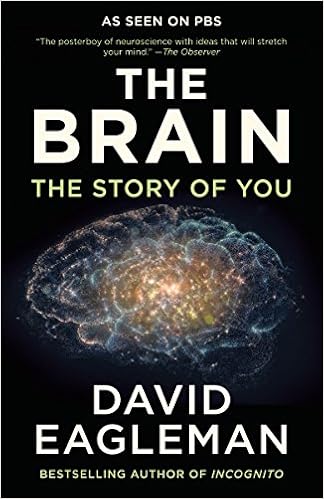
To continue my immersion therapy, I have been trying to find good popular science books about the brain. Browsing my local book store, I came across The Brain: The Story of You, by David Eagleman, a neuroscientist and adjunct professor at Stanford University. The book, which is also a PBS series, includes some new research as well as some classic experiments in neuroscience. These classical approaches, which were very well cataloged in The Dueling Neurosurgeons, is to rely on patients that are missing part of their brain and see what sort of behaviors they exhibit. This is certainly a noninvasive approach, which could be considered as a physiologically relevant organ-specific knock out. The problem is that the brain is incredible plastic (that word means something very different in neuroscience) and so it can adapt to the limitations of a missing piece. The other problem is that there are a limited number of people with missing parts to their brains!


Luckily, advances in neuro-imaging and the advent of techniques like optogenetics, have allowed neuroscientists to stray from these classic experimental models. Of course, that doesn't keep Eagleman from telling the crazy stories reminiscent of Oliver Sacks and his contributions to Radiolab. For example, he tells the case of the man who lost his sight at 3 years old and had a stem cell therapy to restore his vision in middle age. The therapy restored the ability of his eyes to receive visual stimuli, but his brain needed to be re-trained to interpret the messages from the eyes. Another fascinating bit was about proprioception, which could be considered the sixth sense that controls your body position. You might not know you have it- until you lose it, but this is what allows us to have fluid movements like walking or biking. There are rare cases of people who have lost this sense and the affected individual has to think carefully when moving and must train themselves to be able to move with some degree of fluidity.

While The Brain probably isn't the best book on the subject, it is very accessible and fun to read and certainly has helped in my immersion therapy. While I can now remember what the amygdala does, I'm still shaky about the lateral habenula or the nucleus accumbens, suggesting that my immersion therapy should continue.

Sunday, September 24, 2017

I Contain Multitudes: Ed Yong walks us through the wonders of the microbial world

Science stories about the microbiome seem to be as ubiquitous as microbes themselves. There's good reason: it is fascinating to consider that we are home to a completely invisible zoo of microbes, some of which help us to digest our dinner and some of which change our behavior. This intense curiosity has caused some over-hyping of the power that the microbiome can have and the effects that we can exert upon it.

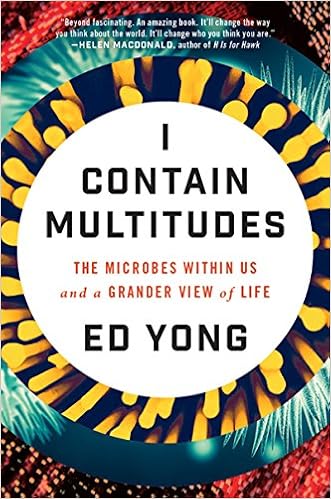
In his first book, I Contain Multitudes, Ed Yong navigates the complexity of the microbiome with his characteristic writing, which deftly combines the nuts and bolts of the science with the wow and wonder at the diversity of the natural world. He discusses some of the amazingly weird microbial relationships that occur in nature as well as those that happen on and in the human body. He seems to hit all the high points of the microbial world, including the ubiquitous symbiont Wolbachia, which scientists are just starting to exploit in insect populations to fight Dengue and Zika, and the amazing research into the human microbiome, which included the awesome roller derby study.

A major theme of the book is the evolving view of our relationship with microbes. The publication of the first microscopic images of microbes by Antonie van Leeuwenhoek (1673) led to an appreciation that there was more to life than what meets the naked eye. Once germ theory started to take hold in the time of Pasteur (ca. 1850), we started thinking that the microbial world was all bad and needed to be eradicated. As the theory of symbiogenesis started to come into favor, our thinking about microbes changed again, leading us to see that there could be "good" and "bad" microbial interactions. As I discussed in my recent post on symbiotic theory, many scientists placed symbiosis/cooperation in opposition to Darwinism. However, as scientists explore these relationships more deeply, it becomes clear that these relationships are much more complex. Yong writes that symbiosis is conflict; conflict that can never be totally resolved. Thus, it may be time to re-evaluate the language we use to describe these relationships and consider adding new terms to capture the complexity of these interactions.


Ed Yong has a knack for finding unusual stories, thus there is no shortage of fascinating tidbits here
all clearly explained and well researched. Two in particular captured my imagination: Sodalis and the mealybug; both of these were adapted for his column in The Atlantic, so you can read these to get a sense of the style of the book. Sodalis is a microbe that has been found as both a free living and a symbiotic organism, so it appears to capture the beginnings of a symbiotic relationship! Mealybugs are insects that form a sort of Russian nesting doll of symbiotic interactions (it's bacteria all the way down!). The mealybug has acquired multiple microbes to solve different metabolic problems. In evolutionary terms, Yong reminds us, this is a smart move. Bacteria are quick to adapt and they are legion, so if you have a problem that needs solving, there are likely microbes that have already found a solution. Biotechnologists and synthetic biologists are just starting to exploit the diversity of microbial functions that have evolved over billions of years of natural selection; they are starting to put existing organisms to work at new tasks, like cleaning up oil spills or radioactive waste, or to design and build completely new organisms to do these things or so many more.

We are really just at the beginning of understanding the microbes around us. Most of the recently published human microbiome studies are little more than inventory lists, with some studies attempting to make correlations for differences in why certain populations are associated with certain microbes sometimes with conflicting conclusions. Yong explains that we simply do not have large enough samples yet to trust the conclusions; for example, if you sampled ten people off the street where 5 were wearing blue and 5 were wearing green, you could find a few striking differences if you ask them enough questions. This means we need to be careful with the conclusions from microbiome studies until we have more data!

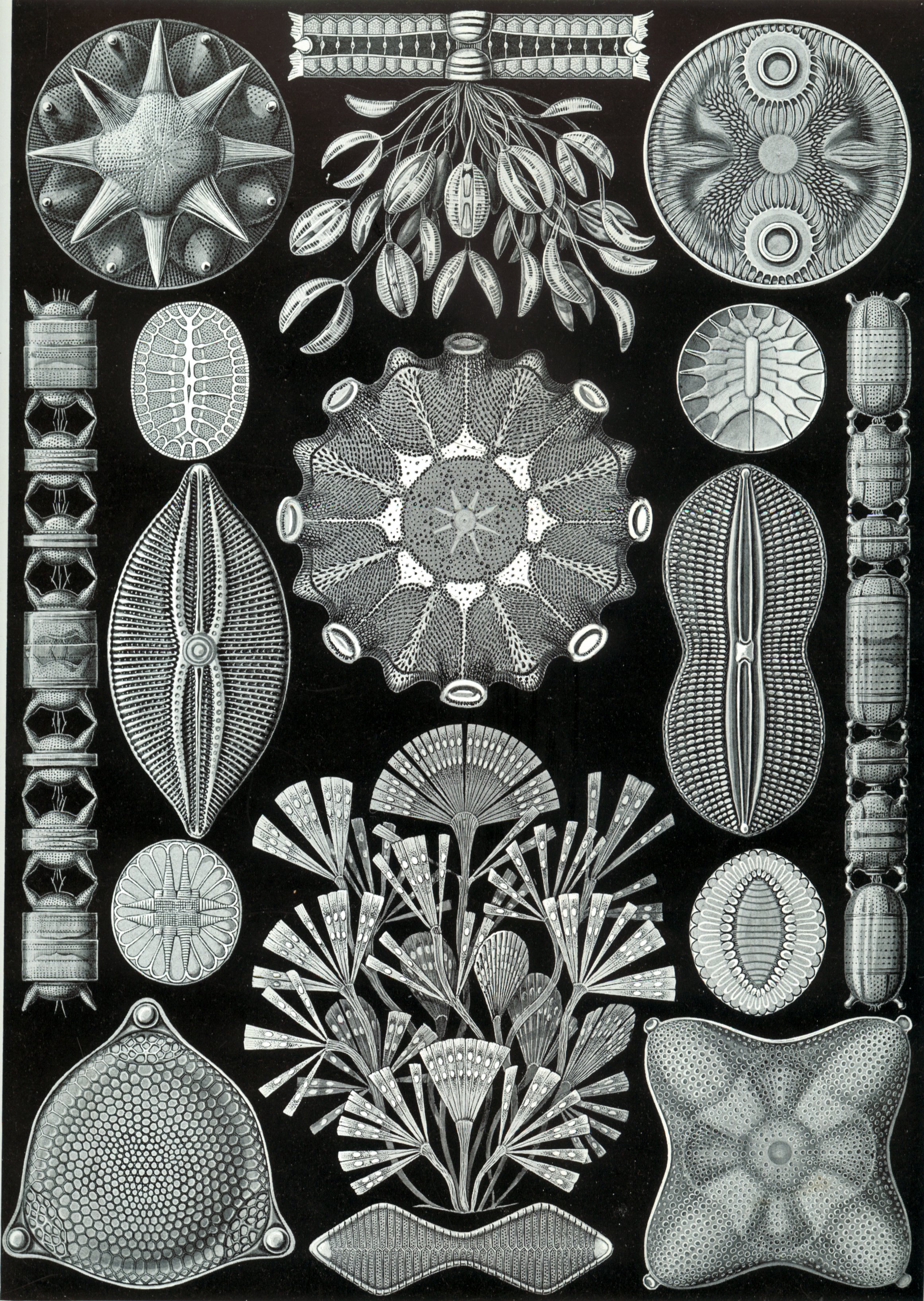
Ernst Haeckel's diatoms
I hope you will forgive me, but I need to take a moment to talk about poop. (According to Yong, anyone who studies the microbiome should prepare themselves to have blenders of animal droppings on their lab bench.) The first time I heard about the microbiome, it was in the context of fecal transplants. Here, Ed Yong describes the history of the FMT (fecal matter transplant) and its success in treating antibiotic- resistant C. diff infections. At this point, FMT is not an exact science and thus it has had mixed results. The ultimate goal here is a stool substitute, a "sham-poo" if you will. In this way, each patient can be treated precisely according to their needs and can be treated with the microbe(s) that can help address each problem. This is a long way off, but it is amazing to consider.

Frankly, I enjoyed reading this book immensely. Yong is an incredibly talented writer and reading his work in long form reminded me how far I still have to go as a writer. I remind myself that he has honed his craft for many years and try to use that as an incentive to keep writing!

Friday, April 24, 2015

Gulp - Mary Roach documents her travels on the alimentary canal

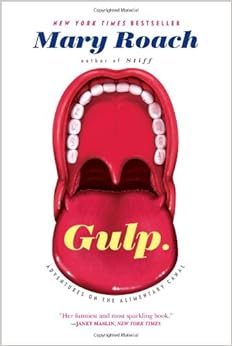
Gulp: Adventures on the Alimentary Canal is Mary Roach's 2013 release about food and its journey from start to finish. Here, Roach brings her trademark style combining interviews and site visits with interesting vignettes. She is never afraid of the taboo (Ed Yong has said he has the "wow" beat in science writing; I think Mary Roach has the "ick" beat) and the subject of the physical process of eating and digestion is rife with such topics. Roach states that books about cuisine and food have eclipsed books about the process of eating, which serves her well because most of the interesting stories about digestion are untold.

One of these strange tidbits is that different animals perceive tastes differently. Catfish have taste receptors all over their skin, effectively making them "swimming tongues"; this also makes catfish a popular model organism for taste researchers. Flies taste with their feet. Humans have taste receptors in the gut and the esophagus as well as the tongue; luckily, only the receptors on the tongue are transmitted to the brain. Animals also have different preferences for tastes: rodents love sweetness, but cats cannot perceive sweet tastes. Dogs' tastes are driven by their sense of smell and they show a strong preference for things that smell like cadaverine or putrescine, odors emitted by decaying meat. Dog food manufacturers often use these scents in concentrations perceptible to your dog but not to you to increase a dog's interest in the food. Roach visits a pet food manufacturer and watches dogs taste testing dog food, which gives a fascinating behind-the-scene glimpse of the industry.  

Beaumont studying the digestion of his patient, St. Martin
Roach digs into the tale of scientific obsession at the heart of the relationship of William Beaumont and his patient and experimental subject, Alexis St. Martin. Over the course of thirty years, Beaumont performed hundreds of experiments into digestion via a fistula in St. Martin's stomach. These experiments did yield the first information about the function and contents of the stomach. However, the mental cost to the patient was likely very high. St. Martin eventually escaped Beaumont for his native Canada, but the doctor was constantly pursuing him. (For more on this strange tale, check out the Radiolab episode Guts.) 

I also learned some surprising facts about saliva. For one, the main digestive enzyme in saliva is amylase, which breaks down starches into simple sugars. This activity makes amylase an excellent way to treat food stains on clothing. Laundry detergents often contain at least three digestive enzymes: amylase to break down starchy stains, lipase for greasy stains, and protease to break down protein. It's good to know that there is a scientific basis to my instinct to spit on food stains.

The other interesting elements in the book are learning the techniques that scientists are using to study eating, digestion, and defecation. Roach visits labs that study topics like the function and components of saliva, the process of chewing, and the chemical composition of flatulence. Unfortunately, I felt that these serious topics were often glossed over for the sake of a punchline. I do find Roach's work easy to read, but her sense of humor does not always mesh with mine. I knew that talking about the journey that food takes from beginning to end would bring out her obsession with the scatological and yet I plowed through. I suppose I'm glad I did, as the penultimate chapter discussed Elvis Presley's digestive troubles; Elvis suffered from mega-colon, which was likely a confounding factor in his death. It's funny that my favorite Mary Roach book is Stiff: The Curious Lives of Human Cadavers (I admit to reading it after seeing it on Six Feet Under), which somehow seems less gross than this one. In the end, I would only recommend reading Gulp if you like Mary Roach's approach to science writing.

Thursday, April 9, 2015

Inheritance by Sharon Moalem: an excellent new perspective on human genetics and epigenetics

Inheritance: How Our Genes Change Our Lives
and Our Lives Change Our Genes, by Sharon Moalem, offers a unique perspective on the subject of human genetics. Moalem is a physician-scientist who specializes in rare diseases; his specialty has given him a keen eye for discerning subtle physical differences (phenotype) that are frequently linked to genetic differences (genotype). In some cases, the differences are insignificant. For example, if you have an extra row of eyelashes, you share something with Elizabeth Taylor, specifically a mutation in a gene called FOXC2. Other differences can serve as a diagnostic for rare genetic conditions. In one chapter, Moalem describes being at a dinner party when he noticed several physical traits that suggested that his hostess may have Noonan syndrome, which can be associated with heart disease and blood clotting. Another example is orbital hypertelorism, where the space between the eyes is large enough to accommodate another eye. This trait can be associated with Fanconi anemia, a blood disorder linked with an increased incidence of cancer. Wide-set eyes are commonly found in actresses and models (famous examples include Jackie Onassis and Michelle Pfeiffer). Our preference for certain physical traits may be explained by our interest in ensuring a good developmental and genetic history in our mates; Moalem suggests that facial features are an obvious indicator that brain and body development occurred properly.

Inheritance also highlights how minor differences in the sequence of our DNA can cause major differences in phenotypes. For example, congenital polycythemia (PFCP) is a genetic condition caused by a mutation in the EPOR gene that results in a greater number of red blood cells. This mutation gave Finnish athlete Eero Mäntyranta a distinct advantage in aerobic competition because his blood can carry more oxygen (essentially it's like he always has doped blood). However, PFCP can also lead to an increased risk of stroke. Thus, evolution took a different approach to solving the low oxygen problem for Sherpas: a mutation in the EPAS1 gene causes lower production of red blood cells, but increases the efficiency of oxygen delivery.  Interestingly, this mutation fixed in the population relatively quickly: Sherpas moved into their current low altitude environment around 1500. (This is a really fascinating story; if you want to read more, I recommend this Ed Yong piece.) These examples also underscore that while humans are ~99% similar, there is still a lot of variability in DNA sequence. In fact, in the 14 years since the first human genome was sequenced, we have learned that there really is no average genome. As I highlighted in my previous post on genomics, large-scale genomics projects (e.g., The 1000 Genomes Project) aim to get samples from a highly diverse set of people to remove the background noise so that significant differences can be identified.

Moalem also has an informative discussion of epigenetics (i.e., changes to DNA that do not occur at the sequence level). A great example in the book is the queen bee. Every bee in a colony is completely identical in their DNA sequence. How then does a queen bee become so different in size and function? Larval queens are fed royal jelly, which changes their DNA to allow them to express queen-specific genes. The protein DNA methyltransferase (Dnmt3) can methylate DNA and change its expression. In fact, if you shut down Dnmt3 in bee larvae, all of them become queen bees. The field of epigenetics is relatively young. However, there are already many fascinating ways in which our daily activities can alter the expression of our genes. The epigenome is dynamic and can be impacted by the things we eat and drink, the exercise we do, and, most surprisingly, the experiences we have. Accumulating evidence suggests that stress can alter your genome; in some cases, these changes can be inherited. The Radiolab episode Inheritance highlights a Swedish study that suggests that the eating habits of your grandfather could have an effect on your longevity. Geneticists are just beginning to find ways to track these changes and, more importantly, how to reprogram the methylated genes. As you can imagine, methylation is a very useful way for a cell to alter its gene expression. However, methylation can also mean the difference between a benign growth and a malignancy, making it an attractive target for therapeutic development.


Moalem makes an excellent argument for the support of the study of rare diseases. Most funding bodies think that funding diseases where many people are affected (e.g., cardiovascular disease, Alzheimer's) is the most cost-effective approach. However, studying the mutations and physiology of people with rare diseases can often shed light on the basic underpinnings of how normal cells work. For example, the study of familial hypercholesterolemia (FH) gave us insights into the function of LDL and HDL ("bad" and "good" cholesterol); these results facilitated the development of Lipitor, which has helped many people with elevated levels of LDL who do not have FH.

In short, Inheritance is immensely readable. The author uses clever and pertinent analogies. For example, he compares our cells to the production style of Toyota and Apple in that they stock only the supplies they need to avoid waste (an approach called production leveling). Another great example is when he is explaining a genetic condition that turns muscle into bone; he writes, "Osteoclasts are the Wreck-it Ralphs of the skeletal system. Osteoblasts are the Fix-It Felixes." Overall, the book is very topical and up to date; it would be an informative read for those who are well versed in genetics as well as those who are just becoming interested in the subject. Inheritance is definitely one of the best books I have read on the subject (a close second to Sam Kean's The Violinist's Thumb) and will be added to my list of great science reads.