Showing posts with label science parents. Show all posts

Saturday, December 23, 2017

The genetics of the calico cat

In an earlier post, I detailed the life and work of Nettie Maria Stevens, the namesake of our new calico cat. Nettie Stevens is known for her discovery of the X and Y chromosomes as the basis for sex determination. While researching the post, I found myself in another internet rabbit hole and I wanted to share some of the things I learned about cat genetics because, it turns out, calico cats are an excellent lesson in genetics.

The genetics of cat fur color (like the genetics of human hair color) are rather complex. There are many different genes that create the spectrum of coat colors and patterns found in domestic cats. In other mammals, white fur color alone has been linked to at least six genes (MITF, EDN3, EDNRB, PAX3, SOX10, and SNAI2). For this discussion, I will focus only on the gene loci that create the calico pattern: agouti (A), orange (O), and spotted (S). Based on the combined expression of these genes, some cats are tortoiseshell, a mix of black and orange and some cats are calico, a mix of black, orange, and white. Because the Orange gene is on the X chromosome, most torties and calico cats are female. There are rare cases of male cats with Klinefelter syndrome (XXY) that can have these fur color variants.
Figure 1 Schmidt-Kuntzel, et al., 2009
Agouti (gene name ASIP) encodes a protein that inactivates the melanocortin receptor and thus controls the distribution and amount of pigment cells (melanocytes) in the hair. The Orange gene has not yet been identified, but its position on the X chromosome has been mapped. Interestingly, the MC1R gene, which has been linked to red hair in humans and other mammals, is not involved in the coloring of calico cats because it isn't on the X chromosome. A recent study of the Syrian hamster, which shows sex-linked inheritance of yellow fur color, described the sex-linked yellow gene (Sly) as being independent of MC1R function and not likely homologous to the Orange gene in cats. However, recessive versions of the MC1R allele create orange/amber fur color in Norwegian forest cats. The gene for white spotting (S) has been linked to the KIT locus; more recent publications have shown that a retroviral insertion in the KIT oncogene caused white spotting, with a full insertion leading to the recessive all white mutation.


The genetics of the tortoiseshell/calico cat
If fur color followed the rules of Mendelian genetics, you would expect cats to be only black and white or orange and white, not two or three colors at once. The patterns observed in calico and tortoiseshell cats can be explained by a phenomenon called X chromosome inactivation. Somatic chromosomes come in even pairs, but the sex chromosomes are not created equal. The Y chromosome is rather small and does not encode many genes. In contrast, the X chromosome contains lots of protein-encoding genes. If an XX individual expressed all the genes on both X chromosomes, they would have a huge imbalance in protein expression in comparison with someone with XY. Organisms have different ways to level the compensate for these differences. In mammals, this involves silencing one of the X chromosomes in each cell with the XX genotype. In organisms like the fruit fly, the XY males just double the expression of the genes on the X chromosome.

The specifics of how this happens is actually pretty amazing. (For further details of the process, check out my post on Nessa Carey's book Junk DNA.) In short, a long non-coding RNA known as Xist (X-inactive specific transcript) turns off one copy of the X chromosome in each cell; on the opposite strand of DNA, a gene called Tsix is found. Xist and Tsix have mutually exclusive expression, which ensures that only one X chromosome is inactivated in each cell. X chromosome inactivation occurs at the 8 cell stage of the embryo. Different cells inactivate different copies of the X chromosome, which means some cells express alleles for orange and white and other cells express black and white alleles. These 8 cells then divide and produce the millions of cells that make up a cat. This random pattern of gene inactivation leads to the pattern observed in Nettie and other calicos.

Carbon copy (left) is a clone of Rainbow (right)
Importantly, because these traits are not strictly inherited by classic Mendelian patterns, it makes cloning cats a bit trickier than other animals. As highlighted in the book Frankenstein's Cat, scientists were disappointed when the cloned cat Carbon Copy ended up looking quite different from its clone mother. Had they thought more carefully about the genetics of calico cats, they might have picked a different breed for their experiment!
maneki-neko calico cat figurines are
thought to bring good luck


Calico cats like our Nettie offer excellent lessons in genetics as they higlight X-linked genes and dosage compensation. After all this reading, I think I will take advantage of cat genome sequencing to discover the specific mutations in our cat. I learned more than expected about cat genetics and hope to share these lessons with you soon. For now, if you want to learn more about the genetics of cats, you should check out Herding Hemingway's Cats by Kat Arney.

Sunday, February 19, 2017

The great asparagus experiment: investigating the genetic basis for asparagus anosmia

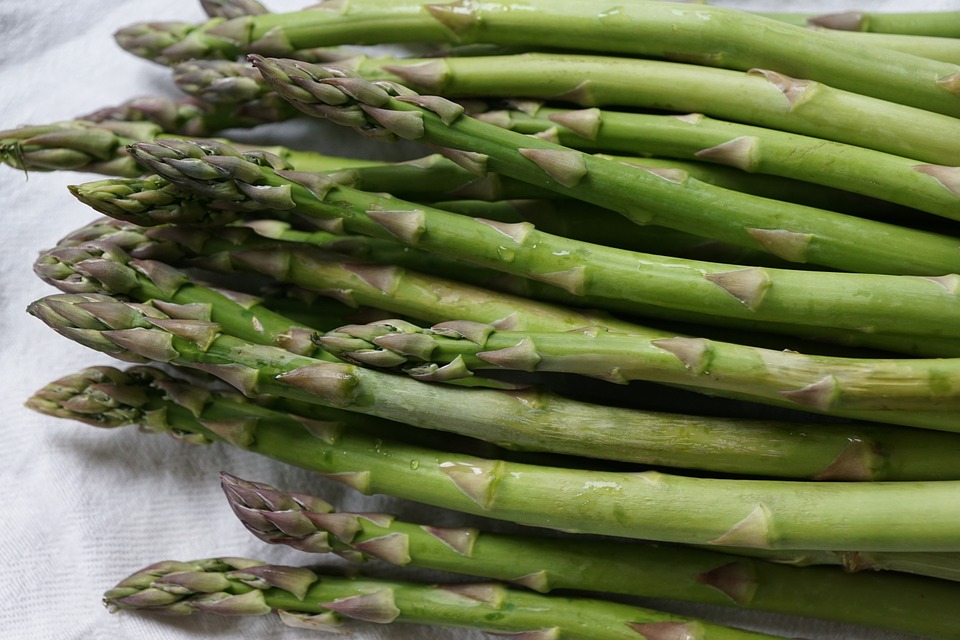
After the great success of the cilantro experiment, we decided to undertake a similar approach with asparagus. As you probably know, some people find that asparagus makes their urine smell funny, while others experience no effect. In fact, observations on the effect of asparagus have been made as early as the 1700s. Ben Franklin included some negative comments about asparagus ("A few Stems of Asparagus eaten, shall give our Urine a disagreable Odour") in his essay on flatulence (I think my son's budding interest in Franklin will increase greatly knowing that Ben was equally interested in lightning and farts!)

In contrast to the cilantro experiment, where I dislike the taste of the test food, I have no idea what the big deal is with asparagus, but my husband tells me of the foul smell that is the result of enjoying this verdant spring vegetable. Depending on the study, 33-60% of people cannot detect the smell. In our experiment, we all enjoyed a side of asparagus that was lightly pan seared with olive oil. Our son was not too excited by the taste of the vegetable, but he ate it for the sake of science. Frankly, I think he was curious what the outcome would be. After our next bladder evacuations, we compared notes on the smell. It seems my son has inherited his father's perception of asparagus smell. Unfortunately for us, this fun experiment did not encourage our boy to eat more asparagus. Rather, he can now use the smell as an excuse to avoid it.

Next came the moment in the experiment to explain what happened and why. The first question is what it is about asparagus that makes urine smell different. Luckily, that one is firmly based in chemistry, so it is relatively straightforward to answer. The odor is the result of the metabolism of a chemical unique to asparagus: asparagusic acid. The infographic below from Compound Interest on the Chemistry of Asparagus includes the specifics on the chemical structures if you are curious. Asparagusic acid breaks down into four other sulfur-containing compounds, which happen to be volatile, evaporating quite readily and giving up their pungent odors in the process. Methanethiol and dimethyl sulfide are thought to be the culprits for the smell; this was determined by giving people purified forms of either compound, which can induce the smell without eating asparagus. It is thought that asparagusic acid helps asparagus keep pests away in the wild; the compound can prevent the growth of fungi as well as parasitic nematodes; consistent with this, the concentration of asparagusic acid is highest in the emerging shoots and other parts of the plant that are likely to be infected.


The second question is why only some people experience the smell while others don't. The answer to this question is based in genetics and sense perception, so it is a bit more complicated. As with so many phenotypes, there is not one simple genetic explanation. There are two main physiological issues here: the metabolism of the asparagus and the perception of the smell of those metabolic byproducts. For some time, scientists thought that everyone was an excreter (meaning they could produce the smell in their urine), but that some people could not perceive the smell (the scientific term is anosmia). As more scientists started to ask people about their experience with asparagus, the story became murkier. There is variation in how people perceive the smell (from strong to mild) and there is also a small population of people that that do not metabolize asparagus the same way. 

There have been a number of papers looking at the genetic connection between anosmia and asparagus. A 2010 PLOS Genetics paper published by the personal genomics service 23andme seems to be the first paper linking asparagus anosmia to a particular genetic variation. The paper showed that several single nucleotide polymorphisms (SNPs) occurring near genes encoding for odor receptors were correlated with asparagusic acid anosmia. The most significant association was seen in a gene encoding olfactory receptor 2 (OR2M7), where the variation acted in a dominant fashion to decrease the likelihood of anosmia.

genome-wide association study (GWAS) published in the journal BMJ in 2016 looked at a group of nearly 7000 Europeans. Their results suggest that a majority of this group (60%) had anosmia, with it being slightly more common in women than in men. Consistent with the results from 23andme, they found several SNPs in the olfactory receptor 2 gene. Thus, there is good evidence for the genetic basis for asparagus anosmia.What is still unknown is what SNPs (if any) are associated with the inability to excrete aspargusic acid. In addition, it is unclear if the ability to detect this smell has any evolutionary basis or if it is just a random mutation.

These experiments taught me a lot about the science of food and taste perception. There are lots of opportunities to experiments with food in the future, While most of my previous experiments with food involve baking, there are lots of opportunities to experiment with food in the future. For example, this post from Discover Blogs talks about the large variety in how humans perceive tastes and the opportunity for citizen science to unravel that. I will be sure to post an update about our next foray into human genetics and food.

Sunday, December 4, 2016

These children's books on engineering and inventing can help kids learn about the engineering process

In my previous posts about science books for kids, I focused on some of the books about science and scientists that I have read with my son. Along the way, I also found several books that have strong themes for teaching engineering. I read these with my eight-year-old son, but the books are generally appropriate for elementary age children. 

The Boy Who Harnessed The Wind tells the story of a young boy from Malawi named William Kamkwamba, who grew up during a severe drought and famine. These conditions, in combination with his interest in understanding the workings of car engines, led the fourteen-year-old William to design and build a windmill for his village. People were amazed when the young boy was able to power a light bulb with wind power. Now, William is a student at Dartmouth College, where he is studying to be an engineer. The book highlights how solving problems is central to the process of engineering.


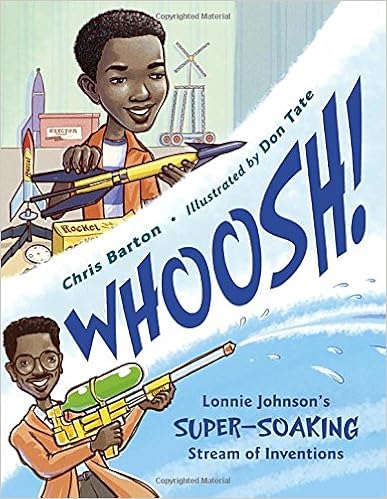
Whoosh: Lonnie Johnson's Super Soaking Stream of Inventions was a fun story about the man who invented the Super Soaker water gun. I chose this one because my son loves water guns and Nerf guns, and I thought he would like to learn more about the process of inventing these toys. Lonnie Johnson started inventing at a young age; he loved building rockets, which served him well in his job at NASA's Jet Propulsion Lab, where he helped missions for like the Galileo orbiter. In his spare time, Lonnie, who was always building and experimenting, stumbled upon a pump action water gun that would later become the Super Soaker. The story emphasizes the importance of both serendipity and hard work in the engineering process.

Papa's Mechanical Fish is loosely based on the story of Lodner Phillips, who created one of the first modern submarines. The book includes beautiful illustrations to help tell the story of an eccentric father as he tinkers in his backyard workshop to build something new and wonderful. This book highlights the need for problem solving and the process of iterative re-design. Of course, the reaction that people have to Papa's inventions also reminds us that inventors and engineers are often so ahead of their time that they are perceived as a bit mad.


The Glorious Flight Across the Channel with Louis Bleriot: This Caldecott award winner includes lovely paintings that evoke the turn of the 20th century in France. The story follows Louis Bleriot as he builds, tests, and re-builds a variety of airplanes, which he names successively (e.g., Bleiot I, Bleiot II). In 1909, the Bleriot XI flies across the English Channel. Like Papa's Mechanical Fish, this book shows how the engineering process really works, namely how there are more failures than successes.


Electrical Wizard: How Nikola Tesla Lit up the World tells the story of Serbian-born Nikola Tesla, whose curious mind and interest in electricity led him to discover and design systems to use alternating current electricity. However, Thomas Edison's direct current was the dominant system at the time. This led to a feud between the two inventors and the War of Currents, which culminated in Tesla's lighting up the World's Fair in 1893. Like most of the internet, I side with Tesla in this feud, viewing Tesla as the generous, unsung hero and Edison as the monopolist inventor. In the interest of fairness, I also read Young Thomas Edison with my son. The book details Edison's hard work and cleverness, not really getting into the ugly business with Tesla at all. As a pair, these books underscore the importance of curiosity and perseverance in the process of inventing. 

Wednesday, October 12, 2016

Share your love of science with these children's books about science and the scientific process

I missed many, many great children's books about science in my previous post, so I decided to re-visit the topic with my son. Here, I have chosen books that highlight the most important traits to nourish in budding scientists: asking questions, making observations, forming hypotheses, and remaining persistent.

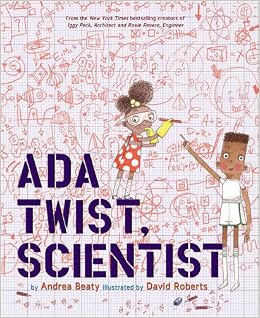
Ada Twist, Scientist: I had enjoyed Andrea Beatty's previous books so much that I decided to treat myself to this book (usually I borrow children's books from the Boston Public Library to save money and shelf space). We both found this book worth the purchase. The main character, Ada Marie Twist (named after Ada Lovelace and Marie Curie) is a young girl with an insatiable curiosity. Like her predecessor, Rosie Revere Engineer, who taught kids about the importance of persistence and troubleshooting in engineering, Ada teaches kids about the value of asking questions. I love that Ada's parents are totally game for her questioning and give her space to explore- definitely a vital trait for good science parents.


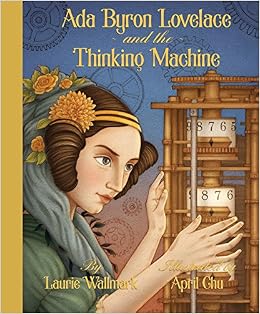
Ada Byron Lovelace and the Thinking Machine: Another great find! This book details the life and work of Ada Byron Lovelace. Abandoned by her father, the poet Lord Byron, Ada was lucky to have a mother with the financial means to encourage her interest in math. An early bout with measles left Ada paralyzed for some time (confusingly, the book never clarifies what happened here and left me with the impression that Ada was paralyzed for life). Ada's tutors opened her to a world inaccessible to most young women of her time. In her early twenties, her tutor Mary Somerville introduced Ada to Charles Babbage. Ada collaborated with Babbage on several projects, eventually putting together notes that outlined the first computer and computer program. I admit that I have not read that much about Ada Lovelace, so this book was a revelation for me. For me, Ada was uniquely positioned to enter the realm of science and math because her family had the means to encourage her interests. Surprisingly, the income barrier in science persists, even while other fields have become more accessible.

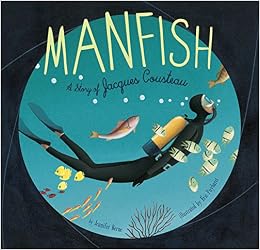
Manfish: A Story of Jacques CousteauMy introduction to science as a child relied on a healthy dose of Jacques Cousteau (as well as Carl Sagan and Mr. Wizard, of course). I loved how this book captured the magic of the world of the ocean as seen through the eyes of Cousteau. Manfish focuses on the need for asking questions and the importance of imagination and hard work. In particular, we learn how Cousteau and his partner Emilie Gagnan invented scuba tanks and gear to enable Cousteau to explore the ocean as never before. Cousteau also loved filmmaking from an early age, which proved critical for his success as a science educator and conservation activist.

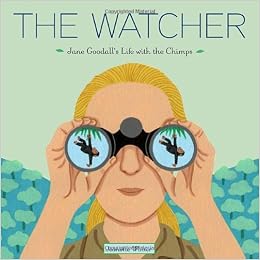
The Watcher: Jane Goodall: As a child, Jane Goodall loved to watch animals, she dreamed that she could talk to animals like Dr. Doolittle. After graduation, Jane saved up her money to travel to Kenya, where she wanted to work with animals. She was lucky enough to meet Louis Leakey, who gave her a job watching and studying chimps. Despite her lack of scientific training, Goodall revolutionized how ecologist studied their subjects, using an approach that involved long and careful watching and note taking without disturbing the subjects. The book highlights the importance of observation and patience for a scientist.


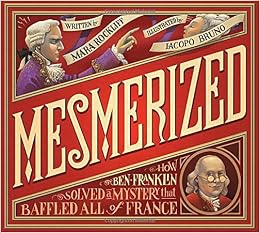
Mesmerized: How Ben Franklin Solved the Mystery that Baffled all of France was a book that we both enjoyed more than expected! The book details how Ben Franklin, while in France negotiating with Louis XVI for support of the American Revolution, did some scientific investigation of the Mesmer phenomenon. Because our son is presently obsessed with Hamilton, he was excited for some additional details about Lafayette and the French support of the Revolution. We both enjoyed getting some new information about Ben Franklin's fascinating life (he wore a fur hat to cover his bald spot and was a minor celebrity due to his kite experiment). Mesmer had most of France under his spell, until Ben Franklin used the scientific method to investigate. (Critique for the author: the final step in the scientific method should be "make conclusions" not "support your hypothesis"; we need to ensure that future scientists are not cherry pickers that are only interested in positive results!) Interestingly, the Mesmer phenomenon revealed the placebo effect and Franklin's approach to the problem formed the basis for later drug trial designs.


The Elements:A Visual Exploration of Every Known Atom in the Universe was recommended in a post about great science books for kids. It is a great reference book for a wide range of ages; whether your kids are just learning about the periodic table or if they want to learn more. This picture book includes a variety of photos associated with each elements as well as fun and interesting trivia. The author, who is an element collector, shares his love of the elements in a novel way. This one is also available as an iPad app, which is on my list to check out.


Wednesday, August 17, 2016

Share your love of science with these six children's books about scientists

At the library one day, I stumbled upon a children's book about Gregor Mendel. This gave me the idea to read a collection of books about scientists with my seven-year-old boy. The books highlight the importance of curiosity, perseverance, and troubleshooting in the scientific process.

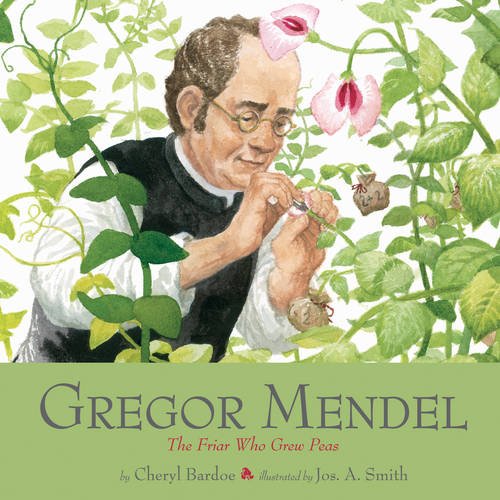
Gregor Mendel - The Friar Who Grew PeasLike many on this list, the book begins with Mendel's youth, with a focus on his curiosity and his thirst for knowledge. His parents could not afford secondary school for Mendel, so he payed his own way by tutoring other students. He joined a monastery so he could focus on learning and not worry about making a living. While there, he began his famous experiments with pea plants; over the course of eight years, he grew close to 28,000 pea plants. This book was a great stimulus for conversations about genetic, which followed on our discussion from the cilantro experiment. I even learned something about the specifics of his experimental methods and the novelty of his approach of using mathematics to explain his results.


Rosie Revere, Engineer: This was definitely my favorite of the science books we read. Rosie Revere is a second grader who loves tinkering and building inventions. She aims to be an engineer, but is frustrated by the failures of her creations. Luckily, her great Aunt and namesake Rose (formerly known as Rosie the Riveter) helps young Rosie learn that the most important part of engineering is trouble shooting the problems that arise when you build, an important lesson for budding scientists and engineers. I am really looking forward to the author's next book, Ada Twist, Scientist, due out in September 2016.

Snowflake Bentley: This Caldecott Award winner is a beautiful picture book with woodcuts reminiscent of scenes by Currier and Ives. The style is appropriate for the story of Vermonter Wilson Bentley (b. 1865) whose fascination with snow led him to become an early DIY scientist, setting up a microscope and camera in his parents' barn. I first heard about Bentley on an episode of Radiolab about snowflakes and subsequently found this book during a particularly long visit to the public library during Boston's winter from hell. Like others on this list, the book highlights the importance for scientists to think differently and pursue questions tenaciously.

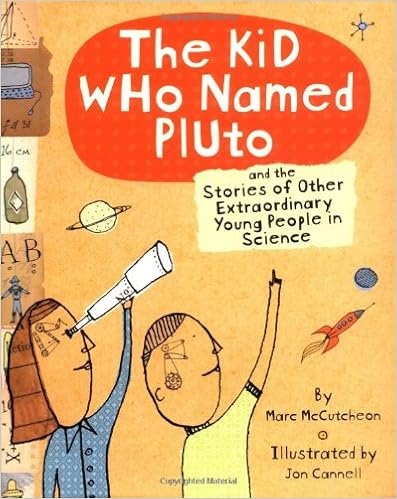
The Kid Who Named Pluto: This collection of stories about kids contributing to science was a mixed bag. While most stories fit the bill, some were tenuous in their connection to the theme. The highlights for us were the story of 11-year-old Venetia Burney, who suggested the name Pluto for our dwarf planet, and the story of Mary Anning, who supported her family by hunting and selling fossils near her home in Lyme Regis, England. Anning had many great finds in her lifetime, including several ichthyosaurs and a pterodactyl. (Shortly after reading this story, I came across this fascinating post about how Mary Anning may be the basis for the She sells seashells tongue twister; always great to see the Baader-Meinhof Phenomenon in action.) I think we will have to find some books that focus on Mary Anning for our next project!

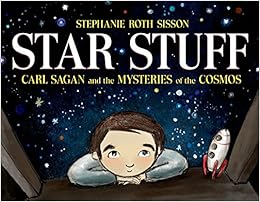
Star Stuff: Carl Sagan and the Mysteries of the Cosmos: Like most Gen X science types, I loved the first Cosmos series as a kid. I later re-discovered Carl Sagan in my early forays into science writing (his book The Shadows of Forgotten Ancestors is on my great science reads list); he made me want to be a science writer myself. Star Stuff book begins with Sagan in elementary school, where his interest in space was spurred in part by science fiction novels. It then details how Sagan started the Cosmos series to share his excitement about learning about the universe. Finally, his role in the U.S. space program, in particular his contribution to the Golden Record on the Voyager spaceships, is described. While we enjoyed this book, I felt it didn't capture the beauty and poetry of Sagan's language.

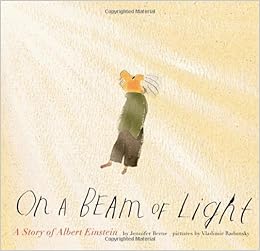
On a Beam of Light - A Story of Albert Einstein: For reasons unclear to me, my son is obsessed with Albert Einstein; I think it might be their mutual love of science and math and a dislike of hair brushes and socks. As most children's books about Einstein, On a Beam of Light begins with his parents worrying about his lack of speech, even at three years of age. When he finally does start talking, he is full of questions, much to the chagrin of his school teachers. The book highlights the importance of curiosity and how asking simple questions can lead to truly profound results.This was a favorite for both of us; I thought it captured the eccentricity of Einstein as well as the practical elements of his personality that made him successful (hardworking and thoughtful).

------------------------------------------------------------------------------

** For more recommendations on books to spark your child's interest in science, check out this post from the CrossTalk blog.


Sunday, May 22, 2016

Using cilantro's foul flavor to teach my son about human genetics

We are struggling to incorporate variety into the diet of our seven year old, who is not interested in having anything green on his plate. My husband, the cook of the house, has found some ingenious ways to sneak extra veg into dishes (e.g., finely chopped cauliflower disguises itself as meat in chili con carne). My contribution to this effort has been to tackle the problem with a little home-based scientific investigation. (I guess my scientific training is helping my parenting skills as well as my baking skills.) How random genetic variations can affect taste perception was one of the many interesting topics in both Sharon Moalem's Inheritance and Sam Kean's The Violinist's Thumb. Like most couples, my husband and I have some major differences in how some foods taste. This gave me the idea of using these genetic variations to our advantage to talk to our son about human genetics and genetic diversity.

Thamizhpparithi Maari (CC-BY-SA) Wikimedia Commons
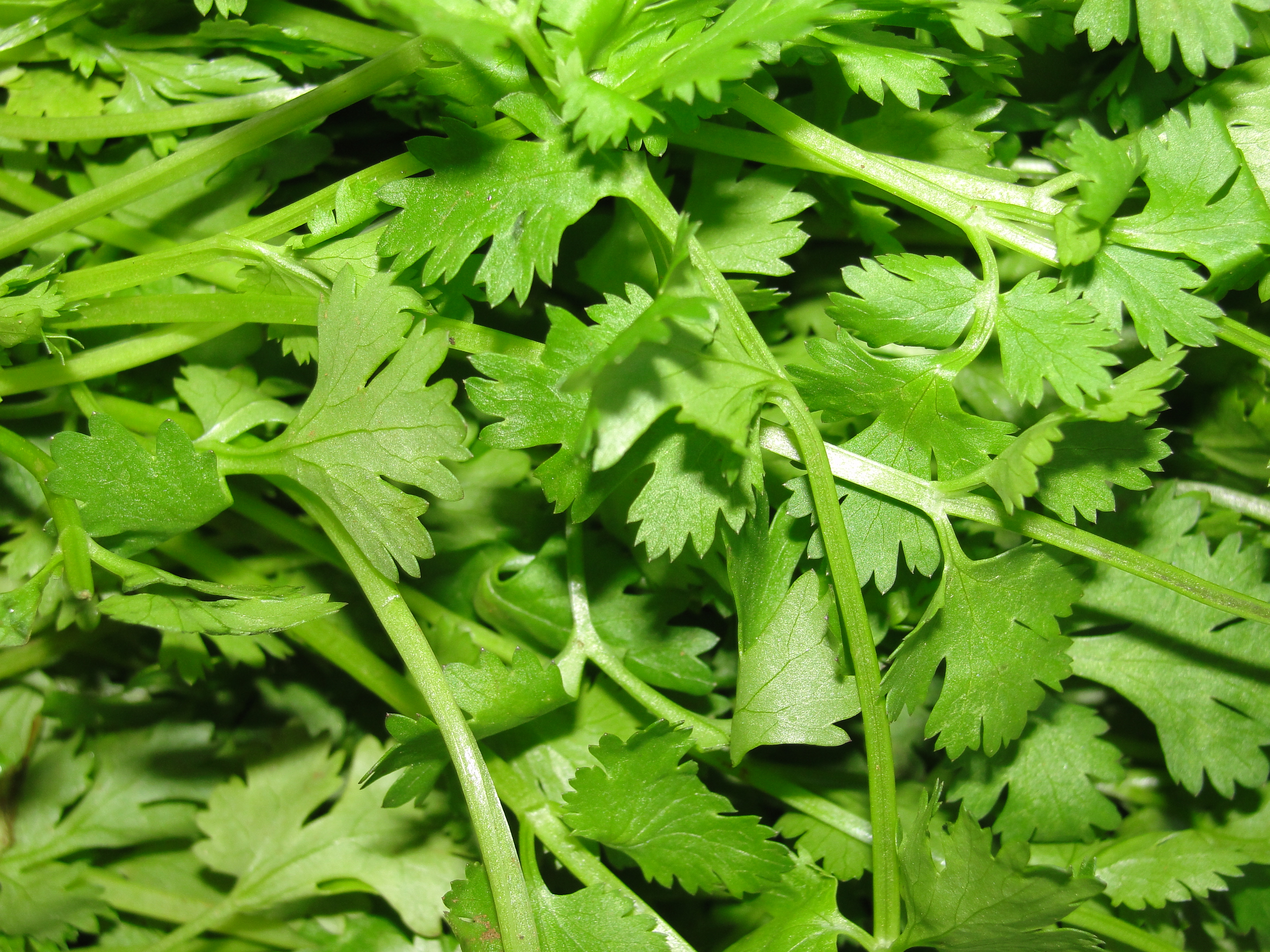
I had previously introduced my son to the concept of DNA with Have a Nice DNA, a fun book from Cold Spring Harbor Laboratory Press suitable for elementary-aged children. This set the table for the first experiment: cilantro (or coriander). I find that cilantro tastes a bit soapy, but my husband thinks it tastes great. Before our dinner of black beans and rice with raw cilantro sprinkled on top, I told our son about the differences in how his father and I perceive the taste of this herb. I told him that he would be part of an important experiment to determine whose genes he had inherited. In the spirit of the good nerd we are raising, he was fascinated and curious. The experiment revealed that our son had not inherited my taste perceptions of cilantro. In fact, it made him laugh to hear that I thought it tasted like soap (kids love to see their parents suffer), especially since it was so different from what he thought it tasted like.

Once we learned the outcome, I wanted to teach him more about the genetic basis of this difference. Lucky for me, cilantro is a hot topic on the internet. The prevalence of dislike ranges from 3-21% depending on the ethnic group (21% of east Asians, 17% of Caucasians, 4% Hispanics, and 3% Middle Easterners). While in the minority, the group is quite vociferous in their hatred of the herb. The consumer genetics company 23andme looked at DNA sequence data for ~30,000 users who were asked about their preference for cilantro. Variations in a gene called OR6A2 were linked to differences in cilantro preference. This gene encodes an olfactory receptor that recognizes certain aldehydes, which happen to be the molecular basis of cilantro's smell. Aldehydes are also present in soap. Thus, people with the genetic variant are more likely to sense cilantro's soap-like aldehydes; the sense of smell is a major player in how we perceive flavor. Two other studies found two different explanations for the soapy phenotype (one showed a connection to a different olfactory receptor and the other to a bitter taste receptor); these differences in results could be due to the large variation in the phenotype. My literature searches did not find any more recent stuies in the genetics of cilantro taste perception, suggesting that the work is difficult to fund.

I think my favorite find in my exploration of cilantro was the Gastropodcast, which examined the science behind these differences. Another interesting piece was from New York Times food science writer Harold McGee, who explored the evolutionary basis for taste perceptions. He also discussed how changing the preparation of cilantro can change its flavor; one study showed that crushing cilantro speeds the rate at which plant enzymes break down aldehydes. As a result, fine chopping of cilantro or cooking it a bit can get rid of the soapy flavor for some (this definitely works for me). Based on the success of the cilantro experiment, we will definitely be searching for future food science to explore during family dinners.