Showing posts with label microbiome. Show all posts

Sunday, September 24, 2017

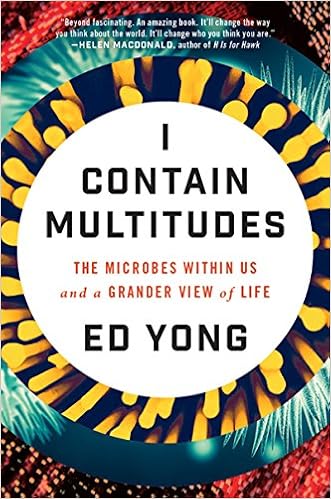
I Contain Multitudes: Ed Yong walks us through the wonders of the microbial world

Science stories about the microbiome seem to be as ubiquitous as microbes themselves. There's good reason: it is fascinating to consider that we are home to a completely invisible zoo of microbes, some of which help us to digest our dinner and some of which change our behavior. This intense curiosity has caused some over-hyping of the power that the microbiome can have and the effects that we can exert upon it.

In his first book, I Contain Multitudes, Ed Yong navigates the complexity of the microbiome with his characteristic writing, which deftly combines the nuts and bolts of the science with the wow and wonder at the diversity of the natural world. He discusses some of the amazingly weird microbial relationships that occur in nature as well as those that happen on and in the human body. He seems to hit all the high points of the microbial world, including the ubiquitous symbiont Wolbachia, which scientists are just starting to exploit in insect populations to fight Dengue and Zika, and the amazing research into the human microbiome, which included the awesome roller derby study.

A major theme of the book is the evolving view of our relationship with microbes. The publication of the first microscopic images of microbes by Antonie van Leeuwenhoek (1673) led to an appreciation that there was more to life than what meets the naked eye. Once germ theory started to take hold in the time of Pasteur (ca. 1850), we started thinking that the microbial world was all bad and needed to be eradicated. As the theory of symbiogenesis started to come into favor, our thinking about microbes changed again, leading us to see that there could be "good" and "bad" microbial interactions. As I discussed in my recent post on symbiotic theory, many scientists placed symbiosis/cooperation in opposition to Darwinism. However, as scientists explore these relationships more deeply, it becomes clear that these relationships are much more complex. Yong writes that symbiosis is conflict; conflict that can never be totally resolved. Thus, it may be time to re-evaluate the language we use to describe these relationships and consider adding new terms to capture the complexity of these interactions.


Ed Yong has a knack for finding unusual stories, thus there is no shortage of fascinating tidbits here
all clearly explained and well researched. Two in particular captured my imagination: Sodalis and the mealybug; both of these were adapted for his column in The Atlantic, so you can read these to get a sense of the style of the book. Sodalis is a microbe that has been found as both a free living and a symbiotic organism, so it appears to capture the beginnings of a symbiotic relationship! Mealybugs are insects that form a sort of Russian nesting doll of symbiotic interactions (it's bacteria all the way down!). The mealybug has acquired multiple microbes to solve different metabolic problems. In evolutionary terms, Yong reminds us, this is a smart move. Bacteria are quick to adapt and they are legion, so if you have a problem that needs solving, there are likely microbes that have already found a solution. Biotechnologists and synthetic biologists are just starting to exploit the diversity of microbial functions that have evolved over billions of years of natural selection; they are starting to put existing organisms to work at new tasks, like cleaning up oil spills or radioactive waste, or to design and build completely new organisms to do these things or so many more.

We are really just at the beginning of understanding the microbes around us. Most of the recently published human microbiome studies are little more than inventory lists, with some studies attempting to make correlations for differences in why certain populations are associated with certain microbes sometimes with conflicting conclusions. Yong explains that we simply do not have large enough samples yet to trust the conclusions; for example, if you sampled ten people off the street where 5 were wearing blue and 5 were wearing green, you could find a few striking differences if you ask them enough questions. This means we need to be careful with the conclusions from microbiome studies until we have more data!
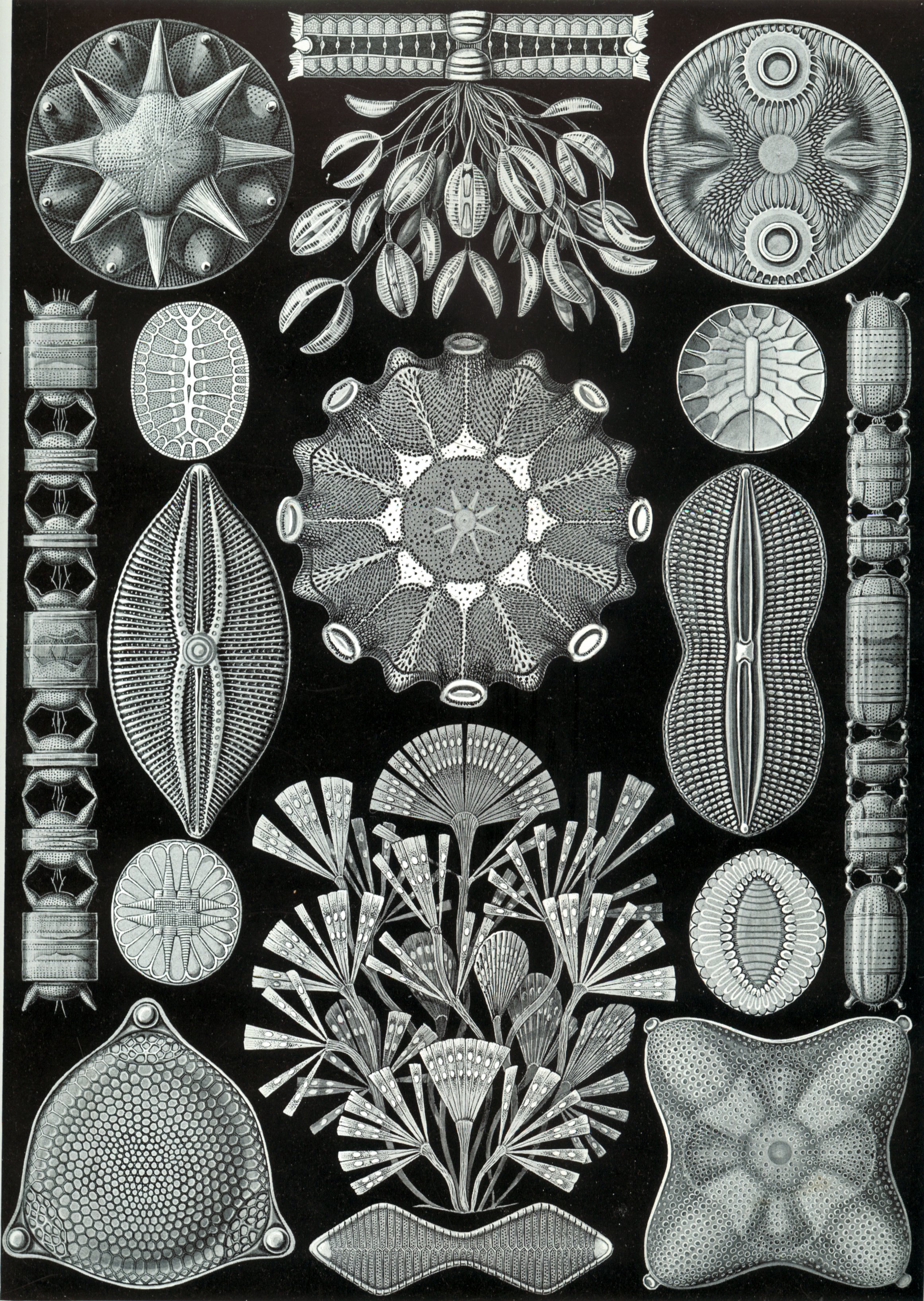
Ernst Haeckel's diatoms
I hope you will forgive me, but I need to take a moment to talk about poop. (According to Yong, anyone who studies the microbiome should prepare themselves to have blenders of animal droppings on their lab bench.) The first time I heard about the microbiome, it was in the context of fecal transplants. Here, Ed Yong describes the history of the FMT (fecal matter transplant) and its success in treating antibiotic- resistant C. diff infections. At this point, FMT is not an exact science and thus it has had mixed results. The ultimate goal here is a stool substitute, a "sham-poo" if you will. In this way, each patient can be treated precisely according to their needs and can be treated with the microbe(s) that can help address each problem. This is a long way off, but it is amazing to consider.

Frankly, I enjoyed reading this book immensely. Yong is an incredibly talented writer and reading his work in long form reminded me how far I still have to go as a writer. I remind myself that he has honed his craft for many years and try to use that as an incentive to keep writing!

Sunday, July 31, 2016

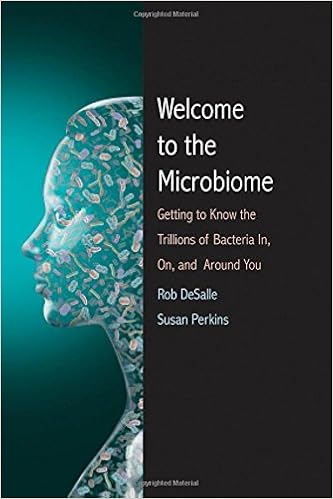
Welcome to the Microbiome: the fascinating hidden world of microbes in, on, and around us

In case you haven't heard, you are hosting a very large and diverse population of microbes   from the top of your head to the soles of your feet and everything in between. The term used for these collections of microbes is microbiome or microbiota. This is a very hot topic of scientific research aiming to understand how the microbes around us and within us may be affecting our physiology.

We recently visited the American Museum of Natural History. I was disappointed that we forgot to purchase tickets for The Secret World Inside You exhibit. Luckily, I came across a review on CrossTalk for the new book by Susan Perkins (the curator of the exhibit) and Rob DeSalle. Welcome to the Microbiome: Getting to Know the Trillions of Bacteria and Other Microbes In, On, and Around You turned out to be a good substitute.

The book is very well written and easy to read. It is an excellent introduction to the microbiome for even the non-science type. The book covers the major topics
starting with the basics of defining life and classifying bacteria as well as the concept of the microbiome. The book describes some of the latest research that investigates the microbes that live around us and inside us and how these collections of organisms are linked with human health and disease. Finally, they discuss what a healthy microbiome is and whether or not this is even a meaningful idea.

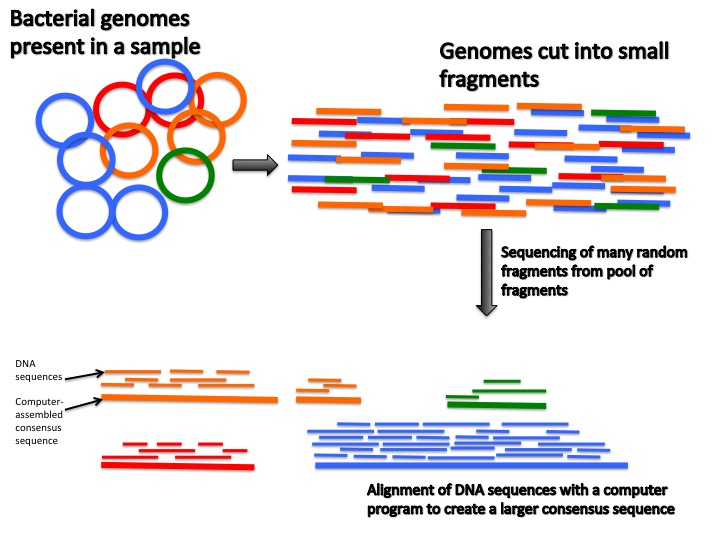
Description of metagenomic sequencing from Teach the Microbiome
The microbiome research that makes headlines typically focuses on the microbiomes of everyday places and things (e.g., subways, bathrooms, kitchens) or the human microbiome and how these microbes can be linked to disease. One critical point the authors highlight is how the revolution in genome sequencing and the advent of next-generation sequencing techniques has made these types of studies possible. The scale of microbiome studies can be astounding. Researchers collect hundreds of samples and these samples can contain hundreds of different species of microbes. Using advance genome sequencing techniques, researchers can sequence and analyze these complex samples and detect even small differences in populations between the samples.

I wanted to discuss a few of the studies that the authors highlighted in their section on the microbes on and around us. My favorite was published in 2013 by Meadow et al. (coverage in outlets like Wired and The New Yorker), where the researchers examined the skin microbiomes of the players involved in a roller derby tournament. By comparing the skin microbes present on  players before and after two games of this high-contact sport, they learned that the different teams started with distinct microbe populations with some variety based on the geography of the team (i.e., the team from Boston had similar microbes to the team from New York, but not San Francisco). After a jam, the teams had swapped skin microbes. The lead author on the study was a former derby skater, who thought that the sport offered a unique chance to study how microbes spread through human contact. 

Another fascinating and ambitious research endeavor is the PathoMap project , which aims to categorize the microbiome in a variety of human-made environments in New York City. They started in the subway system, where they took samples from all 468 stations in NYC. They sampled ticket kiosks, turnstiles, benches, trashcans, and at places within the train itself. The first results from this study were published in Cell Systems. The results revealed an abundance of human skin bacteria as well as a rather disturbing (but frankly not surprising) number of fecal bacteria. A more recently published study examined the microbiome of the Boston subway system (original research and coverage), which showed little variation in the different subway lines even though they serve different populations. In addition, most of the microbes found were exactly what you would expect
the bugs that typically inhabit our skin, gut, and mouths; occasionally samples from seats contained microbes usually found in the human vagina. The researchers plan to expand their study to investigate the microbial changes during cold and flu season. In addition to helping us to understand how microbes spread, these types of studies can have important implications for designing human environments to help prevent the spread of disease.
Descriptions of sampling methods in Hsu et al., 2016 (


The study of microbiota is still in its infancy, so it is an exciting time to follow the research here. If you want to learn more about the microbiome, the AMNH exhibit is probably a great place to start, but if you can't get to NYC, Welcome to the Microbiome is a great alternative.