Showing posts with label scientific publishing. Show all posts

Saturday, May 6, 2017

Expanding our consciousness: Illuminating how the brain responds to hallucinogens like LSD

via Wikipedia commons
Bicycle day occurs every April 19. It commemorates the first time a person purposefully took LSD. That person was Albert Hoffman, a Swiss chemist working for a pharmaceutical company that eventually became Novartis (also of Toms River fame). Hoffman was part of a lab that was isolating the active ingredients from a variety of medicinal plants and fungi. One of those was the ergot fungus, which can infect various grains. Historically, ergot extracts had been used by midwives to prevent bleeding death in childbirth (Chemistry World). Notably, this is the same fungus that scientists speculated led to the Salem Witch Trials, however, subsequent research has called this idea into question.

When he started working with the ergot alkaloids and their active ingredient, lysergic acid, he wanted to develop a new stimulant of the circulatory system. He based his design of LSD-25 on the successful drug Coramine (nicotinic acid diethylamide). Hoffman's first synthesis of lysergic acid diethylamide (LSD)-25 in 1938 yielded nothing of interest in his pharmacological assessment. His curiosity about the chemical structure of the drug led him to make the product again one day in 1943, when he accidentally dosed himself with the synthesized product. Curious to learn more about the "not unpleasant" experience, he repeated the dosing on April 19, 1943 and road his bike home from the lab. Here is a shortened version of his now famous description of his experience:
"The faces of those present appeared like grotesque coloured masks;...a feeling of suffocation; confusion alternating with a clear appreciation of the situation. I lost all control of time: space and time became more and more disorganised and I was overcome with fears that I was going crazy....Occasionally I felt as being outside my body. I thought I had died. My ’ego’ was suspended somewhere in space and I saw my body lying dead on the sofa. I observed and registered clearly that my ’alter ego’ was moving around the room, moaning."
Dragnet's LSD story
In 1947, Hoffman patented the drug under the name Delysid. The timing of Hoffman's discovery coincided with the discovery of serotonin and the birth of neuroscience and the eventual rise of psychopharmacology,leading to a surge in usage of LSD in both psychiatric practice and scientific research in the 1950s and 60s. The rise of hippie culture  and concerns about the corruption of youth led to LSD being made illegal in 1967 (the same year as Dragnet's famous Blue Boy episode) and listed as a schedule 1 drug in 1970. As argued here and here, these restrictions have made it difficult for researchers to get the approval to do human studies on LSD and other psychoactive drugs. Thus, they have relied on studies in animals, which have limitations for several reasons, namely that we can't really ask them about their acid trip. 

There are several unanswered questions about the neurochemistry of LSD: why are its effects so potent and long lasting?; why does LSD induce hallucinations while other serotonin receptor agonists (activators) don't?  To answer this question, researchers solved the structure of LSD bound to its serotonin receptor (5-HT) and measured the rates at which LSD binds and dissociates from the receptor. The results, published in Cell and covered here and here, show that the LSD molecule binds to a pocket in the receptor (5-HT2B), after which the "lid" of the pocket closes itself, which makes it difficult for LSD to disengage. The conclusions from the structure are consistent with their kinetic measurements, which showed very low off rates for LSD from serotonin receptors. When they generated a 5-HT mutant that increased the mobility of the "lid", they found that LSD could bind and dissociate much more quickly. These results help to explain the long-lasting effects of LSD, which can last up to 20 hours even at moderate doses. They also investigated the effects of the binding of LSD on the downstream signaling protein arrestin. They found that when LSD is bound to 5-HT receptors, arrestin can bind more tightly than when LSD is not bound. This is not true for other 5-HT receptor agonists, which may explain the unique effects of LSD.
Despite the roadblocks and difficulties in getting approval for research with restricted drugs, there are a few labs looking at the effects of psychedelics on humans. Three papers from the Nutt lab have looked at the effects of LSD on the brain using state-of-the-art neuroimaging techniques. In a study published in PNAS, the researchers used three complementary approaches to compare the effects of LSD and placebo in 20 healthy volunteers using a within subjects design, in which they would perform imaging in each patient with one treatment (placebo or LSD) and then repeat the experiment a few weeks later with the other treatment. This allowed them to create difference maps to see what parts of the brain were active after taking LSD in each patient. When combined with answers from their "altered consciousness questionnaire (ACQ)", they were able to characterize the neurological attributes of the LSD state. They observed an increased activity in the visual cortex, which correlated with increased hallucinations. They also found a set of characteristic changes observed in subjects that reported "ego dissolution" or "altered meaning".

Two subsequent papers from the Nutt lab explored the brain regions that are involved in these two specific responses to LSD. To understand the basis of LSD-induced ego dissolution, which is defined as the "a compromised sense of possessing an integrated and distinct personality or identity" (exactly what Hoffman described on his bike trip). Their paper, published in Current Biology, used fMRI imaging to look at the connections in the brain in people experiencing this effect. Consistent with the known neuropharmacology of LSD, the images revealed increases in connectivity in areas of the brain high in serotonin receptors. The observed increases in connectivity of the brain correlated with reports of ego dissolution. Interestingly, they also found that LSD increased the connections between sensory systems, creating unusual links between visual cortex, auditory cortex, and senso-motor cortex. These results could explain the occurrence of hallucinations and general feelings of increased senses as well as well as synesthesia (think that sound seems orange or that tastes blue).
Neuroimaging of the same brain on placebo vs. LSD shows increased connections.
Another paper, published in Current Biology (covered here), was entitled "The Fabric of Meaning and Subjective Effects of LSD-Induced States." This idea of "meaningfulness" feels a bit unscientific, but it is part of everyday life for most people and we don't understand how the brain makes the connections that denote something as meaningful or meaningless. Because LSD changes the perception of meaning for the brain, it can be used to figure out what parts of the brain are involved in this response. To that end, they used neuro-imaging in combination with the ACQ to compare brain maps in different LSD states in subjects that were given LSD with a placebo or LSD with a serotonin antagonist (ketanserin) that blocks the effects of LSD. To test the development of personal relevance, they used musical stimuli that the subjects had previously judged as either meaningful, neutral, or non-meaningful. They performed imaging of the brain while the subjects listened to music in these three categories. When they compared the brains of people listening to meaningful music, they observed an increase in signal in the frontal brain region, which was not observed when subjects listened to meaningless music. Strikingly, LSD increased the meaningfulness of all music and these effects were abolished with ketanserin, suggesting an important role for serotonin receptors in the attribution of meaningfulness.

While interesting in their own rights, these papers can also have implications for understanding the function of the brain in both healthy and pathological states. For example, several psychiatric disorders increase the attribution of personal relevance (e.g., paranoia). Knowing that increased serotonin receptor activity is associated with misattribution of meaning can help doctors determine the right pathways to target for psycho-pharmacological treatment.

Hoffman originally intended LSD for a very different purpose and when he tried the drug, he knew its potential for psychiatry and neuroscience. Today, the clinical possibilities of LSD and other hallucinogens remain under explored. A recent retrospective study re-examined work from the 50s and 60s that treated alcoholics with LSD. Using current statistical meta-analyses, they found that alcohol misuse was less frequent after the dose of LSD (59% reported less misuse vs. 38% in placebo-treated controls). One clinical trial showed that psilocybin "magic mushrooms" could help control anxiety; MDMA is currently in clinical trials to help people conquer fear induced by PTSD.

One of my early post on this blog reviewed the book Elephants on Acid and Other Bizarre Experiments. The book includes the titular experiment combining pachyderms and hallucinogens as well as other experiments on LSD. The reason I liked that book was that it highlights how unusual science, which frankly can seem frivolous, can have unexpected applications.

Sunday, December 4, 2016

These children's books on engineering and inventing can help kids learn about the engineering process

In my previous posts about science books for kids, I focused on some of the books about science and scientists that I have read with my son. Along the way, I also found several books that have strong themes for teaching engineering. I read these with my eight-year-old son, but the books are generally appropriate for elementary age children. 

The Boy Who Harnessed The Wind tells the story of a young boy from Malawi named William Kamkwamba, who grew up during a severe drought and famine. These conditions, in combination with his interest in understanding the workings of car engines, led the fourteen-year-old William to design and build a windmill for his village. People were amazed when the young boy was able to power a light bulb with wind power. Now, William is a student at Dartmouth College, where he is studying to be an engineer. The book highlights how solving problems is central to the process of engineering.


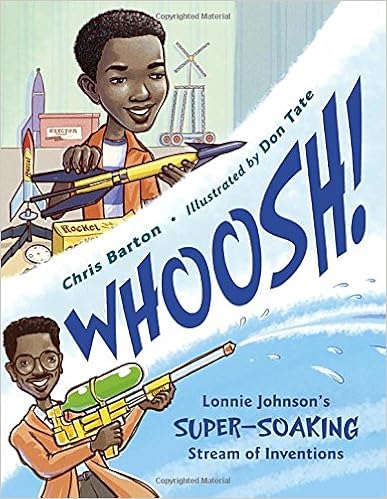
Whoosh: Lonnie Johnson's Super Soaking Stream of Inventions was a fun story about the man who invented the Super Soaker water gun. I chose this one because my son loves water guns and Nerf guns, and I thought he would like to learn more about the process of inventing these toys. Lonnie Johnson started inventing at a young age; he loved building rockets, which served him well in his job at NASA's Jet Propulsion Lab, where he helped missions for like the Galileo orbiter. In his spare time, Lonnie, who was always building and experimenting, stumbled upon a pump action water gun that would later become the Super Soaker. The story emphasizes the importance of both serendipity and hard work in the engineering process.

Papa's Mechanical Fish is loosely based on the story of Lodner Phillips, who created one of the first modern submarines. The book includes beautiful illustrations to help tell the story of an eccentric father as he tinkers in his backyard workshop to build something new and wonderful. This book highlights the need for problem solving and the process of iterative re-design. Of course, the reaction that people have to Papa's inventions also reminds us that inventors and engineers are often so ahead of their time that they are perceived as a bit mad.


The Glorious Flight Across the Channel with Louis Bleriot: This Caldecott award winner includes lovely paintings that evoke the turn of the 20th century in France. The story follows Louis Bleriot as he builds, tests, and re-builds a variety of airplanes, which he names successively (e.g., Bleiot I, Bleiot II). In 1909, the Bleriot XI flies across the English Channel. Like Papa's Mechanical Fish, this book shows how the engineering process really works, namely how there are more failures than successes.


Electrical Wizard: How Nikola Tesla Lit up the World tells the story of Serbian-born Nikola Tesla, whose curious mind and interest in electricity led him to discover and design systems to use alternating current electricity. However, Thomas Edison's direct current was the dominant system at the time. This led to a feud between the two inventors and the War of Currents, which culminated in Tesla's lighting up the World's Fair in 1893. Like most of the internet, I side with Tesla in this feud, viewing Tesla as the generous, unsung hero and Edison as the monopolist inventor. In the interest of fairness, I also read Young Thomas Edison with my son. The book details Edison's hard work and cleverness, not really getting into the ugly business with Tesla at all. As a pair, these books underscore the importance of curiosity and perseverance in the process of inventing. 

Wednesday, October 12, 2016

Share your love of science with these children's books about science and the scientific process

I missed many, many great children's books about science in my previous post, so I decided to re-visit the topic with my son. Here, I have chosen books that highlight the most important traits to nourish in budding scientists: asking questions, making observations, forming hypotheses, and remaining persistent.

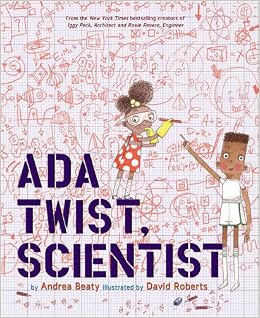
Ada Twist, Scientist: I had enjoyed Andrea Beatty's previous books so much that I decided to treat myself to this book (usually I borrow children's books from the Boston Public Library to save money and shelf space). We both found this book worth the purchase. The main character, Ada Marie Twist (named after Ada Lovelace and Marie Curie) is a young girl with an insatiable curiosity. Like her predecessor, Rosie Revere Engineer, who taught kids about the importance of persistence and troubleshooting in engineering, Ada teaches kids about the value of asking questions. I love that Ada's parents are totally game for her questioning and give her space to explore- definitely a vital trait for good science parents.


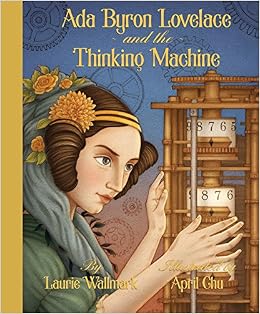
Ada Byron Lovelace and the Thinking Machine: Another great find! This book details the life and work of Ada Byron Lovelace. Abandoned by her father, the poet Lord Byron, Ada was lucky to have a mother with the financial means to encourage her interest in math. An early bout with measles left Ada paralyzed for some time (confusingly, the book never clarifies what happened here and left me with the impression that Ada was paralyzed for life). Ada's tutors opened her to a world inaccessible to most young women of her time. In her early twenties, her tutor Mary Somerville introduced Ada to Charles Babbage. Ada collaborated with Babbage on several projects, eventually putting together notes that outlined the first computer and computer program. I admit that I have not read that much about Ada Lovelace, so this book was a revelation for me. For me, Ada was uniquely positioned to enter the realm of science and math because her family had the means to encourage her interests. Surprisingly, the income barrier in science persists, even while other fields have become more accessible.

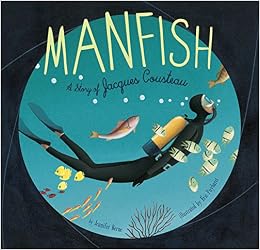
Manfish: A Story of Jacques CousteauMy introduction to science as a child relied on a healthy dose of Jacques Cousteau (as well as Carl Sagan and Mr. Wizard, of course). I loved how this book captured the magic of the world of the ocean as seen through the eyes of Cousteau. Manfish focuses on the need for asking questions and the importance of imagination and hard work. In particular, we learn how Cousteau and his partner Emilie Gagnan invented scuba tanks and gear to enable Cousteau to explore the ocean as never before. Cousteau also loved filmmaking from an early age, which proved critical for his success as a science educator and conservation activist.

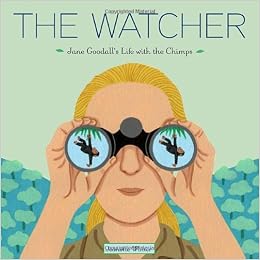
The Watcher: Jane Goodall: As a child, Jane Goodall loved to watch animals, she dreamed that she could talk to animals like Dr. Doolittle. After graduation, Jane saved up her money to travel to Kenya, where she wanted to work with animals. She was lucky enough to meet Louis Leakey, who gave her a job watching and studying chimps. Despite her lack of scientific training, Goodall revolutionized how ecologist studied their subjects, using an approach that involved long and careful watching and note taking without disturbing the subjects. The book highlights the importance of observation and patience for a scientist.


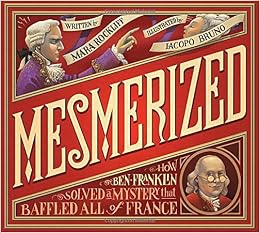
Mesmerized: How Ben Franklin Solved the Mystery that Baffled all of France was a book that we both enjoyed more than expected! The book details how Ben Franklin, while in France negotiating with Louis XVI for support of the American Revolution, did some scientific investigation of the Mesmer phenomenon. Because our son is presently obsessed with Hamilton, he was excited for some additional details about Lafayette and the French support of the Revolution. We both enjoyed getting some new information about Ben Franklin's fascinating life (he wore a fur hat to cover his bald spot and was a minor celebrity due to his kite experiment). Mesmer had most of France under his spell, until Ben Franklin used the scientific method to investigate. (Critique for the author: the final step in the scientific method should be "make conclusions" not "support your hypothesis"; we need to ensure that future scientists are not cherry pickers that are only interested in positive results!) Interestingly, the Mesmer phenomenon revealed the placebo effect and Franklin's approach to the problem formed the basis for later drug trial designs.


The Elements:A Visual Exploration of Every Known Atom in the Universe was recommended in a post about great science books for kids. It is a great reference book for a wide range of ages; whether your kids are just learning about the periodic table or if they want to learn more. This picture book includes a variety of photos associated with each elements as well as fun and interesting trivia. The author, who is an element collector, shares his love of the elements in a novel way. This one is also available as an iPad app, which is on my list to check out.


Wednesday, June 22, 2016

Publishing your scientific paper: tips and tricks from a scientific editor

I have written several posts about my work as a scientific editor, but I haven't talked about performing institutional visits, which I sometimes combine with an author workshop discussing the publication process. At Elsevier, these author workshops are given by many different people across the company and they start with the title "How to Publish in Scholarly Journals". Over time, my talk has evolved to focus on the scientific editor's perspective on the publication process; I try to give the audience my pro-tips for navigating peer review from start to finish. The major theme of my talk is making it easy for people to read and interpret your paper: first, the journal's editors (who you want to send it out for review), then the reviewers (who you want to review it fairly and favorably), and finally the readers (who you want to read the paper so they can cite it). I have given this talk enough times that it is starting to feel like my own. I even have a couple of good zingers, including one about the authors who requested that no one from Japan review their paper (obviously we could not satisfy that exclusion request).*

Every time I give this talk, I refer to several online resources that I have found useful in putting together my slides.** Because my blog audience is much broader than my typical seminar audience, I decided to put together a collection of the best of these resources in combination with some of my own tips. 


General Tips: 
Preparing your Manuscript:
Preparing your Figures/Image Manipulation Policies: 
Revisions and Rejections: 
Getting Your Paper Noticed: 
  • After your paper is published, remember to share your work with others and follow how your paper is doing. 
  • First, you might want to read this post on Scholastica about why this is important.
  • Elsevier's Publishing Campus has additional tips and tricks
  • Altmetric and Mendeley Stats can help you gauge the impact of your article before citations start. 

*********************

* The Tufts Post doc association has a blog post about my visit.

** I recently noticed that I refer frequently to the Cell Press CrossTalk blog in my author talk. While I work for the same company as the Cell Press folks, I do not actually receive any click-through dividends. It just happens to be a great site with many useful posts.

Tuesday, May 5, 2015

Resources for finding a career away from the bench

If you are a graduate student or postdoc in the sciences, you are likely aware of the "PhD problem"*, the academic bottleneck caused by an increasing number of PhDs with a concomitant decrease in the number of tenure track positions. Unfortunately, the statistics suggest that the problem is not likely to get better any time soon. In fact, the issue has gotten so bad that even the mainstream media has picked up the story. The default pathway is no longer PhD to postdoc to tenure track; this great infographic from ASCB  (see below) suggests that the tenure track is the real alternative career. While the statistics may seem grim, I think there is some good news: the academy is starting to wake up to the harsh reality**. In the past, postdocs and grad students complained that PIs were only capable of training them to become a PI. Increasingly, PIs and universities are aware of the prospects for their trainees and they are starting to find ways to help guide them for a number of careers.
ASCB.org infographic

As a Scientific Editor, I often get questions from graduate students, post docs, and PIs about my transition away from the bench. After a recent chat with a grad student at a meeting, I decided it was time to put together a post of useful resources for finding a career away from the bench. Because I am in publishing, my links tend to focus on that path, but all of the websites I list below have articles about other career paths as well. 

The first two places you should be looking for a job in science are Nature Jobs and Science Careers. Both websites have listings for a variety of careers paths as well as an array of great content for helping you navigate your job search. Whether you are just starting to think about your future directions or preparing for an interview and negotiating your salary, there are relevant articles for you.

Nature Jobs has a very well-organized site. I recommend spending some time there to explore their content, especially their blog and their career toolkit. This article from their blog gives a great general overview of the types of jobs available to people with a PhD in the sciences. Be sure to check out The Postdoc Series for articles aimed at post docs at different stages of their careers. Nature Jobs also hosts a career expo, which I have read good things about.

On the Science Careers website, check out the tips and tools and explore the articles in the Career Magazine; they have more than 10 years of content available. By far the most valuable resources I found when I was searching for my current job were this collection of articles about science writing and editing and this 2002 article "Careers in Science Editing". These give a very general idea of what different types of scientific editing jobs entail. This informative article from Cell Press' Debbie Sweet describes the specifics of working for a reviews journal or a primary journal. Once you find something of interest, the related article feature (which seems to be available for newer articles only) will help you find more to read.

Societies relevant to your field will likely also have career resources available. For cell biology, ASCB's Career Development section has a number of articles available. My favorite among these is the Career Publications, which are free to download as PDFs. The ASBMB also has some useful articles, like these Career Case Studies.

The Chronicle of Higher Education is generally best for searching for a faculty job, but they also have some excellent articles on non-academic jobs, such as "The PhD's Guide to a Non-faculty Job Search".

If you are feeling isolated in your decision to leave the bench, you can find some comfort by reading some "quit lit". It seems many scientists find it cathartic to share their story;  indeed, I have written my own quit lit posts on this blog (here and here). Over the years, I have read many posts in this genre; I particularly enjoy finding updates, which tend to have a happier mood than the original post. Eva Amsen's (Outreach Director for Faculty of 1000) "Five Years Later" was very positive and shared some useful links and tips. Likewise, SciCurious (a science writer in neuroscience) tells her story in "The system failed me. It should have failed me sooner." 

To learn more about a career in science writing, read Ed Yong's collection called "On the Origin of Science Writers" where a variety of working science writers share their journey as well as tips on how to make a living writing about science. The National Association of Science Writers also has some great content in their resources section.

In short, these links should give you some ideas of the paths that are available to you. Hopefully you also have some valuable resources at your institution (e.g, postdoc association or a career development office). If you find other useful links, please share them in the comments. 

-------------------------------------------------------------------------------------------------------------------------

* There are numerous suitable links that describe the problem; I have chosen the one that I first discovered. Nature had a 2011 special issue called The Future of the PhD, which included the great story The PhD factory.  

** The Future of Research symposium has been putting together meetings to find solutions to these problems.

Sunday, January 11, 2015

Poisons and venoms - deadly consequences and therapeutic benefits

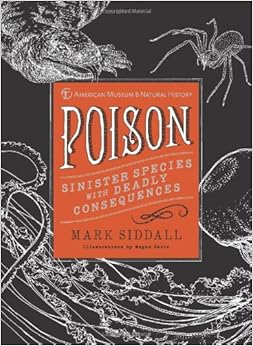
I picked up Poison - Sinister Species with Deadly Consequences by Mark Siddall from the new release shelf at my local branch of the Boston Public Library. It was a whim, but it paid off. Poison has many similarities to Amy Stewart's Wicked Bugs, including the small format and the detailed pen-and-ink scientific illustrations. The subject matter also has a good amount of overlap. Siddall, a curator for the American Natural History Museum, wrote the book in connection with an exhibit by the same name. The book was immensely readable with many fascinating vignettes, which makes me sad that I missed the exhibit (although the ANHM website suggests that it is traveling). If you want to get a sense of the style of the book, check out Siddall's piece in IFLScience.

Siddall explores a few of the many different ways that plants and animals can kill or at least send you writhing in pain. The most surprising fact of the book: platypodes are venomous! The male platypus has spurs on its hind limbs, which can deliver venom. The venom, produced only during mating season as a defense against competing males, is actually strong enough to cause mild paralysis in humans. Another incredible story concerned two vastly different organisms (pitohui birds and phyllobatid frogs) that produce the exact same toxin (batrachotoxin) despite being separated by more than 10,000 miles and millions of years of evolution. It seems that the birds and frogs both eat a particular species of flower beetle that produces this chemically unique toxin. Both species have evolved a tolerance to the poison in the beetle and can use the toxin to protect themselves from predators.

Reading the book reminded me of all the amazing things that scientists are learning about the therapeutic potential of these naturally occurring poisons. As a Scientific Editor, I read papers that examine the components of venoms from a variety of organisms. Venoms have evolved over millions of years, so they are essentially drugs designed by nature; one review article describes them as a "billion-year drug discovery program with unlimited resources" (Vetter et al., 2010). Because venoms come from such diverse species, they provide a large array of chemical and pharmacological novelty. Strikingly, venom toxins from different organisms often target common cellular pathways (e.g., ion channels, cell receptors) and use similar mechanisms to exert their effects.

Sample venomics work flow; Warrell et al., 2013
Venoms are comprised of a complicated mixture of proteins and peptides, thus, venoms can elicit complex physiological responses in the target organism. Generally speaking, venoms are classified as cardiotoxic or neurotoxic, as they can affect the heart or the nervous system, respectively. Toxins that show cardiotoxic properties can prevent blood clotting and lower blood pressure. Neurotoxic venoms show potential as pain relievers and as therapeutics in the treatment of neurological diseases. To identify drug candidates, scientists use venom extracts as a starting place (Harvey and Stöcklin, 2011). High-throughput screening techniques can be used to find venom components with an activity of interest. Then, chemists create synthetic analogues, which can be modified to enhance the pharmacological properties (e.g., binding affinity or specificity) and decrease possible side effects. Recent technological developments have improved the ability to screen and characterize the components of even small quantities of venom; this relatively new field, called venomics, is unlocking the therapeutic potential of venom compounds (Vetter  et al., 2010).

Tubocurarine was the first venom toxin to be used in a clinical setting; in 1942, it was introduced as a muscle relaxant. However, native South Americans were using a crude extract created from the bark of a climbing vine; the resulting curare served as an arrowhead poison for hunting animals. Similarly, the drug Captopril was developed from the active compound from pit viper venom, which was also originally used as an arrowhead poison. Because this compound can lower blood pressure, it is used to treat hypertension and heart failure.

Cone snail uses a harpoon to attack prey (from PBS.org)
Cone snails were once highly sought after for their beautifully patterned shells; the Glory of the Sea variety was worth thousands of dollars due to its rare and unusual shell. Recently, the value of the cone snail is due to its unique pharmacology. This predatory snail uses a harpoon-like appendage to attack its prey and inject a paralyzing neurotoxin. When scientists analyzed the components of cone snail venom, they found several compounds that were useful pain relievers. One of which, ziconotide was approved in 2004 under the trade name Prialt for the treatment of chronic pain. Prialt works by blocking calcium ion channels (membrane proteins that create channels for the selective passage of calcium) that are involved in the transmission of neuronal signals, thereby inhibiting the transmission of pain signals.

Many different venomous animals have evolved toxins that target ion channels, likely due to their conservation in many organisms. For example, sea anemone venom was the source for stichodactyla toxin, or ShK, which blocks potassium ion channels. One analog, ShK186, is currently in phase I clinical trials for the treatment of rheumatoid arthritis and multiple sclerosis. Interestingly, insects express only one type of sodium ion channel, which makes them very sensitive to ion channel inhibitors. Various species of spiders exploit this weakness by using venoms that target ion channels. Thus, these spider venoms could be sources for novel insecticides (Klint et al., 2012). Many of the ion channel inhibitors identified from venoms have also become useful tools for studying the cellular function of ion channels in the laboratory.

There are many more examples of useful therapeutics coming surprising sources. For instance, the saliva of the Gila monster was the source of Exenatide (trade name Byetta), which is used to control glucose for the treatment of type II diabetes. As screening technology and drug design methods continue to improve, scientists will be able to unlock the full economic and therapeutic potential of venom toxins.

Sources:

Review article: Venomics: a new paradigm for natural products-based drug discovery (open access)
Review article: Spider Venom peptides that target voltage-gated sodium channels: pharmacological tools and potential therapeutics leads (from a Toxicon Special Issue: Advancing in Basic and Translational Venomics)
Introduction: From venoms to drugs and Review article: From snake venom toxins to therapeutics: cardiovascular examples and (from a Toxicon Special Issue: From Venoms to Drugs) 
From Venoms to Drugs - blog
The Scientist: From Toxins to Therapeutics

Wednesday, September 10, 2014

Advice from a Scientific Editor

As a Scientific Editor for BBA for the past two years, I have read lots of manuscripts (you can learn more about my job here). This gives me a good sense of what helps a paper make a good first impression. Here are my tips that should help your paper be judged based on the science.**

Write a great abstract

Your abstract is the first thing that an editor or reviewer will see; it serves as your elevator pitch and it is the most important place to make a good first impression. The abstract should clearly say what your paper is about and why that matters. In the simplest terms, your abstract should succinctly state the following: what are the knowns, what are the unknowns, what novel information your paper brings to the topic, and what the significance of the work is. Be sure to get several opinions (e.g., from scientists both inside and outside your field) on your abstract; it doesn't take long to read an abstract, so your colleagues would likely be willing to help.

Learn the proper structure for a scientific paper

When I was a graduate student How to Write and Publish a Scientific Paper was a useful resource. It outlines exactly what each section of the paper should include and what the purpose of the section is.  This information is critical to guide the writing of a manuscript. Most journals include the guidelines for the structure of a manuscript in their guide for authors. The best way to learn the structure of a paper is to read published papers, especially those written by well-established investigators in your field. Organizational issues (e.g., the discussion is simply a re-iteration of the results; the figure legends are too similar to the materials and methods) are a common complaint of reviewers. While this alone might not be a reason to reject a paper, it is best to ensure that the writing and organization of a manuscript does not give editors or reviewers a bad impression.

Find the right journal and know what that journal is looking for

With so many options available, choosing the right journal can be a daunting task. There are two tools that I use to see where similar papers are published: JANE (Journal, Author, Name Estimator) and Journal Finder (this is for Elsevier journals). Both use the title and abstract of your paper to find similar articles and where they were published. Of course, the more standard approach is to check your references. A properly referenced paper should give a clear idea of where the related papers have been published. Alternatively, you can use the related papers feature on Scopus or PubMed; if you look at the results for papers related to your work, you can determine where the majority of papers on the topic have been published. Once you have a list of potential journals, investigate those journals carefully to determine if the scope fits your manuscript. You should also learn what the journal is looking for (e.g., mechanism, animal model). These facts can be found on the journal's website in their description of scope and/or the guide for authors. Please see the additional resources below for other useful links.

Review papers

A great way to know what journals publish is to review papers. Once you go behind the curtain, it becomes clear what a journal is looking for. From my point of view, it's quite simple: something nicely executed that people will be interested in reading. For young investigators, it can be difficult to get experience reviewing, as many of the invitations go to more established scientists. You could consider asking established investigators that you know to mention your name if they decline to review. Once you establish yourself as a competent reviewer, you can also generate a name recognition with a journal. Thus, even if you don't "get credit" publicly for your reviewing, it can help you get to know the journal better and have the journal editors know you.

Talk to editors

If you attend large conferences in your field, it is likely that journal editors (both professional and academic) will also be in attendance. Some journals even list the meetings where you can meet their editors on the journals' web page. Alternatively, many journals and publishers host seminars about submitting your manuscript. These seminars can include the general (e.g., write a good abstract) and the specific (e.g., procedures for a particular journal). The more you can learn about the process, the easier the process will become.

Recommend useful reviewers

Most editors would probably not put this on their list, but this is a personal pet peeve. If you expect me to evaluate your work seriously, the reviewers that you suggest should have the credentials necessary to review your paper. In addition, the reviewers should not have recently co-authored papers with the authors on your paper (different journals have varying standards for this issue). If you know that the journal you will submit to relies on the Editorial Board for reviewing, then suggest useful members. This is another subtle way that you can convince journal editors that you know what you are doing.

Craft an artful response to reviewers

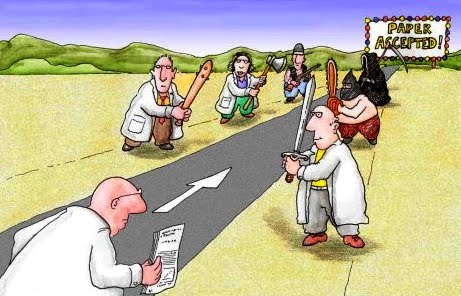
Cartoonist Nick Kim's take on peer review
In your response to reviewers, be sure to include the reviewers' original comments as well as your reply. It is also helpful to the reviewer to include a marked copy of your manuscript or to direct the reviewer to where your reply can be found (the specific requirements for these items vary from journal to journal). Such things will not necessarily ensure that your manuscript will be accepted, but it may engender some good will from reviewers, who are likely busy and will appreciate the ability to judge the revised manuscript quickly. You should also remember that you don't have to do everything the reviewers ask of you. If it is outside the scope of the paper or would not be necessary for the journal to which you are submitting, feel free to make that argument, just remember to keep a courteous tone.

While the peer review process can be daunting and tiring, it is important to remember that the point of peer review is to ensure that the paper is as good as it can be.


Additional Resources: 

Here the Senior Editor for Cell Reports offers advice on publishing your paper

Journal Finders: Journal Selector (in development); Journal finder tool

Tips from publishing pros on choosing the right journal

**Disclaimer: These suggestions are based on my experience and do not guarantee acceptance of your manuscript in any given journal. These opinions are my own and do not necessarily represent the opinions of my journal as a whole.

Tuesday, July 22, 2014

Toms River by Dan Fagin - New Jersey, Superfund, and cancer clusters

Toms River, once a quintessential Jersey shore town, is the focus of Dan Fagin's Pulitzer prize-winning book Toms Rivers: A Story of Science and Salvation. When Toms River welcomed the Swiss chemical company Ciba-Geigy (now known as Novartis) in 1952, they did not know that the company had left towns in both Switzerland and Ohio due to complaints about air and water pollution. The Swiss company owned and operated the Toms River Chemical Corporation for over 30 years without incident even though it was treating the local rivers and oceans as a dumping ground for its chemical waste. In the name of job creation and economic development, the people of Toms River turned a blind eye. (Of course, this is still the case. In places with a weak economy, job creation means absolution for any environmental sin.)

Toms River Chemical Corporation expanded rapidly, building a fortress-like factory isolated from the town by acres of forest. To the executives of Ciba-Geigy, the lesson from Basel and Cincinnati was that they should keep their waste practices hidden from residents to operate with impunity. Treating their toxic waste to even minimal standards would cut into the bottom line. The company had standing, unlined pools where untreated waste would be dumped year after year; the sandy soil of the Jersey shore readily absorbed the waste, giving the company the unforeseen benefit of disappearing waste. Unfortunately for the people of Toms River, those toxic chemicals didn't really disappear, especially from the water table. Complaints about the water supply tasting and smelling like chemicals precipitated the 1965 development of a pipeline to dump untreated wastes offshore. Even though this toxic waste pipeline ran through their backyards, the people of Toms River had seemingly no idea that it was present. At least not until a leak in the pipeline created a sinkhole on a city street in 1984. A company spokesman said that the effluent was simply salt and water, but the chemicals in the waste were likely the cause of the leak. Moreover, tests performed by independent agencies suggested that this "salt water" was highly mutagenic and not safe for sea life.

This toxic sink hole was a major turning point for the opposition to the chemical company in Toms River. The people of Toms River no longer felt safe with the waste practices of their neighbor, and they began to demand change. Around the same time, the story of Love Canal**, a town near Niagara Falls that was built on the site of a former chemical plant, had gained national attention. Love Canal residents were experiencing a variety of health problems, including asthma, miscarriages, and cancer. In 1980, the US government started CERCLA, more commonly known as Superfund. New Jersey had the most sites of any state in the US; two sites were in Toms River. One, Reich's Farm, was used as a dumping site by several local chemical companies, who paid a local entrepreneur $3.50 per drum to dispose of toxic waste. The companies included Ciba-Geigy and Union Carbide (whom you may remember from the Bhopal Disaster in India; UC is now part of Dow Chemical). The other site was the Toms River Chemical Corporation grounds.

The Superfund status meant that Ciba-Geigy would have to pay to clean up the hazardous waste on its factory grounds. In addition, the increasing pressure from residents helped ensure that the company would also have to treat their new chemical waste properly. These changes meant that doing business in Toms River was less profitable for Ciba. Predictably, the company started to decrease the size of the plant, eventually transferring their dye-making operations to Southeast Asia. (This move was purportedly to be closer to the textile industries there; the lower wages and relaxed environmental standards didn't hurt either.) However, even after the company left Toms River, the town's trouble wasn't over.

Fagin intercalates the history of Toms River with the scientific developments in environmental toxicology and cancer epidemiology. The author describes how the initial links between illness and chemical contaminants were made based on the observation that certain types of workers were more likely to have particular diseases. For example, chimney sweeps, who often cleaned chimneys naked, were more likely to get scrotal cancer, while dye workers, who were exposed to chemicals like those used in the plant in Toms River, were more likely to get bladder cancer. The first direct evidence that chemicals cause cancer came when rabbits whose ears were painted with coal tar (the starting ingredient in dye manufacturing) developed tumors (Yamagiwa and Itchikawa, 1915).

In Toms River, many chemical company workers developed cancer. It also seemed that the entire town experienced an increase incidence of cancer, particularly childhood blood and brain cancers. Such cancer clusters are difficult to study because the number of cases is not high enough to be statistically significant and because confounding factors (e.g., smoking, diet) were more likely to be the cause of the cancers. Perhaps most importantly, cancer is a complex disease, which could be considered a collection of diseases (blood cancers are different than solid tumors, which are different at each affected site). The causes of cancer are also complicated; for example, the Knudson hypothesis posits that multiple hits are necessary to cause cancer. A person might start with a genetic susceptibility (as I discussed in the case of BRCA mutations) or a viral infection (as was the situation for Henrietta Lacks) and then be exposed to pollution or some other mutagen, which would then lead to cancer. Thus, even if an entire town is exposed to the same chemical, they will experience the effects differently due to subtle genetic and environmental differences.

The later chapters detail how the cancer cluster was proven to be statistically significant (at least in some populations) and how the likely source of the cancer was identified. A case from a Superfund site in Massachusetts (which later became the basis for the book and movie A Civil Action) showed a definitive link between water pollution and a cancer cluster; this was a landmark outcome in epidemiology. In the case of Toms River, the connections were somehwat more tenuous. In 2001, the affected families received a combined $35 million settlement from Dow and Novartis (nee Ciba-Geigy). Interestingly, Novartis made headlines later that year for its development of the revolutionary drug Gleevec (discussed in my previous post about The Philadelphia Chromosome). The name change coincided with the company's move into pharmaceuticals, but was also a way to distance itself from its toxic past.

Throughout the book, Fagin's journalistic writing style is useful for the subject matter. The story can be deeply frustrating at times due to the mistakes made by Ciba-Geigy as well as at the lack of oversight and the absence of repercussions for the company. Fagin chooses to focus on the "good guys", the people who helped identify the cancer cluster and those who fought to fix the problem. Today, the people of Toms River are safer, and cancer incidence has decreased since the cleanup. However, people living close to where Dow and other chemical giants are currently operating are also experiencing cancer clusters. Despite this grim information, Fagin ends hopefully, discussing how the new developments in molecular epidemiology could improve the ability to link a disease with a pollutant. 

**************************

** For additional information see this excellent video of the history of Love Canal with updates

Wednesday, May 7, 2014

Post collapse fiction versus reality - The World Without Us by Alan Weisman

I love post-collapse science fiction in any form, so it is no surprise that I have been binging on the genre of late. Most recently, I finished Children of Men, the basis for an excellent movie, and Margaret Atwood's MaddAddam, the final book in the eponymous trilogy that includes Oryx and Crake and Year of the Flood. MaddAddam struck me with some of the details and descriptions of the post-collapse environment. It reminded me of The World Without Us by Alan Weisman, which I decided to re-visit due to my recent obsession with apocalyptic fiction. The book is something of a thought experiment to address the question of how the world would look without humans; it is definitely on my great science reads list.


I am Legend's image of New York City without us
My original vision of a post-collapse world was a paradise where plants and animals take over the newly vacated cities. The traces of our civilization would be quickly covered in kudzu and dust, as seen in The Walking Dead or I am Legend. However, Weisman's book changed this view; his book suggests that while some vestiges of our existence would disappear rather quickly, other elements would persist long after we are gone.

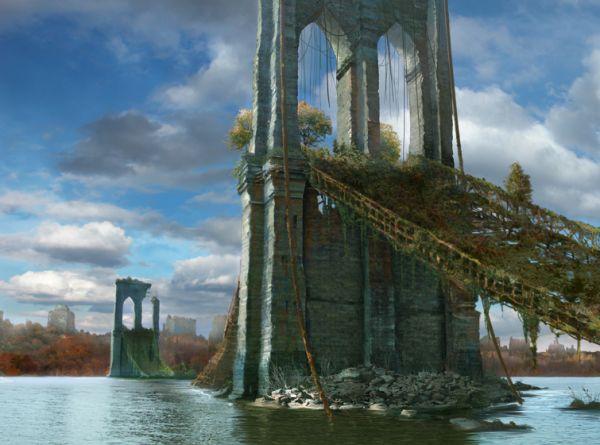
A crumbling Brooklyn Bridge five years after us (K. Brown)
My favorite chapter is "The City Without Us". The author spoke with a variety of experts (e.g., engineers, chemists, geologists) to discover how New York City would change after humans disappear. During the development of Manhattan, various environmental engineering projects transformed the island from a tidal 
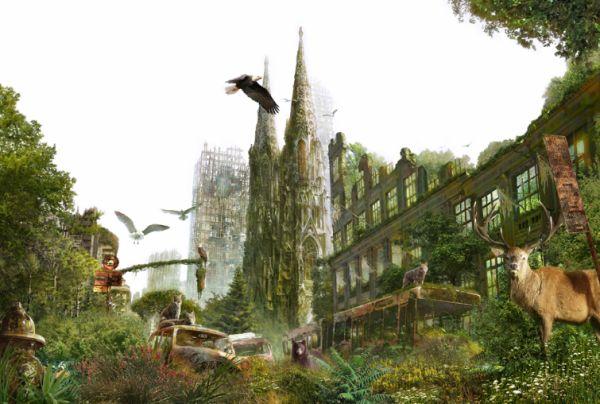
500 years after humans: New York City becomes a forest
marsh filled with rivers and streams to the metropolis we know today. All of this water, currently trickling unseen under the city, would be a major force for change after humans are gone. The subway tunnels would fill with water only a few days after the power turns off. As the water seeps through the subway system, it would cause weaknesses in the roads and sidewalks. In combination with seasonal changes in temperature, bridges and roads would collapse quite quickly. Without people around to maintain the infrastructure, roads and bridges would likely be crumbling after just five years. In about 500 years, Weisman predicts that the city would be a forest, with a unexpected array of animals, including deer, moose, bears, and coyotes. The images on the right are from the author's website, where you can find more amazing visions of New York City without humans.

Abandoned bumper cars in Pripyat, Ukraine, the site of Chernobyl
Within days of our disappearance, power plants would go offline, causing meltdowns at nuclear plants. Chemical and industrial plants would catch fire without maintenance, making the initial landscape rather hellish. While the fires would eventually extinguish, the chemical and nuclear wastes would persist. These pollutants would then become a force for adaptive change. The city of Pripyat, the site of the 1986 Chernobyl meltdown, can serve as an example of how the landscape changes without us. The fallout from the disaster is estimated to irradiate the environment nearby until at least 2135. The Exclusion Zone (a 30 km radius evacuated around the plant) has highlighted how adaptable nature can be. Weisman discusses how the biodiversity in the Exclusion Zone has improved; in fact, the zone has become home to an increasing number of animals (e.g., moose, voles, rabbits, birds). Surprisingly, it is unclear whether these animals are experiencing an increased mutation rate (primary article with coverage on ScienceBlogs). The inner reactor core has proven to be a unique niche for evolution: scientists discovered a  radiotrophic fungi as a black slime on the inner reactor core; this fungus converts gamma rays into energy for growth. Other published articles have described how plants have adapted in the highly radioactive environment.

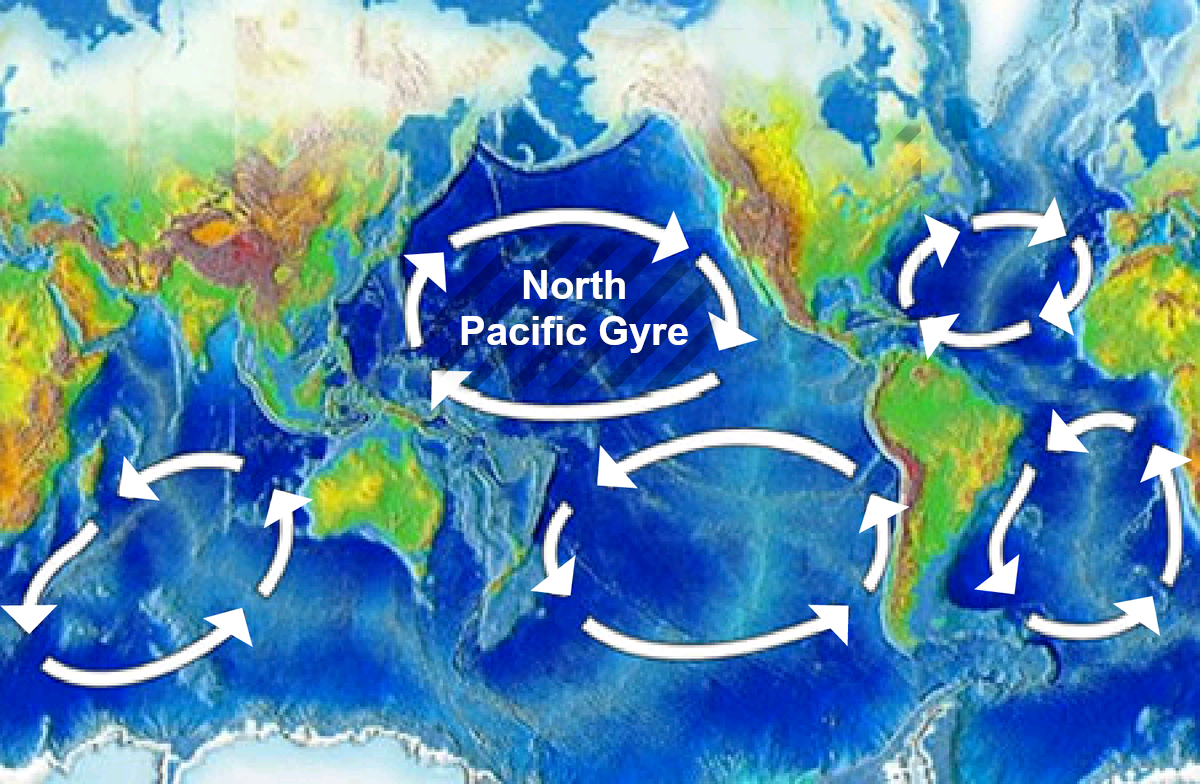
One vestige of human existence that would persist without us: plastics. Weisman thoroughly discusses the issue of plastics pollution, including the North Pacific Subtropical Gyre, more commonly known as the Pacific garbage patch. Like the four other oceanic gyres, this area of the ocean has become a sink for plastics in varying states of decay; plastic debris is reduced to smaller and smaller sizes by the action of waves and the sun. The majority of the plastic wastes in these gyres is in the form of microplastics. Because plastics have only been in use for about 60 years, scientists are only starting to understand the ramifications and possible outcomes of the life cycle of plastics. Likewise, this relatively short time frame means that microbes have not yet evolved to degrade them. Despite the gloomy information in this chapter, the author keeps a positive tone, suggesting that while we do not know how long it will take for plastics to degrade, there is hope on the geological timescale: "Like trees buried in bogs a long time ago....were changed into oil and coal," maybe plastics will degrade when microbes evolve to degrade them or when something else changes them altogether (p. 128). This geological view from the book's website may also help keep things in perspective. 

The World Without Us informs the reader of the knowns and spurs the imagination of the unknowns. In this way, it captures the things about post-collapse fiction that I find appealing: that initial sadness at the loss of our humanity, the imaginings of what kind of place the world will become without us, and the hope that the world could be better.

More links: 

* The author also discusses the Mannahatta project, which has done extensive research to chronicle what Manhattan looked like before Henry Hudson landed. I am adding the book about the project to my ever-growing book list.

* To get some ideas for this post, I read a lot of opinions on why human are so obsessed with the apocalypse. I did not find a really satisfying answer, but this piece was the best of the relevant articles.

* If you enjoy the pictures here, be sure to check out the AbandonedPorn (SFW) Subreddit.

                                                  Talking Heads' (Nothing but) Flowers.