Showing posts with label cancer. Show all posts

Wednesday, September 28, 2016

Ten Great Science Articles and Blog Posts From Across the Internet

Some websites do a weekly best of the web and, frankly, I wish I were that well read or that ambitious. In lieu of such lofty ambitions, I will share a listicle of some of my favorite science articles and blog posts. Enjoy! 

The Man with the Golden Blood: This Mosaic Science piece explores the market for rare blood; easily one of the best long reads I have found. This makes a good compliment to the Radiolab episode on Blood.

Brazil's Cancer Curse: Title aside, this is a great story by Sue Armstrong, whose book about p53 I recently reviewed. She digs deep into a Brazilian cancer cluster and how the doctors made the link to p53 mutations. The best part is the speculations about where this mutation arose and how it fixed in the population.
He Thinks He's Untouchable: Yes, this is BuzzFeed and yes, it is worthy of this list. This is one of many well researched and frankly exasperating stories about sexual harassment in academia. I have read too many of these stories, this one is definitely the most extreme of them all.

The Unique Merger That Made Ewe, You and You: A list of great science reporting would not be complete without something from Ed Yong. Frankly, it's difficult to choose just one. This one is a favorite simply because it addresses a subject dear to my heart: endosymbiotic evolution. 

Lessons of Immortality and Mortality From My Father, Carl Sagan: A bit far adrift for science articles, but this story from Carl Sagan's daughter was published at the perfect time in my parenting lifeafter the death of a close friend of the family. It helped me find a way to frame life and death in a way consistent with my perspective as a scientist and a way that was understandable to a young child.

Medical Research: Cell Division: A title that doesn't really capture the awesomeness at the heart of this story. In the vein of Rebecca Skloot's HeLa cell book, this story captures the ethical issues surrounding the Leonard Hayflick's creation of the WI-38 cell line from an aborted fetus. The author, Meredith Wadman, has a book related to this topic coming out in early 2017.

He may have invented one of neuroscience’s biggest advances. But you’ve never heard of him: Another title I hate hiding a story I love from STAT news. This one surrounds the invention of optogenetics in neuroscience. For me, it highlights the need for researchers to be sure readers and editors understand the implications of their work.
 
How Elizabeth Holmes's House of Cards Came Tumbling Down: Again, this story is not in my usual wheelhouse, but I have been following the story of the Theranos company with great fascination. This Vanity Fair piece gets into how Holmes was able to convince everyone around her that this idea was the next Unicorn and that it was scientifically sound, even though she neglected to get the scientists and clinicians on board from the beginning.

Who was Phineas Gage?:This piece from Sam Kean gives you a great sense of what his book The Dueling Neurosurgeons is about. This may be one of the weirdest stories in science, so it makes sense that it was likely the start of Kean's book about the brain.

How Your Cat is Making you Crazy:  I should be embarrassed to admit how many times I have shared this story from 2012, but I find it oddly compelling read about the strange effects of Toxoplasmosis (that stuff in cat poo) on the brains of humans and mice. It has all the things necessary for a good science article: cats, weird scientists, and unexpected results.

Monday, September 19, 2016

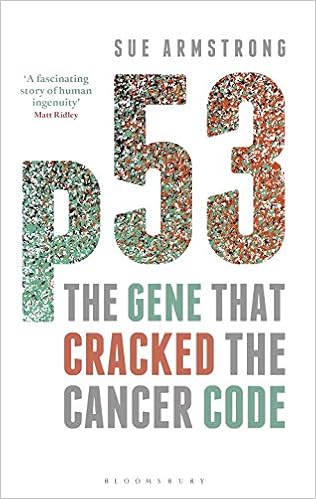
p53: The gene that cracked the cancer code - a review

I wouldn't think that an entire popular science book could be written about one protein, unless that protein is p53. As of this writing, a PubMed search reveals 82,179 scholarly articles about p53. Thus, p53 The Gene That Cracked the Cancer Code by Sue Armstrong has an abundance of source material. Even with the all that information to cover, the author does an excellent job explaining the relevant research in a clear and concise way, using a chronological structure with the main source being interviews with the scientists that did the original research. Unlike many popular science books, Armstrong relies more on the direct quotes from the primary source, ensuring that she gets everything right.

Briefly, p53 (named because the protein is about 53 kilodaltons on a protein gela naming convention that swept through some circles of scientific research, but has since been eclipsed by more colorful naming styles) was discovered in 1979. While David Lane is typically credited first, Arnold Levine, Lloyd Old, and Pierre May also deserve acknowledgement for the discovery. Considered to be a tumor suppressor, p53 has cellular roles in genome stability, DNA repair, apoptosis/cell death, and cell metabolism. This book primarily focuses on p53's role as the "guardian of the genome", a term penned to describe that ability of p53 to keep the cell's DNA free of mutations. This role is the primary connection of p53 to cancer: normally, p53 induces cellular suicide (apoptosis/cell death) in cells with DNA damage. p53 is the most commonly mutated gene in cancer and when p53 is mutated, it loses its ability to protect from DNA damage, which can lead to excessive cell growth, a hallmark of tumorigenesis.

Like so many of the books on cancer that I have covered before, this book hit many of the key topics in the area of cancer research. What is unique about this book is that it leads the reader through the sometimes winding roads of scientific research. This includes an in-depth discussion of the p53 mutation database, which collects all the mutations in p53 that have been linked to a variety of cancers. This database has been a rich source of information for researchers over the years. For example, in 1996 researchers showed that lung cancer cases showed p53 mutations in a particular hotspot on the p53 gene. Interestingly, these same mutations were shown by the Pfeifer lab to be induced by the carcinogenic substance in cigarette smoke, benzopyrene diol epoxide (BPDE). This publication was a major win for the 1998 class action lawsuit against Big Tobacco.

Map of p53 mutations and their frequency.
The p53 database has also helped reveal the link between liver cancer, Hepatitis B, and aflatoxin, a poison produced by a fungus that grows on peanuts and other grains when they are stored without adequate ventilation. Typically, HepB causes liver cancer only after many years. However, in places like Asia and Africa, the risk is compounded by the exposure to aflatoxin, a carcinogen known to cause DNA damage. Aflatoxin can induce a mutation in p53 (at codon 2449), which can essentially turn p53 from a tumor suppressor into an oncogene.

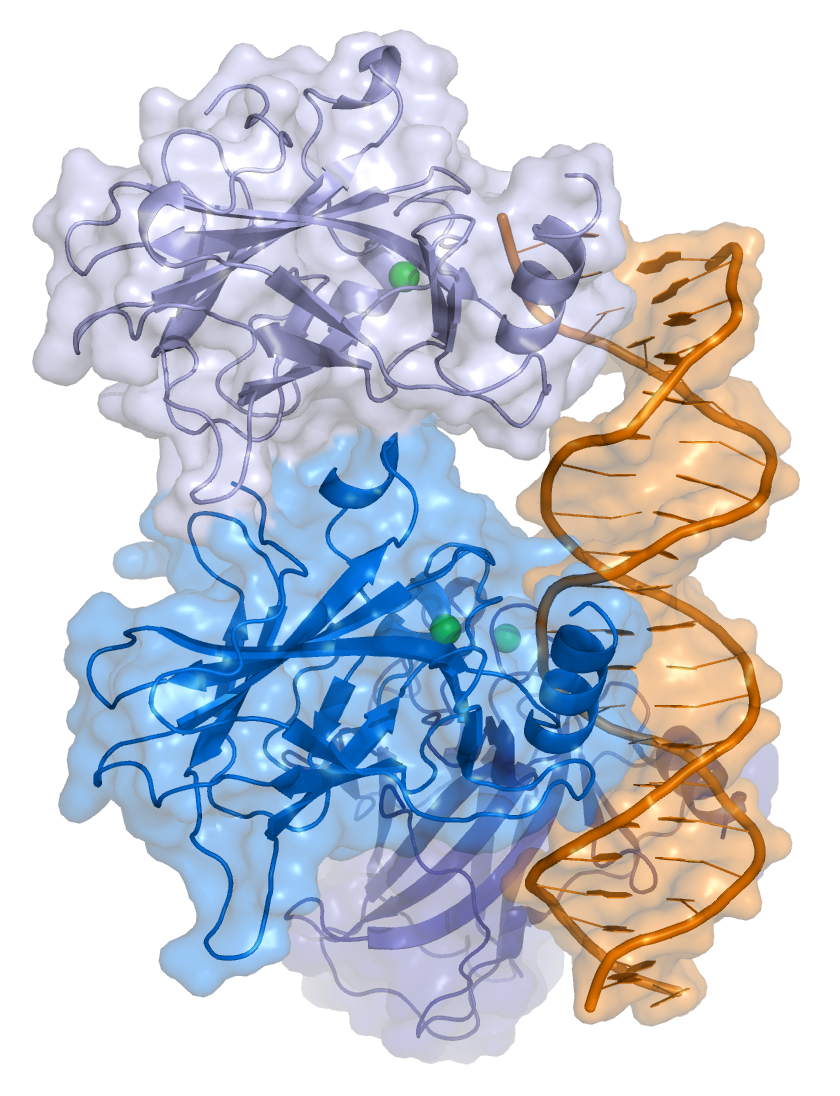
The book delves into several of the most damaging p53 mutations. For example, Li-Frameni syndrome (LFS) is a genetic disordered characterized by the early and frequent acquisition of cancer at "every conceivable site in the body". The disease was first described in the early 1980s, but the connection to p53 was not established until the 1990s. A variety of mutations in p53 have been associated with LFS, but the most common hotspot connected to LFS is involved in p53's ability to bind to DNA.

Perhaps the most interesting story in the book describes the cancer clusters in Brazil. Sue Armstrong contributed the story of "Brazil's Cancer Curse" to Mosaic Science; it is a fascinating story and gives a great sense of her writing style. As discussed in the book Toms River, cancer clusters are typically assumed to be caused by a pollutant. Likewise, the Brazilian doctors wondered if that might be the case. However, the research about LFS was starting to garner attention, leading Brazilian clinicians to suspect p53 was also be responsible in the Brazilian cancer cluster. Indeed, sequencing of the p53 gene in affected individuals reveals a mutation at codon 337 to be the most common. Where the story gets really interesting is when scientists attempt to understand how an uncommon mutation fixed in the population at such high frequency. While the source is still debatable, the p53 mutation is now thought to be the result of a founder effect and bottleneck (as described for BRCA mutations in The Wandering Gene).

p53 structure (Wikipedia)
I think I learned the most in the section about the clinical approaches to treating p53 mutations. Here, Armstrong has done a deep dive into the literature about the latest drugs and trials connected to p53 function and dysfunction. Thus, the book is up to date on the available p53-related drugs (as of its publication in November 2014). Armstrong describes several different approaches to treating p53-related cancers, including drugs like Advexin, which uses a viral vector to induce cells to express wild type p53. For reasons that are unclear, Advexin has had mixed success in the US and is still awaiting FDA approval. Perhaps more interesting, is the research on PRIMA-1 (an acronym for p53 re-activation and induction of mass apoptosis), a drug designed to work on mutants of p53 that no longer bind DNA. Essentially, PRIMA-1 induces mutant p53 into its wild type shape, allowing it to re-activate and bind DNA. Thus, PRIMA-1 should target a wide range of p53 conformation mutants and leave wild type p53 alone. Both of these have been major roadblocks in the deisng of previous p53 therapies, especially since p53 is at the center of so many regulatory pathways. The drug is currently in Phase 2 trials. (Here, Armstrong takes a tangent into the history of chemotherapy, specifically its connection to the German use of mustard gas in WWII. This was a fascinating story that I recommend reading more about, for example here or here.) 

Sue Armstrong's p53 book distills a large amount of scientific literature into an interesting and readable book. I don't think I would recommend this as the first book to read if you are just starting to learn about cancer research. To me, the best starting place would be The Philadelphia Chromosome (some might recommend Mukherjee's The Emperor of All Maladies). However, this is an excellent book for those familiar with cancer and looking for the next level of science writing on the topic.

Sunday, September 13, 2015

The Emperor of All Maladies - comments on the second part of the PBS special

In all my reading about cancer biology, I have not yet tackled The Emperor of All Maladies, which is said to be the best book on the subject.  Luckily, PBS and Ken Burns have delivered an excellent three-part series based on Siddhartha Mukherjee's 2011 book. This post covers the contents of part two, "The Blind Men and The Elephant."

This part of the series focuses on discovering the cause of cancer. The title, an allusion to the parable, refers to the fact that for many years scientists could not find the connection between the three major causes of cancer: viral, chemical, and genetic. The ideas were separated ideologically and scientifically. At conferences, the scientists that supported each of these ideas did not interact. It was only relatively recently that the connections between these causes were illuminated.

The earliest carcinogen was discovered in 1911 by Peyton Rous, who described the viral origin of avian sarcoma (for more information check out this great story by Jessica Wapner). In 1964, Burkitt lymphoma was linked to the Epstein-Barr virus. These results led to an rapid increase in the focus on viral carcinogenesis with the idea that a vaccine could prevent cancer. This focus came at the cost of other ideas about the causes of cancer. Unfortunately, Human papillomavirus (HPV) and Hepatitis (HepB and C) have been the only other viral carcinogens identified.

The second idea was that chemicals cause cancer. Lung cancers became increasingly common in the late 1940s. Epidemiological studies showed links between cigarette smoking and lung cancer, but tobacco companies obfuscated the results. In 1964, scientific links between cigarettes and lung cancer were firmly established thanks in part to the Kennedy administration's blue ribbon panel tasked with investigating the matter. Once the epidemiological methods were established for tobacco, other chemicals were added to the carcinogen list.

The final idea was that genes caused cancer. The major breakthrough came from Michael Bishop and Harold Varmos, who were studying the Rous sarcoma virus. Their timing was perfect the tools of molecular biology were becoming readily available. Work from their labs led to the discovery of a gene called Src, the first described oncogene. The oncogene idea was that normal genes in our bodies that control cell growth can be turned on at high levels and cause cancer. Robert Weinberg later identified the first human oncogene, Ras. Dozens of other oncogenes were found in subsequent years, leading to optimism that the cure for cancer was surely close at hand. However, we have since learned that cancer is a complex disease (some argue a collection of diseases) with a diverse range of etiologies, which makes it impossible to treat with a one-size-fits-all approach.

Interspersed with the description of cancer research was a narrative of one woman's treatment for breast cancer. This story begins with a history of breast cancer treatment, including a discussion of William Halsted's radical mastectomy. As I covered in more detail in my recent post on Pandora's DNA, Halsted's method was the standard treatment for breast cancer for nearly a century. The success rate was not impressive, but the treatment approach was unchallenged until Bernard Fisher criticized its use. Fisher performed a clinical trial to compare the use of the lumpectomy with the radical mastectomy. In 1985, his results showed that either approach was just as effective, but that the lumpectomy was less invasive and led to improved quality of life. Radical mastectomy was no longer the standard therapy: "cutting more did not mean curing more".

The intention of this segment was to illustrate the personal side of cancer, but for me the link between the two segments was how the treatment of cancer has evolved in parallel with developments in cancer research. This highlights how basic scientific research is a critical starting point for successful clinical outcomes.

Tuesday, August 18, 2015

The genetic wonders of red hair

I recently finished reading Armand Leroi's Mutantswhere I learned about some of the polymorphisms (small changes in DNA sequence) linked to variations in human skin and hair color, particularly red hair. With two different types of redheads in the house, I have always been curious about the genetic basis of this relatively rare trait.


red-haired mouse (from Flickr)
Hair and skin color are determined by the relative proportions of the two types of melanin pigment: eumelanin (dark brown) and pheomelanin (red/yellow). Large amounts eumelanin result in darker hair and very little produces blond hair. People with more pheomelanin have red hair. Red hair phenotypes can range from pale red to bright red or reddish brown, which is due to a balance of the two melanin types. Polymorphisms in the melanocortin 1 receptor gene (MC1R) are associated with variations in hair and skin color in mammals. The MC1R protein is a membrane receptor found only in melanin-producing cells (melanocytes). In response to melanocyte-stimulating hormones (MSHs), MC1R initiates a cascade of cellular events that turns on the production of pigment synthesizing genes, including pheomelanin or eumelanin. Essentially, MC1R determines pigmentation by regulating the relative proportion of eumelanin and pheomelanin.


The ancestral form of the MC1R allele produces eumelanin; variant alleles are less functional, decreasing eumelanin production or increasing the amount of yellow/red melanin. Variations in MC1R contribute to a spectrum of phenotypes, including freckling, red hair color, and sun sensitivity. MC1R alleles that disrupt function are present in ~80% of individuals with red hair and ~20% with brown-black hair. More than 80 MC1R allele variations have been identified in European populations. Association studies have shown that certain MC1R variants (p.D84E, p.R151C, p.R160W, p.D294H, p.R142H, and p.I155T) are linked with the red hair color phenotype.

One unanswered question is why these polymorphisms are more prevalent in Eurasians than in Africans. The current hypothesis is that paler skin permits better synthesis of Vitamin D in environments with less sunlight. A recent study using data from the 1000 Genomes Project revealed that the polymorphisms are also more common in Northern Europe than Southern Europe, which supports the Vitamin D hypothesis. Interestingly, a MC1R variant has been observed in Neanderthals, indicating that red hair and pale skin were also present in this population. A recent paper has shown that the Neanderthal MC1R variant is rare in Europeans, but can be found in East Asian populations. This result suggests that mutation of MC1R was a common mechanism to adapt to changes in sunlight intensity.

from David Fisher's lab


Some MC1R variants are associated with an increased risk of melanoma. Due to increased sun sensitivity and freckling of people with pale skin, this relationship seems obvious. However, darkly pigmented Caucasians with certain MC1R variants also show an increased incidence of melanoma. This result suggests that the MC1R pathway may have another role in the development of melanoma beyond differences in the ability to filter UV rays in light and dark skin. In fact, scientists think that MC1R may play a pigment-dependent and a pigment-independent role in skin carcinogenesis. There are a few hypotheses to explain the link between MC1R and melanoma. First, after UV exposure, cells with more pheomelanin show increases in DNA damage, which is correlated with increases in abnormal cell growth and proliferation, a hallmark of cancer. Second, a recent paper in Molecular Cell suggested that UV light triggers the interaction of a tumor suppressor called PTEN with MC1R. The tumor suppressor can interact with wild type MC1R, but not the red hair alleles of MC1R. The PTEN-MC1R interaction protects PTEN from degradation, which suppresses an oncogenic signaling pathway (PI3K/Akt). In contrast, MC1R variants do not interact with PTEN, allowing increased levels of oncogenic signaling pathways after UV irradiation. Unfortunately for redheads, sun exposure alone is not the sole mechanism for skin cancer. A Nature paper from David Fisher’s lab used a red-head mouse model with inactive MC1R to investigate a possible UV-independent pathway. They found that in the presence of the most common melanoma oncoprotein (BRAF 600E), ginger mice developed melanoma without UV exposure, while MC1R wild-type mice did not. Thus, shielding easily freckled skin from the sun may not be enough to protect from skin cancer for people with certain MC1R variants.


The association between red hair and melanoma suggested that there may be a scientific basis for the headline from 2014 that climate change was putting the red hair gene in danger of extinction. The story was exposed as alarmist and scientifically inaccurate. One of the many problems with the article is that they label the red hair gene as recessive. Because hair color is a complex phenotype, it is not surprising that the genetics of red hair are also complex. Red hair is usually inherited in a recessive manner, but it can also be dominant. A 2000 study showed that the inheritance pattern depends on the MC1R allele that is present: most alleles are recessive, but some alleles can be dominant. Individuals that are heterozygous for a mutant MC1R allele show variations in red hair color, beard color, or freckling. Thus, there is a dosage effect of MC1R variants on hair and skin color, which explains why some men have red beards and brown hair. These results also explain how two red-haired parents can (on rare occasions) have children that don't have red hair. Thankfully, the many variations in MC1R and the complex inheritance patterns mean that red hair isn't likely to die out any time soon.

**************************

For more information, I recommend the following links:

Red heads feel pain differently A blog post from 23andme about the population genetics of red hair.

Thursday, July 16, 2015

The Emperor of All Maladies - part three of Ken Burns' PBS documentary

In all my reading about cancer biology, I have yet to tackle The Emperor of All Maladies, which is said to be the best book on the subject. Luckily, PBS and Ken Burns have delivered a three-part series based on Siddhartha Mukherjee's 2011 book. Here, I will do a short synopsis of Part Three, "Finding the Achilles Heel", which focuses on the development of cancer therapies.

The documentary begins with the story of Gleevec (covered beautifully in Jessica Wapner's The Philadelphia Chromosome), which was designed specifically to treat a type of chronic myelogenous leukemia (CML) that is caused by a swapping of two chromosomes to create the Philadelphia chromosome. The success of Gleevec led to great hope  could this be the first of many targeted therapeutics? Indeed, there have been some successes in targeted therapies; ALK inhibitors have shown some promise for the treatment of cancers that are characterized by the presence of an ALK gene rearrangement. However, on average, only four targeted therapy drugs are approved per year. These drugs are typically very expensive and are not very successful in terms of extending patients' lives.

The complexity of cancer has been a major obstacle in the development of successful therapeutics. When the human genome was completed in 2001, a new hypothesis arose: if we sequence common cancers and compare with normal cells, we could begin to understand exactly how they differ. In 2005, The Cancer Genome Atlas (TCGA) project began; this large-scale sequencing project aims to identify mutations in 25 different types of commonly occurring cancers. The first results, released in September 2008, confirmed cancer's complexity. Many cancers had multiple mutations in as many as 100 genes. However, there were some cancers that had only a few mutations or showed recurrent mutations, which were found in many different patients. These less complex cancers are the focus of future directions. As more and more cancer genomes are completed, researchers can start to identify patterns in the mutations that appear in cancers; such analyses may lead to the identification of driver mutations (i.e., mutations that are causally linked to oncogenesis) versus passenger mutations (i.e., mutations that are picked up along the way). Mukherjee points out how much drug companies have benefited from the information from basic research. He suggests that the current funding environment, where increased funding of clinical and translational studies comes at the expense of basic research, is not likely to promote these types of success stories in the future.

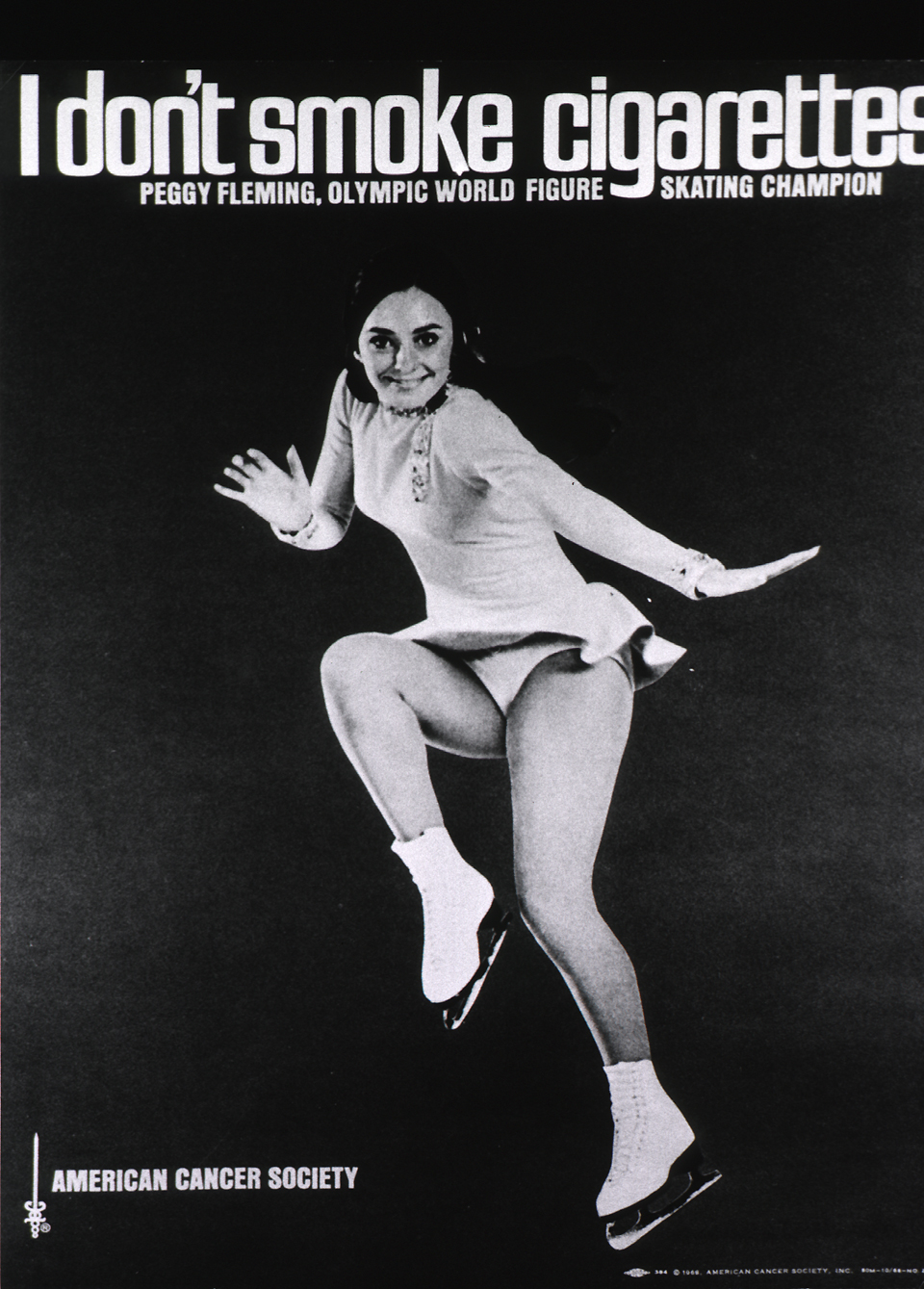
ACS, anti-smoking ad 1968
The shift in focus from cancer treatment to cancer prevention has generally been a useful approach. For example, smoking was once a major contributor to cancer, but anti-smoking campaigns starting in the late 1960's have successfully reduced the number of new lung cancer cases. Obesity is another major contributor, but solving this health problem has been less straightforward. Viruses like human papilloma virus (HPV) and hepatitis are also common causes for cancers; these viruses are now decreasing in incidence with vaccines for both viruses available. Approximately 40% of cancers are due to unknown causes. Epidemiology focuses on determining a causal link between cancers and environmental factors (e.g., pollution, occupation, cell phones), but the connections are often difficult to prove (as was discussed in Toms River.) Overall, the combination of prevention, early detection, and targeted therapies has decreased the cancer mortality rate 20% in the US over the last two decades.


For me, the most interesting part of the this episode was about cancer immunotherapy. Cellular immunotherapy takes immune cells from a patient's blood, activates these cells, and then gives them back to the patient; this approach boosts the immune system by enriching for T cells. Some researchers have suggested that the immune system is held back from attacking cancer because it is the patient's own cells. In 1992, the FDA approved a therapy using interleukin-2 (IL-2), a protein produced by white blood cells during the immune response. Increasing IL-2 leads to increased T cell response, making T cells more likely to recognize and attack cancer cells. After that initial success, there were few breakthroughs, but some recent developments have increased interest in the field. For example, in 2011 the FDA approved Yervoy (ipilimumab), which binds and blocks CTLA-4, a checkpoint protein that prevents T-cell activation to keep cells from attacking healthy tissue. Thus, when CTLA-4 is blocked, T cells can attack tumors. Both Yervoy and IL-2 treatment show long-lasting responses, but only in a small percentage of patients; serious side effects are also common. The newest weapon in the immunotherapy arsenal is an inhibitor of PD-1, called Opdivo (nivolumab). PD-1 is another checkpoint protein, which some cancers use to disable the T cells in the area surrounding the tumor. PD-1's specificity to cancer cells suggests that Opdivo could be more powerful and less toxic than existing therapies. Based on these exciting developments, this is likely an area to watch in the coming years. 

--------------------------------------------
** You can read more about cancer immunotherapy in this feature in Nature, this Nature review by Ira Mellman, or the April 2015 special issue of Cancer Cell focused on immunotherapy in cancer.

Saturday, October 25, 2014

The Cancer Chronicles - George Johnson's personal exploration of cancer, its origins, and treatments

I have recently reviewed books about the discovery and treatment (The Philadelphia Chromosome) and the causes of cancer (Toms River). So the subject matter in George Johnson's The Cancer Chronicles is quite familiar to me. Johnson does have a unique angle – his wife was diagnosed with uterine cancer, which led him to use his expertise as a science writer to learn more about the disease. This perspective helps create a personal element to the book, but does not distract from the science.

Several of the stories were previously covered in other books that I have reviewed: Boveri's prescient hypothesis linking chromosomal aberrations with cancer (The Philadelphia Chromosome), Thomas Hunt Morgan's mutant fruit flies (The Violinist's Thumb), scrotal cancer in chimney sweeps (Toms River), and the Radium girls (The Poisoner's Handbook). Johnson covers new ground in the chapter called "Jurassic Cancer", which examines the other animals in which cancers have been found. In fact, most animals get cancer; the one exception is naked mole rats. Surprisingly, various types of malignancies have even been identified in dinosaur fossils. Another chapter examines how far back in human populations cancers have been described. Johnson writes, "There were signs of cancer in an Iron Age man in Switzerland and a fifth century Visigoth from Spain" (p 49). In both animals and humans, it is difficult to know the exact frequency of the disease, but it is clear that cancer is not strictly linked to industrialization or environmental factors. 

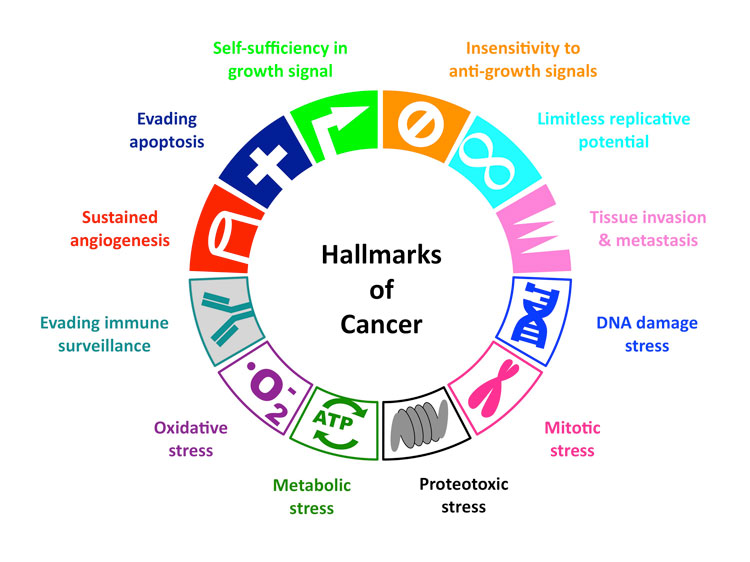
Hanahan and Weinberg, 2000.
Rather, it seems that cancer is inevitable. The landmark review "The Hallmarks of Cancer" (and its update in 2011) states that cancer is basically caused by the accumulation of several mutations. The review's author Robert Weinberg estimates that every second four million cells are replicating in a human body. Each time a cell replicates, there is a chance for error. While there are many error correction mechanisms, mistakes do get through. This genetic variability is the fodder for evolution by natural selection. It is also the source for cancer. Thus, it makes sense that cancer is generally seen throughout the animal kingdom and throughout time. Johnson concludes that it is comforting to know that cancer has always been with us.

Johnson also discusses cancer cell evolution, which is a topic of intense interest in scientific research. Cancer cells are constantly changing to evade the body's defense mechanisms. During treatment, some cancer cells can develop resistance to chemotherapeutics. Understanding how chemoresistant cancers can be treated is a major unanswered question. In the case of Gleevec/imatinib-resistant cancer, a single mutation is responsible for Gleevec-resistance, which allowed the development of a second drug (nilotinib) to kill cells with the imatinib-resistant mutation. Unfortunately, and as is to be expected with a complex disease such as cancer, most chemo-resistant cancers are not as clear cut. 

Overall, the book is quite easy to read and covers many important topics, albeit not at the depth of other, more focused books on the topic of cancer. I will definitely be adding The Emperor of All Maladies to my reading list to give this topic another perspective.


** Post script: Johnson's book was short-listed for the 2014 Royal Society Winton Prize for Science books. 

Tuesday, July 22, 2014

Toms River by Dan Fagin - New Jersey, Superfund, and cancer clusters

Toms River, once a quintessential Jersey shore town, is the focus of Dan Fagin's Pulitzer prize-winning book Toms Rivers: A Story of Science and Salvation. When Toms River welcomed the Swiss chemical company Ciba-Geigy (now known as Novartis) in 1952, they did not know that the company had left towns in both Switzerland and Ohio due to complaints about air and water pollution. The Swiss company owned and operated the Toms River Chemical Corporation for over 30 years without incident even though it was treating the local rivers and oceans as a dumping ground for its chemical waste. In the name of job creation and economic development, the people of Toms River turned a blind eye. (Of course, this is still the case. In places with a weak economy, job creation means absolution for any environmental sin.)

Toms River Chemical Corporation expanded rapidly, building a fortress-like factory isolated from the town by acres of forest. To the executives of Ciba-Geigy, the lesson from Basel and Cincinnati was that they should keep their waste practices hidden from residents to operate with impunity. Treating their toxic waste to even minimal standards would cut into the bottom line. The company had standing, unlined pools where untreated waste would be dumped year after year; the sandy soil of the Jersey shore readily absorbed the waste, giving the company the unforeseen benefit of disappearing waste. Unfortunately for the people of Toms River, those toxic chemicals didn't really disappear, especially from the water table. Complaints about the water supply tasting and smelling like chemicals precipitated the 1965 development of a pipeline to dump untreated wastes offshore. Even though this toxic waste pipeline ran through their backyards, the people of Toms River had seemingly no idea that it was present. At least not until a leak in the pipeline created a sinkhole on a city street in 1984. A company spokesman said that the effluent was simply salt and water, but the chemicals in the waste were likely the cause of the leak. Moreover, tests performed by independent agencies suggested that this "salt water" was highly mutagenic and not safe for sea life.

This toxic sink hole was a major turning point for the opposition to the chemical company in Toms River. The people of Toms River no longer felt safe with the waste practices of their neighbor, and they began to demand change. Around the same time, the story of Love Canal**, a town near Niagara Falls that was built on the site of a former chemical plant, had gained national attention. Love Canal residents were experiencing a variety of health problems, including asthma, miscarriages, and cancer. In 1980, the US government started CERCLA, more commonly known as Superfund. New Jersey had the most sites of any state in the US; two sites were in Toms River. One, Reich's Farm, was used as a dumping site by several local chemical companies, who paid a local entrepreneur $3.50 per drum to dispose of toxic waste. The companies included Ciba-Geigy and Union Carbide (whom you may remember from the Bhopal Disaster in India; UC is now part of Dow Chemical). The other site was the Toms River Chemical Corporation grounds.

The Superfund status meant that Ciba-Geigy would have to pay to clean up the hazardous waste on its factory grounds. In addition, the increasing pressure from residents helped ensure that the company would also have to treat their new chemical waste properly. These changes meant that doing business in Toms River was less profitable for Ciba. Predictably, the company started to decrease the size of the plant, eventually transferring their dye-making operations to Southeast Asia. (This move was purportedly to be closer to the textile industries there; the lower wages and relaxed environmental standards didn't hurt either.) However, even after the company left Toms River, the town's trouble wasn't over.

Fagin intercalates the history of Toms River with the scientific developments in environmental toxicology and cancer epidemiology. The author describes how the initial links between illness and chemical contaminants were made based on the observation that certain types of workers were more likely to have particular diseases. For example, chimney sweeps, who often cleaned chimneys naked, were more likely to get scrotal cancer, while dye workers, who were exposed to chemicals like those used in the plant in Toms River, were more likely to get bladder cancer. The first direct evidence that chemicals cause cancer came when rabbits whose ears were painted with coal tar (the starting ingredient in dye manufacturing) developed tumors (Yamagiwa and Itchikawa, 1915).

In Toms River, many chemical company workers developed cancer. It also seemed that the entire town experienced an increase incidence of cancer, particularly childhood blood and brain cancers. Such cancer clusters are difficult to study because the number of cases is not high enough to be statistically significant and because confounding factors (e.g., smoking, diet) were more likely to be the cause of the cancers. Perhaps most importantly, cancer is a complex disease, which could be considered a collection of diseases (blood cancers are different than solid tumors, which are different at each affected site). The causes of cancer are also complicated; for example, the Knudson hypothesis posits that multiple hits are necessary to cause cancer. A person might start with a genetic susceptibility (as I discussed in the case of BRCA mutations) or a viral infection (as was the situation for Henrietta Lacks) and then be exposed to pollution or some other mutagen, which would then lead to cancer. Thus, even if an entire town is exposed to the same chemical, they will experience the effects differently due to subtle genetic and environmental differences.

The later chapters detail how the cancer cluster was proven to be statistically significant (at least in some populations) and how the likely source of the cancer was identified. A case from a Superfund site in Massachusetts (which later became the basis for the book and movie A Civil Action) showed a definitive link between water pollution and a cancer cluster; this was a landmark outcome in epidemiology. In the case of Toms River, the connections were somehwat more tenuous. In 2001, the affected families received a combined $35 million settlement from Dow and Novartis (nee Ciba-Geigy). Interestingly, Novartis made headlines later that year for its development of the revolutionary drug Gleevec (discussed in my previous post about The Philadelphia Chromosome). The name change coincided with the company's move into pharmaceuticals, but was also a way to distance itself from its toxic past.

Throughout the book, Fagin's journalistic writing style is useful for the subject matter. The story can be deeply frustrating at times due to the mistakes made by Ciba-Geigy as well as at the lack of oversight and the absence of repercussions for the company. Fagin chooses to focus on the "good guys", the people who helped identify the cancer cluster and those who fought to fix the problem. Today, the people of Toms River are safer, and cancer incidence has decreased since the cleanup. However, people living close to where Dow and other chemical giants are currently operating are also experiencing cancer clusters. Despite this grim information, Fagin ends hopefully, discussing how the new developments in molecular epidemiology could improve the ability to link a disease with a pollutant. 

**************************

** For additional information see this excellent video of the history of Love Canal with updates