Showing posts with label HeLa cells. Show all posts

Wednesday, June 21, 2017

The Vaccine Race: The Limits of Leonard Hayflick and the WI-38 Cell Line.

I have been anxiously awaiting the release of Meredith Wadman's book, The Vaccine Race: Science, Politics, and the Human Costs of Defeating Disease, which does a deep dive into the early history of cell culture and the development of vaccines for polio, rubella, and rabies. Wadman started researching this story for a piece in Nature in 2013 (I liked it so much that it is near the top of my list of great science blog posts.) Thus, the book is a well-researched and scientifically detailed account of how many lives have been saved and improved by these scientific advances. It also describes, with unflinching honesty, the sometimes questionable practices of researchers and doctors in the time before informed consent and clinical trial review boards. Like Rebecca Skloot's The Immortal Life of Henrietta Lacks, it is an important look at the history of medical ethics. The Vaccine Race also emphasizes why we need funding for basic research and details the beginning of intellectual property law in biomedical research.


While the book focuses on the scientific development of vaccines, Leonard Hayflick is still at the center of the action. Hayflick, an early practitioner of tissue culture, was interested in developing a normal diploid human cell line. Other cell lines in use at the time were either non-human or from cancer cells. The source of his cell lines were human fetuses obtained from legal abortions. In developing the normal diploid cell lines, he observed that the cells could not grow and replicate forever, but typically replicated only 40-60 times.This result contradicted the famous experiment of Alexis Carrel, whose normal chicken heart cells were continuously cultivated in the lab for 34 years. The Carrel result was considered dogma and so Hayflick's findings were initially met with skepticism and suggestions that Hayflick must not be culturing the cells properly. After increasingly careful repetitions with the same result, he performed a co-culture experiment using young cells from a female and old cells from a male, which showed that the cells died after 40-60 replications no matter when they were added to the culture. He finally convincing the scientific community of the existence of the Hayflick limit. Carrel's result was then called into question. Many years later, Carrel's former lab technician confirmed that the method of preparing the fresh culture media was constantly adding new, young cells to the supposedly elderly cells, allowing them to appear to grow immortally.

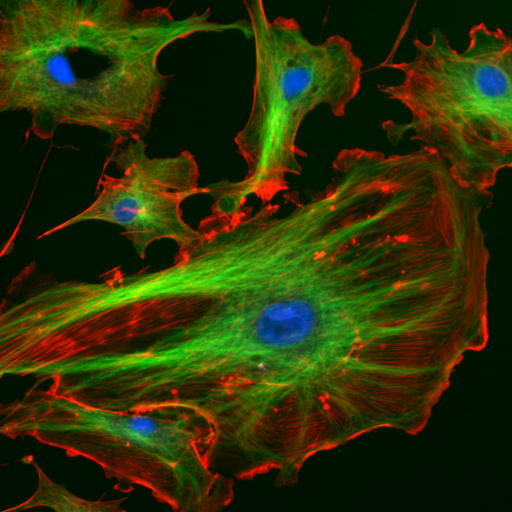
Images of WI-38 cells from ATCC; listed as diploid human fetal lung fibroblasts.
After 38 attempts, he found success with a cell line named WI-38 (WI for Wistar Institute), which could proliferate without problem and be infected with virus and continue to replicate. Once he had a reliable cell line, Hayflick then had to convince others of its efficacy and safety for vaccine development. The cell line was eventually used to develop vaccines for adenovirus, MMR, and chickenpox. (Of course, when the source of the cells became known, there was a backlash from religious groups who thought that there was no excuse for using fetal cells.)

The other major battle that Hayflick fought was with the NIH, who had given him a contract to distribute the cells to researchers working on certain NIH grants. When he left the Wistar Institute in 1968, he took the cells with him to his new lab at Stanford. Over the next 8 years, he distributed the WI-38 cells, first at prices similar to those of commercial distributors (like ATCC) and then at increasingly high prices, charging even more for young cells at low passage numbers. In 1974, Hayflick  interviewed for a position as director of the Institute of Aging; this spurred an investigation of his management and practices of the cell line. Eventually, Hayflick resigned from Stanford and hired a young lawyer whose expertise was intellectual copyright; this lawyer later represented many of Silicon Valley's biggest players, like Apple and Facebook. Hayflick was fighting a battle with the NIH that had little precedent. Wadman uses the WI-38 case to describe the advent of intellectual property and biological patent law and how these helped spurred the success of the biotech industry. These chapters were among the most interesting. 

Leonard Hayflick proudly displays his cell line.
The book includes some pretty harrowing details of clinical trials with early vaccines that were given to patients in mental wards, babies born in public hospitals where the majority of patients were African American, inmates in prisons whose release was tied to their participation, members of the US military, and terminal cancer patients all without informed consent. In most cases, the vaccines behaved as expected and side effects were minimal or nonexistent, but there were exceptions. These cases led Henry Beecher (an anesthesia specialist at Harvard Medical School) to publish an article in the New England Journal of Medicine entitled "Ethics and Clinical Research" which detailed the specifics of the questionable human experiments. After Beecher's article, the tide started to change.

Overall, The Vaccine Race is an excellent read, particularly for its coverage of the history of science and medical ethics. If I had one complaint it would be that it was not as detailed about the science of viruses and vaccines, but Wadman does end on a strong, scientific note as she describes the Nobel-prize winning discovery of the enzyme telomerase, which explains the mechanistic basis of the phenomenon observed by Leonard Hayflick. 

Wednesday, September 28, 2016

Ten Great Science Articles and Blog Posts From Across the Internet

Some websites do a weekly best of the web and, frankly, I wish I were that well read or that ambitious. In lieu of such lofty ambitions, I will share a listicle of some of my favorite science articles and blog posts. Enjoy! 

The Man with the Golden Blood: This Mosaic Science piece explores the market for rare blood; easily one of the best long reads I have found. This makes a good compliment to the Radiolab episode on Blood.

Brazil's Cancer Curse: Title aside, this is a great story by Sue Armstrong, whose book about p53 I recently reviewed. She digs deep into a Brazilian cancer cluster and how the doctors made the link to p53 mutations. The best part is the speculations about where this mutation arose and how it fixed in the population.

He Thinks He's Untouchable: Yes, this is BuzzFeed and yes, it is worthy of this list. This is one of many well researched and frankly exasperating stories about sexual harassment in academia. I have read too many of these stories, this one is definitely the most extreme of them all.

The Unique Merger That Made Ewe, You and You: A list of great science reporting would not be complete without something from Ed Yong. Frankly, it's difficult to choose just one. This one is a favorite simply because it addresses a subject dear to my heart: endosymbiotic evolution. 

Lessons of Immortality and Mortality From My Father, Carl Sagan: A bit far adrift for science articles, but this story from Carl Sagan's daughter was published at the perfect time in my parenting lifeafter the death of a close friend of the family. It helped me find a way to frame life and death in a way consistent with my perspective as a scientist and a way that was understandable to a young child.

Medical Research: Cell Division: A title that doesn't really capture the awesomeness at the heart of this story. In the vein of Rebecca Skloot's HeLa cell book, this story captures the ethical issues surrounding the Leonard Hayflick's creation of the WI-38 cell line from an aborted fetus. The author, Meredith Wadman, has a book related to this topic coming out in early 2017.


He may have invented one of neuroscience’s biggest advances. But you’ve never heard of him: Another title I hate hiding a story I love from STAT news. This one surrounds the invention of optogenetics in neuroscience. For me, it highlights the need for researchers to be sure readers and editors understand the implications of their work.
 
How Elizabeth Holmes's House of Cards Came Tumbling Down: Again, this story is not in my usual wheelhouse, but I have been following the story of the Theranos company with great fascination. This Vanity Fair piece gets into how Holmes was able to convince everyone around her that this idea was the next Unicorn and that it was scientifically sound, even though she neglected to get the scientists and clinicians on board from the beginning.

Who was Phineas Gage?:This piece from Sam Kean gives you a great sense of what his book The Dueling Neurosurgeons is about. This may be one of the weirdest stories in science, so it makes sense that it was likely the start of Kean's book about the brain.

How Your Cat is Making you Crazy:  I should be embarrassed to admit how many times I have shared this story from 2012, but I find it oddly compelling read about the strange effects of Toxoplasmosis (that stuff in cat poo) on the brains of humans and mice. It has all the things necessary for a good science article: cats, weird scientists, and unexpected results.

Monday, November 30, 2015

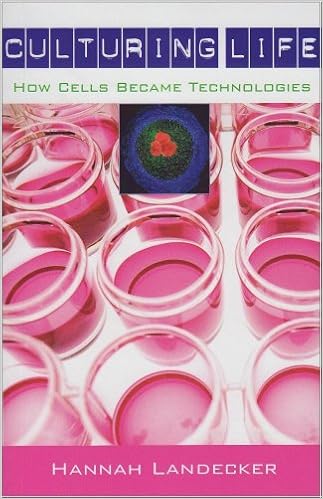
Culturing Life reveals the history of tissue culture, with some interesting details about HeLa cells

Culturing Life: How Cells Became Technology by Hannah Landecker is an extensive history of the culturing of cells in the lab. As such, it gave many details about the fits and starts involved in the early attempts to get cells to grow reliably. As is usually the case in scientific research, as much is owed to timing and serendipity as to careful repetition and fastidious lab work.

The idea that cells could be taken from an organism and cultured separately was initially met with skepticism. The general thinking was that cells could not become autonomous from the organism. By 1885, Wilhelm Roux showed that he could keep nerve cells from chicken embryos alive for several days in the lab. Once the principal was established, scientists began to search for the right media, the right glassware, and the right cells or tissue to make cell culture reliable.

The growth in virology was a major driver for the improvement of cell culture. Virologists needed a way to make large-scale cultures of infected samples for vaccine development. Early vaccines were grown using embryonated chicken eggs, a method that had a high yield for virus, but was quite costly. (Flu vaccines are still made using chicken eggs; the specifics of the process are described here.) By the 1930s, the yellow fever vaccine was the first to be produced with cultured cells, but it was not clear that these approaches would work for other viruses.

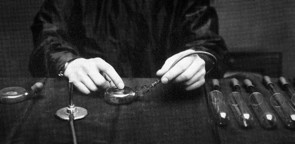
Alexis Carrel used specially designed flasks for growing cells
In the late 1940s, John Enders started using cell culture to grow viruses. His lab was the first to show that polio virus could be cultured in human tissues and that infection with the virus caused rapid changes in the appearance of the cells; these results meant that there was a quick and reliable assay for infection. Enders published his results in the journal Science in 1949 and soon after received the Nobel prize for his work.

It is important to consider Enders' work in the context of time and place. As Landecker writes, "It is not that Enders was particularly good at growing human cells." Instead, like so many scientific breakthroughs, Enders' success was due to being in the right place at the right time with the right reagents. The location of his lab in Boston Children's Hospital afforded Enders a ready supply of living tissues (from abortions, miscarriages, hysterectomies, and circumcisions, which were all used without concerns about patient consent or privacy). The timing was also critical as cell culture was becoming more feasible due to improved techniques and the increased availability of antibiotics. Enders' methods became the basis for the production of virus cultures for vaccine development, most significantly the creation of polio vaccine by Jonas Salk in 1954.

Importantly, Enders and Salk also had a major role in organizing the tissue culture community. One major push was for standardization of reagents and media; in the early days of cell culture, each lab made its own glassware and media, so it was nearly impossible to share cell lines between labs. Another proponent of standardization was cell biologist and electron microscopist Keith Porter. Porter wanted to image whole cells by EM, but was frustrated by the need to learn the exacting and often finicky methods of cell culture to get his experiments done. Porter and others started a group that would later become the Tissue Culture Association, which aimed to standardize media preparation and other elements of tissue culture.


The next major event in the history of cell culture happened in 1951, when an African-American patient named Henrietta Lacks was treated for cervical cancer at Johns Hopkins. Lacks' biopsy came into the hands of George Gey, who was able to generate the first human cell line (called HeLa cells) that in culture continuously. HeLa cells are unique in many respects: they grow rapidly and are robust enough to withstand shipping and freeze/thaw cycles. These unique features (which have been explained to some degree by the genome sequence) were what allowed researchers to culture the cells so easily, making HeLa cells a standard cell line in most laboratories.

The story of the origins of the cell line that was generated from Ms. Lacks' biopsy has been told in beautiful detail by Rebecca Skloot in The Immortal Life of Henrietta Lacks. Skloot's book (which is on my list of top science reads) focuses on the Lacks family as it comes to terms with the Henrietta's legacy. In Culturing Life, Landecker tells the HeLa story in broader strokes with a different historical context, focusing on how the tenor of the HeLa cell line origin story has changed over time. In 1968, with tissue culture techniques established and many cell lines available, Stanley Gartler published a Nature paper profiling eighteen cell lines; using the presence of a gene variant only present in African Americans, he showed that all were contaminated by HeLa cells. Predictably, these results created a major stir in the research community. Landecker details the language used to describe HeLa cells, particularly in regards to the contamination issue: aggressive, surreptitious, and malicious. Some scientists suggested that "one drop was enough" to contaminate and ruin a culture, which is evocative of the one-drop rule of racial classification in the US. Thus, unlike for most cells, the race and gender of the donor was central to the discussion of the cells.

While the language used to talk about HeLa cells has changed considerably, some elements have remained consistent. Scientists and science writers still connect the cells with Henrietta Lacks and talk about how the cells have allowed her to achieve immortality. Most articles will also detail how many HeLa cells have been grown since Gey started to culture the cells. Indeed, these are fascinating details. According to Skloot's book, "One scientist estimates that if you could pile all HeLa cells ever grown onto a scale, they’d weigh more than 50 million metric tons—an inconceivable number, given that an individual cell weighs almost nothing. Another scientist calculated that if you could lay all HeLa cells ever grown end-to-end, they’d wrap around the Earth at least three times, spanning more than 350 million feet." Thus, while the legacy of HeLa cells may be complicated, their utility in the research lab is not.

Monday, August 26, 2013

Henrietta Lacks' Immortal Cells

This month brought some progress to the family of Henrietta Lacks, whose cells were collected more than fifty years ago while Lacks suffered from cervical cancer. The resulting HeLa cell line has been critical for the development of cell culture, the generation of the Polio vaccine and many other important scientific discoveries. Recently, the genome sequence of HeLa cells was published online, a development that concerned Lacks' family members. As of this writing, the NIH has agreed to include two members of the Lacks family in the decision making process for the future use of the cells (check here and here for coverage of varying depth). The agreement does not result in any remuneration for the family. While this agreement is a clear step forward, this is still an isolated case and has not set a standard for consent about the use and sharing of genomic data.

I wanted to write something about this event because it brings the excellent book by Rebecca Skloot back into my mind. The Immortal Life of Henrietta Lacks is definitely near the top of my list for best science books; this list includes books by Stephen Jay Gould and Carl Sagan. Skloot has received many accolades, and with good reason. The book does an amazing job of laying out the history of a complex story in an easy, digestible way and she makes the story compelling. The book was written in such a way that you feel the thrill of the investigation, as well as an emotional connection to the Lacks family. Skloot was careful not to place blame on the scientists involved. Rather, she presents the issues surrounding the case with the professionalism and rigor of a journalist, rather than someone trying to sensationalize the case, which is certainly easy to do in a situation like this, where the patient was a poor, African-American woman whose cells were taken without permission (at the time, there was no standard for informed consent).

Henrietta Lacks was infected with both human papillomavirus (HPV) and syphilis (probably by her husband), which were likely the cause of and a contributing factor to the aggressiveness of her cervical cancer. Now, several groups of researchers are sequencing the genome from HeLa cells to pinpoint what made HeLa cells grow so robustly. In a paper published in the August 8 edition of Nature, Adey and colleagues report that the HeLa genome is hypertriploid (meaning that the cells had just over three sets of chromosomes, whereas healthy cells would have two copies; aneuploidy or abnormal chromosome numbers is a hallmark of cancer cells), has a surprisingly low rate of point mutations during the course of normal cell culture, and has had a fairly stable chromosome count since the initial isolation of the cells. Most interestingly, the study describes the insertion of the HPV genome at a fragile site on one copy of chromosome 8. Only two thirds of the HPV genome was observed at chromosome 8; importantly, copies of the E6 and E7 oncogenes of the HPV genome were integrated. These oncogenes have been linked to cervical cancer progression, malignancy, and cell immortalization. Notably, the sequence for E2, the inhibitor of E6 and E7, was absent. Finally, the site of HPV integration was 500 kilobases from MYC, a canonical proto-oncogene; MYC showed very high expression, but only from the copy of chromosome 8 that included the HPV genome. Essentially, the oncogenes from HPV were hyper-activated, as was the MYC oncogene from the HeLa genome and this was directly caused by the insertion of HPV near the MYC oncogene. Thus, the research suggests that the interaction between the HPV DNA and the HeLa DNA may underlie the robust growth characteristics of the HeLa cell line. These results are exciting and suggest that we still have a lot to learn about HeLa cells.