Showing posts with label STEM. Show all posts

Thursday, April 20, 2017

Hidden Figures: Lessons in Race, Gender, and the Importance of Funding Science

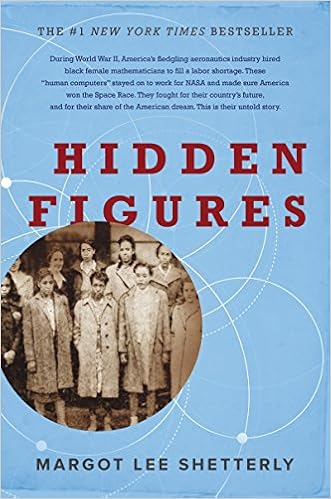
When I finished reading Rise of the Rocket Girls, I had to stop in my local book shop to grab Hidden Figures. While Rocket Girls details the women who worked as human computers at the Jet Propulsion Lab on the west coast, Hidden Figures focuses on a group of African American women working as human computers on the east coast at the Langley Research Center, first as part of the National Advisory Committee for Aeronautics and later part of NASA.

Hidden Figures is a bit denser in terms of the history and a bit less focused on the narratives of the individual women at the heart of the story. The author Margot Lee Shetterly has beautifully described how she came to tell this story, which is deeply connected to her life in Virginia, where her father worked for NASA's Langely Research Center and where all the family friends were connected to NASA in some way. As a result, the author has a very unique perspective on the lives of the young women who broke the boundaries at the NACA/NASA. Based on her initial research and interviews, she started The Human Computer Project, which aimed to document all the people who worked in this capacity at NACA/NASA. As she did this, she started to find the story that would become the book Hidden Figures. This careful research and detail is evident in every page of the book. In the epilogue, the author describes how hard it was to choose what stories to tell if you're finally bringing people's contributions to the space race to light, it can be hard to leave anything out!

As a result, the book is structured around the historical events that the women are connected with and driving forward. Interestingly, the movie complements the story perfectly in this respect. I admit that, in an unusual turn, I decided to watch the film as I was reading the book; this really helped me put the stories together into a linear (albeit much too simple) narrative. Don't get me wrong, the film was not without fault, oversimplification of the story was not as glaring as the white savior problem. (History vs. Hollywood has a good summary of the things the film got right and wrong.)


Because Hidden Figures has achieved such strong critical acclaim, there are plenty of excellent reviews of the content (e.g., The New York Times and The Atlantic), so I decided to focus instead on why it's so important that this story has been brought to light in 2017:
- We need to remember the realities of segregation.
- We need to remember the limited opportunities available for women in mid-century America
- We need to remember what can be achieved when we invest in science and technology.

Remembering the realities of segregation
Here is where I need to ask forgiveness for my ignorance of history. I have been studying science for many years, and this focus has meant that I have missed a lot of other important things, with history probably being at the top of the list. In my defense, I bet that lots of people, especially white folks or those educated in the south, were never taught about the realities of segregation. This is the first reason I think this book seems particularly relevant right now: we are at a time in our history when we seem to be moving backwards in terms of civil rights and we are at the risk of wiping out the truth of these events that happened only 60 years ago. Just as some deny the moon landing or the roundness of Earth, some want to erase this history, which they paint as being exaggerated (e.g., Betsey DeVos' suggestion that HBCUs were pioneers in school choice and the revision of Texas state history textbooks to downplay Jim Crow.)

Hidden Figures also reminds us that even after the obvious signs of segregation were removed, the less obvious and more pernicious elements of segregation persisted. For example, the book details how computer and engineer Mary Jackson's son was the "first colored boy to win" the local All American Soap Box Derby. While there was no explicit rule that black boys couldn't enter the race, it just wasn't something that would register to people in the black community. Even if someone did hear about such an event, there were still barriers to participation, which Shatterly's description perfectly:
"The electrified fence of segregation and the centuries of shocks it delivered so effectively circumscribed the lives of American blacks that even after the current was turned off, the idea of climbing over the fence inspired dread."
Unfortunately, people of color continue to be under-represented in STEM fields. Data from the National Science Foundation states that minorities (of any gender) make up only 10% of the STEM work force, despite being about a quarter of the population (statistics from 2015). A 2015 survey of women of color in STEM reports on the "Double Jeopardy" that these women face in their jobs. Women reported being mistaken for janitors and that they were likely to have to "prove themselves again and again" (covered here).  
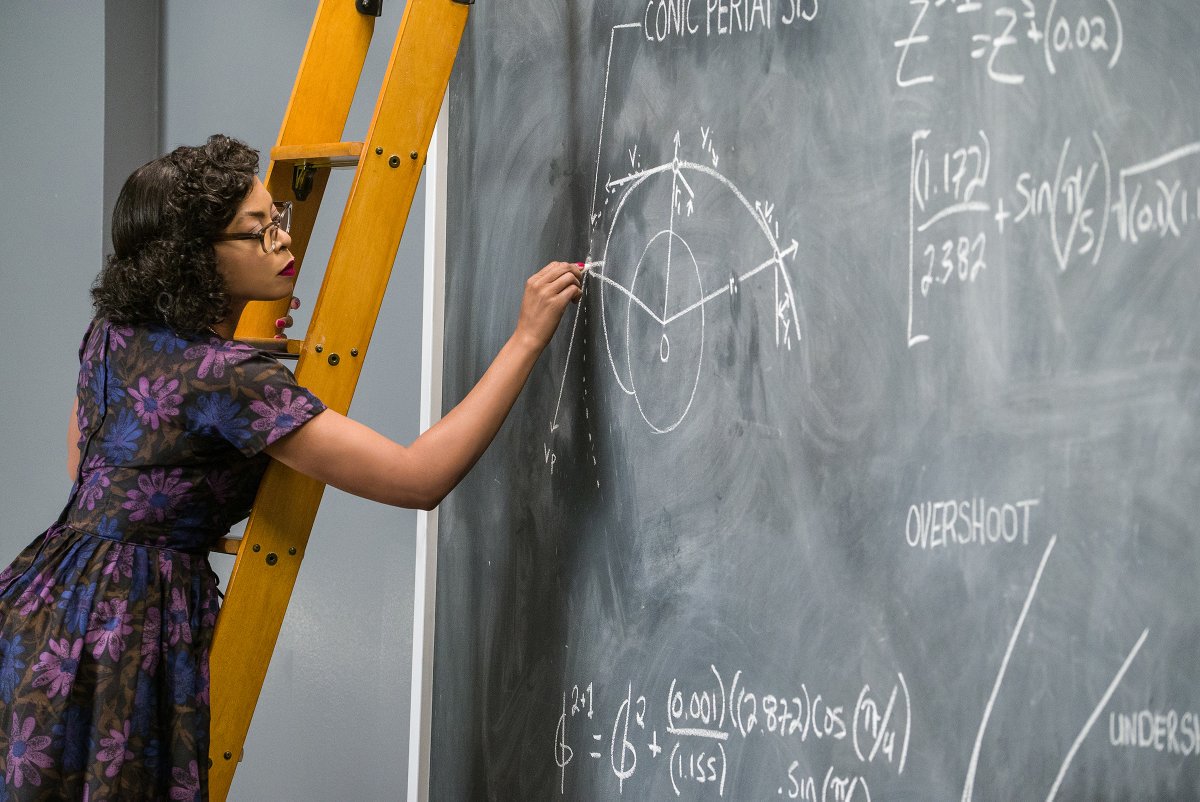
Katherine Johnson (Taraji Henson) at work in Hidden Figures

Remembering the limited options for women in mid-century America
The story of the female computers at Langley Research Center also highlights the contribution of women in STEM before the age of women's liberation. Before that time,
women were generally limited to jobs as nurses, teachers, or secretaries. Even the jobs that women filled during the war were chosen for their simple and repetitive nature. This is why so many women joined computing groupsthese were considered to be menial and repetitive tasks that required an attention for detail. Of course, even when women got the jobs that were suitable for their skills, they found their employers willing to say goodbye as soon as they got married or pregnant. (Remember that employers in the US were not required to give family leave until 1993.)

Even today, women are still not equally represented in STEM fields. Perhaps most troubling is the "leaky pipeline", where women are getting an equal number of advanced degrees as men, but are not securing high level jobs. There are a number of causes for these inequities (e.g., the confidence gap), but few solutions are clear. 

Implicit bias is another problem. The Implicit Bias test can help uncover your blind spots. As a woman of science, I was surprised to learn that I had some bias in associating men with science, particularly engineering and physics, where women are still in the lowest numbers. Interestingly, the author of Hidden Figures always thought scientists and engineers were black and middle class because that is what she grew up around. Hidden Figures reflects Shetterly's upbringing by portraying many positive black women in STEM. Recent data shows that girls as young as 6 start self-selecting out of STEM fields and already associate boys with inherent smartness and girls with hard work (coverage in the LA Times). Thus, it seems we need to start raising awareness of the prevalence of women in science and engineering. Some suggest that seeing more women and people of color in roles like this can encourage young women to chose STEM careers. 

It is frustrating to consider how many stories like Hidden Figures and Rise of the Rocket Girls still need to be uncovered. I recently read a post from Hilda Bastian, who has started a crowd-sourced project to get pictures of female scientists for their Wikipedia pages. She explains her rationale: "Pictures are one of the main drivers for whose stories get told and shared. So expanding the pool of women we can 'see' matters." Going forward, I plan to contribute to this project and look for ways to highlight the accomplishments of women in my daily work.

Remembering what we can achieve when we fund science and technology Finally, Hidden Figures highlights a time when America invested significant financial resources into science and engineering. The "space race" was clearly driven by a competitive and antagonistic spirit rather than an adventurous and scientific one; our entire purpose for going into space was to beat the Russians. (Ah, mid-century America, when our relationship with Russia was less complex)

Of course, the decision to put "Whitey on the Moon" rather than focus on the problems at home received criticism, especially when the competition for resources was an ideological war thousands of miles away (link checks out!) It's always been difficult for scientists to make the case for scientific funding. Our elected representatives might not understand why a project on the salamander axolotl could have benefits for regenerative medicine in humans or why a study on fruit flies could have an impact on cancer or how understanding the way an animal poisons its prey could help us develop pain killers, but now more than ever we need to invest in science

The Apollo missions gave us many important, indirect benefits: cell phone cameras and baby formula;, improved athletic footwear and solar panels.; and memory foam and precision GPS. Reminding people of what great things can be accomplished when we adequately fund science is an important part of doing science these days. Funding for NASA and other scientific organizations in the government has an excellent return on investment, which I plan to detail further in my next post about the upcoming Science March
Every day in this post-truth world, I really try to stay positive about the future. For me, Hidden Figures helped. I think the story highlights a time that is considered to be the height of the American empire (read: when America was Great), when these young, gifted, and black women put pencil to paper to propel us to the moon and beyond. I plan to watch Hidden Figures with my son and remind him of these important lessons. I recommend reading or watching Hidden Figures so you can benefit from Shetterly's perspective and knowledge as well.

Sunday, December 4, 2016

These children's books on engineering and inventing can help kids learn about the engineering process

In my previous posts about science books for kids, I focused on some of the books about science and scientists that I have read with my son. Along the way, I also found several books that have strong themes for teaching engineering. I read these with my eight-year-old son, but the books are generally appropriate for elementary age children. 

The Boy Who Harnessed The Wind tells the story of a young boy from Malawi named William Kamkwamba, who grew up during a severe drought and famine. These conditions, in combination with his interest in understanding the workings of car engines, led the fourteen-year-old William to design and build a windmill for his village. People were amazed when the young boy was able to power a light bulb with wind power. Now, William is a student at Dartmouth College, where he is studying to be an engineer. The book highlights how solving problems is central to the process of engineering.


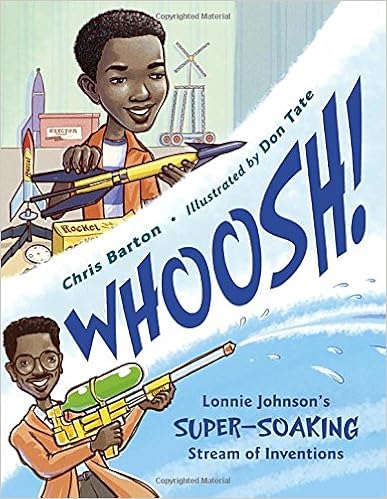
Whoosh: Lonnie Johnson's Super Soaking Stream of Inventions was a fun story about the man who invented the Super Soaker water gun. I chose this one because my son loves water guns and Nerf guns, and I thought he would like to learn more about the process of inventing these toys. Lonnie Johnson started inventing at a young age; he loved building rockets, which served him well in his job at NASA's Jet Propulsion Lab, where he helped missions for like the Galileo orbiter. In his spare time, Lonnie, who was always building and experimenting, stumbled upon a pump action water gun that would later become the Super Soaker. The story emphasizes the importance of both serendipity and hard work in the engineering process.

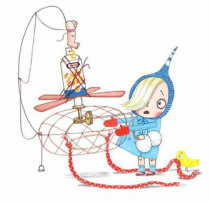
Papa's Mechanical Fish is loosely based on the story of Lodner Phillips, who created one of the first modern submarines. The book includes beautiful illustrations to help tell the story of an eccentric father as he tinkers in his backyard workshop to build something new and wonderful. This book highlights the need for problem solving and the process of iterative re-design. Of course, the reaction that people have to Papa's inventions also reminds us that inventors and engineers are often so ahead of their time that they are perceived as a bit mad.


The Glorious Flight Across the Channel with Louis Bleriot: This Caldecott award winner includes lovely paintings that evoke the turn of the 20th century in France. The story follows Louis Bleriot as he builds, tests, and re-builds a variety of airplanes, which he names successively (e.g., Bleiot I, Bleiot II). In 1909, the Bleriot XI flies across the English Channel. Like Papa's Mechanical Fish, this book shows how the engineering process really works, namely how there are more failures than successes.


Electrical Wizard: How Nikola Tesla Lit up the World tells the story of Serbian-born Nikola Tesla, whose curious mind and interest in electricity led him to discover and design systems to use alternating current electricity. However, Thomas Edison's direct current was the dominant system at the time. This led to a feud between the two inventors and the War of Currents, which culminated in Tesla's lighting up the World's Fair in 1893. Like most of the internet, I side with Tesla in this feud, viewing Tesla as the generous, unsung hero and Edison as the monopolist inventor. In the interest of fairness, I also read Young Thomas Edison with my son. The book details Edison's hard work and cleverness, not really getting into the ugly business with Tesla at all. As a pair, these books underscore the importance of curiosity and perseverance in the process of inventing. 

Wednesday, October 12, 2016

Share your love of science with these children's books about science and the scientific process

I missed many, many great children's books about science in my previous post, so I decided to re-visit the topic with my son. Here, I have chosen books that highlight the most important traits to nourish in budding scientists: asking questions, making observations, forming hypotheses, and remaining persistent.

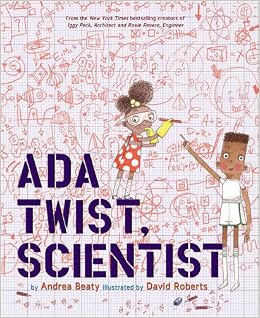
Ada Twist, Scientist: I had enjoyed Andrea Beatty's previous books so much that I decided to treat myself to this book (usually I borrow children's books from the Boston Public Library to save money and shelf space). We both found this book worth the purchase. The main character, Ada Marie Twist (named after Ada Lovelace and Marie Curie) is a young girl with an insatiable curiosity. Like her predecessor, Rosie Revere Engineer, who taught kids about the importance of persistence and troubleshooting in engineering, Ada teaches kids about the value of asking questions. I love that Ada's parents are totally game for her questioning and give her space to explore- definitely a vital trait for good science parents.


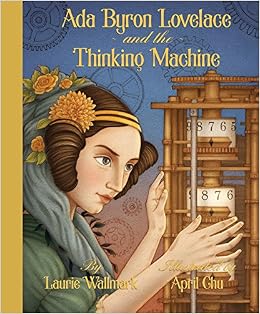
Ada Byron Lovelace and the Thinking Machine: Another great find! This book details the life and work of Ada Byron Lovelace. Abandoned by her father, the poet Lord Byron, Ada was lucky to have a mother with the financial means to encourage her interest in math. An early bout with measles left Ada paralyzed for some time (confusingly, the book never clarifies what happened here and left me with the impression that Ada was paralyzed for life). Ada's tutors opened her to a world inaccessible to most young women of her time. In her early twenties, her tutor Mary Somerville introduced Ada to Charles Babbage. Ada collaborated with Babbage on several projects, eventually putting together notes that outlined the first computer and computer program. I admit that I have not read that much about Ada Lovelace, so this book was a revelation for me. For me, Ada was uniquely positioned to enter the realm of science and math because her family had the means to encourage her interests. Surprisingly, the income barrier in science persists, even while other fields have become more accessible.

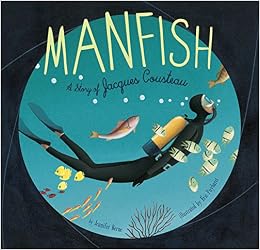
Manfish: A Story of Jacques CousteauMy introduction to science as a child relied on a healthy dose of Jacques Cousteau (as well as Carl Sagan and Mr. Wizard, of course). I loved how this book captured the magic of the world of the ocean as seen through the eyes of Cousteau. Manfish focuses on the need for asking questions and the importance of imagination and hard work. In particular, we learn how Cousteau and his partner Emilie Gagnan invented scuba tanks and gear to enable Cousteau to explore the ocean as never before. Cousteau also loved filmmaking from an early age, which proved critical for his success as a science educator and conservation activist.

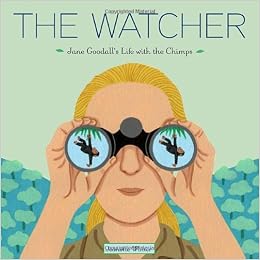
The Watcher: Jane Goodall: As a child, Jane Goodall loved to watch animals, she dreamed that she could talk to animals like Dr. Doolittle. After graduation, Jane saved up her money to travel to Kenya, where she wanted to work with animals. She was lucky enough to meet Louis Leakey, who gave her a job watching and studying chimps. Despite her lack of scientific training, Goodall revolutionized how ecologist studied their subjects, using an approach that involved long and careful watching and note taking without disturbing the subjects. The book highlights the importance of observation and patience for a scientist.


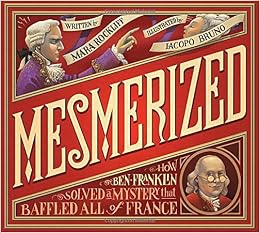
Mesmerized: How Ben Franklin Solved the Mystery that Baffled all of France was a book that we both enjoyed more than expected! The book details how Ben Franklin, while in France negotiating with Louis XVI for support of the American Revolution, did some scientific investigation of the Mesmer phenomenon. Because our son is presently obsessed with Hamilton, he was excited for some additional details about Lafayette and the French support of the Revolution. We both enjoyed getting some new information about Ben Franklin's fascinating life (he wore a fur hat to cover his bald spot and was a minor celebrity due to his kite experiment). Mesmer had most of France under his spell, until Ben Franklin used the scientific method to investigate. (Critique for the author: the final step in the scientific method should be "make conclusions" not "support your hypothesis"; we need to ensure that future scientists are not cherry pickers that are only interested in positive results!) Interestingly, the Mesmer phenomenon revealed the placebo effect and Franklin's approach to the problem formed the basis for later drug trial designs.


The Elements:A Visual Exploration of Every Known Atom in the Universe was recommended in a post about great science books for kids. It is a great reference book for a wide range of ages; whether your kids are just learning about the periodic table or if they want to learn more. This picture book includes a variety of photos associated with each elements as well as fun and interesting trivia. The author, who is an element collector, shares his love of the elements in a novel way. This one is also available as an iPad app, which is on my list to check out.


Wednesday, August 17, 2016

Share your love of science with these six children's books about scientists

At the library one day, I stumbled upon a children's book about Gregor Mendel. This gave me the idea to read a collection of books about scientists with my seven-year-old boy. The books highlight the importance of curiosity, perseverance, and troubleshooting in the scientific process.

Gregor Mendel - The Friar Who Grew PeasLike many on this list, the book begins with Mendel's youth, with a focus on his curiosity and his thirst for knowledge. His parents could not afford secondary school for Mendel, so he payed his own way by tutoring other students. He joined a monastery so he could focus on learning and not worry about making a living. While there, he began his famous experiments with pea plants; over the course of eight years, he grew close to 28,000 pea plants. This book was a great stimulus for conversations about genetic, which followed on our discussion from the cilantro experiment. I even learned something about the specifics of his experimental methods and the novelty of his approach of using mathematics to explain his results.


Rosie Revere, Engineer: This was definitely my favorite of the science books we read. Rosie Revere is a second grader who loves tinkering and building inventions. She aims to be an engineer, but is frustrated by the failures of her creations. Luckily, her great Aunt and namesake Rose (formerly known as Rosie the Riveter) helps young Rosie learn that the most important part of engineering is trouble shooting the problems that arise when you build, an important lesson for budding scientists and engineers. I am really looking forward to the author's next book, Ada Twist, Scientist, due out in September 2016.

Snowflake Bentley: This Caldecott Award winner is a beautiful picture book with woodcuts reminiscent of scenes by Currier and Ives. The style is appropriate for the story of Vermonter Wilson Bentley (b. 1865) whose fascination with snow led him to become an early DIY scientist, setting up a microscope and camera in his parents' barn. I first heard about Bentley on an episode of Radiolab about snowflakes and subsequently found this book during a particularly long visit to the public library during Boston's winter from hell. Like others on this list, the book highlights the importance for scientists to think differently and pursue questions tenaciously.

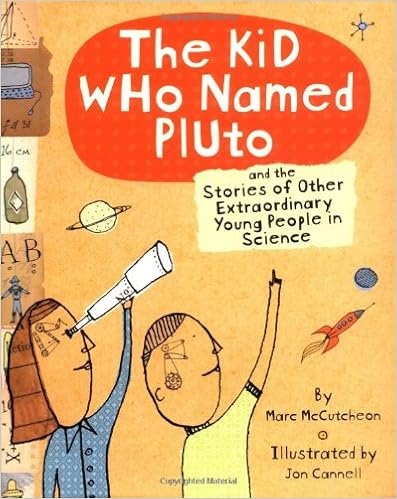
The Kid Who Named Pluto: This collection of stories about kids contributing to science was a mixed bag. While most stories fit the bill, some were tenuous in their connection to the theme. The highlights for us were the story of 11-year-old Venetia Burney, who suggested the name Pluto for our dwarf planet, and the story of Mary Anning, who supported her family by hunting and selling fossils near her home in Lyme Regis, England. Anning had many great finds in her lifetime, including several ichthyosaurs and a pterodactyl. (Shortly after reading this story, I came across this fascinating post about how Mary Anning may be the basis for the She sells seashells tongue twister; always great to see the Baader-Meinhof Phenomenon in action.) I think we will have to find some books that focus on Mary Anning for our next project!

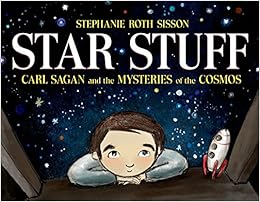
Star Stuff: Carl Sagan and the Mysteries of the Cosmos: Like most Gen X science types, I loved the first Cosmos series as a kid. I later re-discovered Carl Sagan in my early forays into science writing (his book The Shadows of Forgotten Ancestors is on my great science reads list); he made me want to be a science writer myself. Star Stuff book begins with Sagan in elementary school, where his interest in space was spurred in part by science fiction novels. It then details how Sagan started the Cosmos series to share his excitement about learning about the universe. Finally, his role in the U.S. space program, in particular his contribution to the Golden Record on the Voyager spaceships, is described. While we enjoyed this book, I felt it didn't capture the beauty and poetry of Sagan's language.

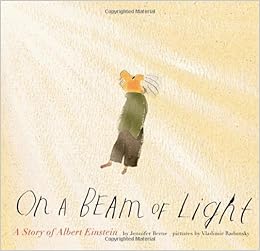
On a Beam of Light - A Story of Albert Einstein: For reasons unclear to me, my son is obsessed with Albert Einstein; I think it might be their mutual love of science and math and a dislike of hair brushes and socks. As most children's books about Einstein, On a Beam of Light begins with his parents worrying about his lack of speech, even at three years of age. When he finally does start talking, he is full of questions, much to the chagrin of his school teachers. The book highlights the importance of curiosity and how asking simple questions can lead to truly profound results.This was a favorite for both of us; I thought it captured the eccentricity of Einstein as well as the practical elements of his personality that made him successful (hardworking and thoughtful).

------------------------------------------------------------------------------

** For more recommendations on books to spark your child's interest in science, check out this post from the CrossTalk blog.