Wednesday, October 7, 2015

Frankenstein's Cat by Emily Anthes looks at how genetic engineering is changing the animals around us


Frankenstein's Cat: Cuddling up to Biotech's Brave New Beasts by Emily Anthes explores how biotechnology and genetic engineering are changing the animals around us. The book delves into the science behind these new creatures as well as the ethical issues and public perceptions. The result is an easy and interesting read that makes you imagine the genetically engineered animals that could be on the horizon.


GloFish were the first commercially available pets created using biotechnology. By inserting the gene that makes jellyfish glow (green fluorescent protein, or GFP) into a common pet store find (zebrafish), the inventor was able to create a fish that glowed green in certain lights. Despite seeming relatively benign, the company was required to perform extensive research on the possible environmental impacts in case of escape before GloFish were approved for sale in 2003. Interestingly, consumers had few concerns about these new creatures and were willing to pay almost 20 dollars for each fish. The company now has a variety of other colors and species available and sells special tanks to help you enjoy their fluorescent fish.

Pharming is a branch of biotechnology where researchers use farm animals to produce a range of pharmacological products. For example, goats can be engineered to produce the protein lysozyme in their milk. Lysozyme has been shown to inhibit bacterial growth; some preliminary results suggest that the lysozyme-enriched milk can improve the immune system. The scientists behind this project hope that this goat milk could help protect children from bacterial infections. Similar approaches have been used to engineer goats that have silk protein in their milk and silkworms that make collagen instead of silk. These additives are not harmful to the animals and have a range of potential applications.

The chapter on animal cloning starts with Dolly the sheep (the first cloned animal) and makes some interesting stops along the way. The story of Carbon Copy (CC), the first cloned cat (sometimes called Copy Cat), is scientifically notable because CC doesn't look much like her calico mother Rainbow. This is due to a process called X chromosome inactivation (you can learn more about this process in my recent post on Junk DNA). The gene for orange fur is on the X chromosome. CC's genome has an inactive copy of the X chromosome from her clone mother. Thus, while CC is genetically identical, she is phenotypically different. This result was interesting to scientists, but it likely gave future customers of cat cloning some pause–what's the point of paying to have your favorite cat cloned if you can't be sure you will get a cat that looks the same?

Anthes tours a wildlife preserve and research center in Louisiana where researchers aim to develop and perfect methods for cloning animals with the long-term goal of preservation of endangered species. This is certainly worthwhile goal, but the barriers, both technical and ecological, are numerous. To me, the biggest problem with saving a species through cloning is the lack of genetic diversity. Until these problems are solved, many are banking on frozen zoos, large stocks of samples from a variety of animals that are endanger of extinction. The hope is that once cloning technology improves, it may become viable to add to the existing populations.

Roboroach from Backyard Brains
The chapter on cyborg animals was truly fascinating. For example, Anthes talks about the CIA's experiments with remote-controlled cats. Project Acoustic Kitty was predictably a failure due to the fiercely independent nature of cats. There are some notable success stories with insect cyborgs. In fact, for 99 dollars, you can build your own Roboroach. The newest approaches include the use of optogenetics, where specific neurons are made to be light sensitive, allowing researchers to control animals by shining a light. These experiments have some important applications, such as the removal of land mines and the detection of survivors in earthquake rubble, but people find animal mind control to be unsettling (even if it is a roach). It is important to consider that.

The book concludes with predictions of what may be possible in the future, like creating farm animals that are resistant to disease to decrease the use of antibiotics. Frankenstein's Cat was published in 2013 and the field has made amazing progress since that time. With the advent of the new genome editing technique CRISPR, the possibilities are truly endless, which has led to concerns about the ethical and safety considerations of this technology. Earlier this week a Chinese Institute caused a stir with its announcement of the commercial availability of gene-edited micro-pigs as pets. It will be interesting to see where we draw the line on genetically modified animals.  

Wednesday, September 23, 2015

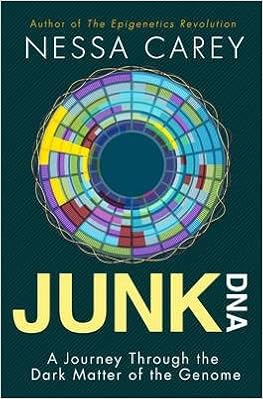
Junk DNA: Nessa Carey's new book about the actually important stuff in the genome.

In 2001, when the first draft of the human genome was completed, researchers were surprised to learn that only 2% of the human genome codes for proteins. At the time, scientists were very focused on proteins and thought that there would be a much larger number of protein-coding genes in the human genome due to our complexity. The term "junk DNA" has been used to describe the other 98% of the genome. With only 20,000 protein-coding genes, the human genome contains almost the same number of genes as the simple roundworm and model organism C. elegans. However, C. elegans has very little excess DNA, suggesting that this junk DNA could be part of the explanation for the increased complexity of humans. This is the starting point for Nessa Carey's second book Junk DNA: A Journey Through The Dark Matter of the Genome, which explains the importance of the non-coding portion of the genome.

Some scientists have argued that the term junk DNA should be scrapped for a more neutral term like non-coding DNA. They suggest that the term is dated and inaccurate. In addition, calling it junk is rather pejorative and is based on the protein-focused view of the genome. Carey's book nicely demonstrates that the other 98% isn't always junk.

What is the other 98% of the genome good for then? Some non-coding DNA has well-established functions. For example, the centromeres are the stretches of DNA that allow the chromosomes to attach to the cell's chromosome segregation apparatus (the mitotic spindle) when the cell copies and divides its DNA. Another example is the telomeres, the lengthy repeat regions of DNA at the ends of the chromosomes. Because telomeres shorten with every cell division, they are linked with aging.


Junk DNA also encodes several special types of RNAs, including long non-coding RNA (lncRNA), microRNA (miRNA), and small interfering RNA (siRNA), that control gene expression. One of the earliest described examples of these special RNAs is found in the biology of sex determination. In XX females, one X chromosome is inactivated to ensure that genes on the X chromosome are not overexpressed. This process, called X chromosome inactivation, is controlled by a gene called Xist (X-inactive specific transcript). Xist encodes a long non-coding RNA, which covers one X chromosome and inactivates it (Xi). Interestingly, on the opposite strand from Xist is a gene called Tsix, which is expressed on the active X chromosome (Xa). The expression of these genes is mutually exclusive, ensuring that only one X chromosome is activated. The Xist/Tsix story highlights the power of special RNAs in controlling gene expression. These RNAs are the subject of intense research in both basic and clinical settings. Carey describes several approved drugs and promising clinical trials based on anti-sense approaches.

In short, Junk DNA was quite readable and should be informative for readers at any level of knowledge about molecular biology. My only complaint about the book was Carey's decision not to include protein or gene names in her writing. In the first chapter, she explains that this was due to the fact that half of her readers find it disruptive. Instead, where applicable, she includes footnotes with the gene or protein names. Unfortunately for me, I am in the half that finds it disruptive to read footnotes to learn the name of the gene in question. Otherwise, the book was very up to date and comprehensive. I also liked her use of simple graphics to explain complex concepts in molecular biology. I recommend Junk DNA for those who want to learn more about why the non-coding regions of our DNA are not junk.

Sunday, September 13, 2015

The Emperor of All Maladies - comments on the second part of the PBS special

In all my reading about cancer biology, I have not yet tackled The Emperor of All Maladies, which is said to be the best book on the subject.  Luckily, PBS and Ken Burns have delivered an excellent three-part series based on Siddhartha Mukherjee's 2011 book. This post covers the contents of part two, "The Blind Men and The Elephant."

This part of the series focuses on discovering the cause of cancer. The title, an allusion to the parable, refers to the fact that for many years scientists could not find the connection between the three major causes of cancer: viral, chemical, and genetic. The ideas were separated ideologically and scientifically. At conferences, the scientists that supported each of these ideas did not interact. It was only relatively recently that the connections between these causes were illuminated.

The earliest carcinogen was discovered in 1911 by Peyton Rous, who described the viral origin of avian sarcoma (for more information check out this great story by Jessica Wapner). In 1964, Burkitt lymphoma was linked to the Epstein-Barr virus. These results led to an rapid increase in the focus on viral carcinogenesis with the idea that a vaccine could prevent cancer. This focus came at the cost of other ideas about the causes of cancer. Unfortunately, Human papillomavirus (HPV) and Hepatitis (HepB and C) have been the only other viral carcinogens identified.

The second idea was that chemicals cause cancer. Lung cancers became increasingly common in the late 1940s. Epidemiological studies showed links between cigarette smoking and lung cancer, but tobacco companies obfuscated the results. In 1964, scientific links between cigarettes and lung cancer were firmly established thanks in part to the Kennedy administration's blue ribbon panel tasked with investigating the matter. Once the epidemiological methods were established for tobacco, other chemicals were added to the carcinogen list.

The final idea was that genes caused cancer. The major breakthrough came from Michael Bishop and Harold Varmos, who were studying the Rous sarcoma virus. Their timing was perfect – the tools of molecular biology were becoming readily available. Work from their labs led to the discovery of a gene called Src, the first described oncogene. The oncogene idea was that normal genes in our bodies that control cell growth can be turned on at high levels and cause cancer. Robert Weinberg later identified the first human oncogene, Ras. Dozens of other oncogenes were found in subsequent years, leading to optimism that the cure for cancer was surely close at hand. However, we have since learned that cancer is a complex disease (some argue a collection of diseases) with a diverse range of etiologies, which makes it impossible to treat with a one-size-fits-all approach.

Interspersed with the description of cancer research was a narrative of one woman's treatment for breast cancer. This story begins with a history of breast cancer treatment, including a discussion of William Halsted's radical mastectomy. As I covered in more detail in my recent post on Pandora's DNA, Halsted's method was the standard treatment for breast cancer for nearly a century. The success rate was not impressive, but the treatment approach was unchallenged until Bernard Fisher criticized its use. Fisher performed a clinical trial to compare the use of the lumpectomy with the radical mastectomy. In 1985, his results showed that either approach was just as effective, but that the lumpectomy was less invasive and led to improved quality of life. Radical mastectomy was no longer the standard therapy: "cutting more did not mean curing more".

The intention of this segment was to illustrate the personal side of cancer, but for me the link between the two segments was how the treatment of cancer has evolved in parallel with developments in cancer research. This highlights how basic scientific research is a critical starting point for successful clinical outcomes.

Tuesday, August 18, 2015

The genetic wonders of red hair

I recently finished reading Armand Leroi's Mutants, where I learned about some of the polymorphisms (small changes in DNA sequence) linked to variations in human skin and hair color, particularly red hair. With two different types of redheads in the house, I have always been curious about the genetic basis of this relatively rare trait.


red-haired mouse (from Flickr)
Hair and skin color are determined by the relative proportions of the two types of melanin pigment: eumelanin (dark brown) and pheomelanin (red/yellow). Large amounts eumelanin result in darker hair and very little produces blond hair. People with more pheomelanin have red hair. Red hair phenotypes can range from pale red to bright red or reddish brown, which is due to a balance of the two melanin types. Polymorphisms in the melanocortin 1 receptor gene (MC1R) are associated with variations in hair and skin color in mammals. The MC1R protein is a membrane receptor found only in melanin-producing cells (melanocytes). In response to melanocyte-stimulating hormones (MSHs), MC1R initiates a cascade of cellular events that turns on the production of pigment synthesizing genes, including pheomelanin or eumelanin. Essentially, MC1R determines pigmentation by regulating the relative proportion of eumelanin and pheomelanin.


The ancestral form of the MC1R allele produces eumelanin; variant alleles are less functional, decreasing eumelanin production or increasing the amount of yellow/red melanin. Variations in MC1R contribute to a spectrum of phenotypes, including freckling, red hair color, and sun sensitivity. MC1R alleles that disrupt function are present in ~80% of individuals with red hair and ~20% with brown-black hair. More than 80 MC1R allele variations have been identified in European populations. Association studies have shown that certain MC1R variants (p.D84E, p.R151C, p.R160W, p.D294H, p.R142H, and p.I155T) are linked with the red hair color phenotype.

One unanswered question is why these polymorphisms are more prevalent in Eurasians than in Africans. The current hypothesis is that paler skin permits better synthesis of Vitamin D in environments with less sunlight. A recent study using data from the 1000 Genomes Project revealed that the polymorphisms are also more common in Northern Europe than Southern Europe, which supports the Vitamin D hypothesis. Interestingly, a MC1R variant has been observed in Neanderthals, indicating that red hair and pale skin were also present in this population. A recent paper has shown that the Neanderthal MC1R variant is rare in Europeans, but can be found in East Asian populations. This result suggests that mutation of MC1R was a common mechanism to adapt to changes in sunlight intensity.

from David Fisher's lab


Some MC1R variants are associated with an increased risk of melanoma. Due to increased sun sensitivity and freckling of people with pale skin, this relationship seems obvious. However, darkly pigmented Caucasians with certain MC1R variants also show an increased incidence of melanoma. This result suggests that the MC1R pathway may have another role in the development of melanoma beyond differences in the ability to filter UV rays in light and dark skin. In fact, scientists think that MC1R may play a pigment-dependent and a pigment-independent role in skin carcinogenesis. There are a few hypotheses to explain the link between MC1R and melanoma. First, after UV exposure, cells with more pheomelanin show increases in DNA damage, which is correlated with increases in abnormal cell growth and proliferation, a hallmark of cancer. Second, a recent paper in Molecular Cell suggested that UV light triggers the interaction of a tumor suppressor called PTEN with MC1R. The tumor suppressor can interact with wild type MC1R, but not the red hair alleles of MC1R. The PTEN-MC1R interaction protects PTEN from degradation, which suppresses an oncogenic signaling pathway (PI3K/Akt). In contrast, MC1R variants do not interact with PTEN, allowing increased levels of oncogenic signaling pathways after UV irradiation. Unfortunately for redheads, sun exposure alone is not the sole mechanism for skin cancer. A Nature paper from David Fisher’s lab used a red-head mouse model with inactive MC1R to investigate a possible UV-independent pathway. They found that in the presence of the most common melanoma oncoprotein (BRAF 600E), ginger mice developed melanoma without UV exposure, while MC1R wild-type mice did not. Thus, shielding easily freckled skin from the sun may not be enough to protect from skin cancer for people with certain MC1R variants.


The association between red hair and melanoma suggested that there may be a scientific basis for the headline from 2014 that climate change was putting the red hair gene in danger of extinction. The story was exposed as alarmist and scientifically inaccurate. One of the many problems with the article is that they label the red hair gene as recessive. Because hair color is a complex phenotype, it is not surprising that the genetics of red hair are also complex. Red hair is usually inherited in a recessive manner, but it can also be dominant. A 2000 study showed that the inheritance pattern depends on the MC1R allele that is present: most alleles are recessive, but some alleles can be dominant. Individuals that are heterozygous for a mutant MC1R allele show variations in red hair color, beard color, or freckling. Thus, there is a dosage effect of MC1R variants on hair and skin color, which explains why some men have red beards and brown hair. These results also explain how two red-haired parents can (on rare occasions) have children that don't have red hair. Thankfully, the many variations in MC1R and the complex inheritance patterns mean that red hair isn't likely to die out any time soon.

**************************

For more information, I recommend the following links:

Red heads feel pain differently A blog post from 23andme about the population genetics of red hair.

Friday, July 31, 2015

Pandora's DNA: One woman's experience with a BRCA mutation

In Pandora's DNA: Tracing the Breast Cancer Gene through History, Science, and One Family Tree, Lizzie Stark describes her experience with a BRCA mutation, which has left its mark on generation after generation of women in her family. Like The Cancer Chronicles, Stark explores the science to understand the causes and consequences of the BRCA mutation. As a child, Stark watched her young mother as well as many of the women in her family endure breast and ovarian cancer and the subsequent treatments. In the nineties, when the BRCA gene test was first available, Stark accompanied her mother to appointments with a genetic counselor, who informed them that her family has a mutation in the BRCA1 gene called 3600del11 (a truncation mutation where 10 DNA bases are deleted from exon 11), a mutation that seems to be more prevalent in French families (for more on the population genetics of BRCA mutations, check out The Wandering Gene and the Indian Princess).

Upon learning of her mother's BRCA status, Stark realizes that she has a 50% chance of having the same mutation. Thus, she decides to learn more about the history of breast and ovarian cancer diagnosis and treatment to inform her decisions about her own treatment options. The radical mastectomy was introduced by the unusual and innovative surgeon William Halsted. Halsted (the basis for the drug-addicted surgeon on The Knick) started his career in 1880; he developed the first blood transfusion, pioneered the use of rubber gloves (through a partnership with the Goodyear rubber company) for surgery, and performed the first mastectomy in the US. Because patients regularly relapsed after this treatment, Halsted decided that a more extensive mastectomy was the solution to the problem; the radical mastectomy was designed to carve out the root of the cancer. However, the procedure, which takes both the breasts and the pectoral muscles, still has a recurrence rate of 60%. Despite these grim statistics and the fact that the procedure negatively affected women's posture and arm mobility, the radical mastectomy was the standard for care for breast cancer for nearly a hundred years.

A med student named Emil Grubbe experimented with the use of radiation to treat cancer recurrence following mastectomy; Grubbe reasoned that radiation might kill rapidly dividing cells like those in cancer. His treatment worked well for many patients, but cost the doctor his own life to radiation-induced cancer. Dr. Geoffrey Keynes (brother to the economist John Maynard Keynes) became a strong proponent the lumpectomy, a more conservative surgery that removes only the tumor and a bit of surrounding tissue, in combination with radiation therapy. In 1935, Keynes started comparing survival rates for patients receiving the combined treatment with those who had a radical mastectomy. Surprisingly, survival rates were nearly identical. Despite the fact that this less aggressive treatment was just as effective, the medical community ignored the results. It wasn't until a study published in 1981 confirmed these results that the Halsted method was finally called into question. In fact, until the 1970's, if a woman had a suspicious lump in her breast, she would be taken in for exploratory surgery, where the surgeons would biopsy the tumor and, if necessary, remove the breast without waking her up. Thus, women would go into surgery and not know whether they would wake up "with a band-aid or without breasts". This practice added psychological difficulty to the radical mastectomy. However, the women's health movement of the 1970's helped give women more power in this process and improve the life of women after treatment.

Location of the BRCA1 gene (Wikipedia)
One hero of the story is Mary-Claire King, who identified the BRCA1 gene's connection to inherited breast and ovarian cancers. (King has led an extraordinary life. In addition to her role in the BRCA story, her lab helped UN war crimes tribunals identify victims when DNA testing was still in its infancy. She tells a great story at The Moth about the connection between BRCA and Joe DiMaggio.**) After King announced her findings, a competing group formed Myriad Genetics, a company that would later patent the BRCA1 and BRCA2 genes, which allowed the company to set the price for the mutation screening. A 2013 Supreme Court decision eliminated this patent, which lowered the price for the test. Myriad Genetics has become the big bad in the BRCA story. Stark's interview with a patent attorney points out that by monetizing the BRCA test, the company was able to make it more widely available. This interview also includes an interesting discussion of the pros and cons of patenting a gene. Despite the patent ruling, Myriad Genetics has refused to share all of the data obtained from their BRCA testing, which could impede research on identifying additional BRCA mutations linked to cancer.

Stark is in the first cohort of women (along with Angelina Jolie) who are able to choose to test for the BRCA mutation. When Stark learns of her BRCA status, she then considers her treatment options: constant cancer screenings or preventative mastectomy and oopherectomy. Here, the author discusses her thought process as well as the published research as she comes to terms with her BRCA status and the health decisions she must make. Stark does an excellent job describing the research, especially considering she is not trained in science. Overall, I found the book both readable and informative; thus, it will be a useful read for a person whose family is affected by a BRCA mutation.

-------------------------------------------------------------------------------------------------------------------------
** For more on the story of Mary-Claire King and her research in hereditary breast and ovarian cancer, check out the film Decoding Annie Parker. 

Thursday, July 16, 2015

The Emperor of All Maladies - part three of Ken Burns' PBS documentary

In all my reading about cancer biology, I have yet to tackle The Emperor of All Maladies, which is said to be the best book on the subject. Luckily, PBS and Ken Burns have delivered a three-part series based on Siddhartha Mukherjee's 2011 book. Here, I will do a short synopsis of Part Three, "Finding the Achilles Heel", which focuses on the development of cancer therapies.

The documentary begins with the story of Gleevec (covered beautifully in Jessica Wapner's The Philadelphia Chromosome), which was designed specifically to treat a type of chronic myelogenous leukemia (CML) that is caused by a swapping of two chromosomes to create the Philadelphia chromosome. The success of Gleevec led to great hope – could this be the first of many targeted therapeutics? Indeed, there have been some successes in targeted therapies; ALK inhibitors have shown some promise for the treatment of cancers that are characterized by the presence of an ALK gene rearrangement. However, on average, only four targeted therapy drugs are approved per year. These drugs are typically very expensive and are not very successful in terms of extending patients' lives.

The complexity of cancer has been a major obstacle in the development of successful therapeutics. When the human genome was completed in 2001, a new hypothesis arose: if we sequence common cancers and compare with normal cells, we could begin to understand exactly how they differ. In 2005, The Cancer Genome Atlas (TCGA) project began; this large-scale sequencing project aims to identify mutations in 25 different types of commonly occurring cancers. The first results, released in September 2008, confirmed cancer's complexity. Many cancers had multiple mutations in as many as 100 genes. However, there were some cancers that had only a few mutations or showed recurrent mutations, which were found in many different patients. These less complex cancers are the focus of future directions. As more and more cancer genomes are completed, researchers can start to identify patterns in the mutations that appear in cancers; such analyses may lead to the identification of driver mutations (i.e., mutations that are causally linked to oncogenesis) versus passenger mutations (i.e., mutations that are picked up along the way). Mukherjee points out how much drug companies have benefited from the information from basic research. He suggests that the current funding environment, where increased funding of clinical and translational studies comes at the expense of basic research, is not likely to promote these types of success stories in the future.

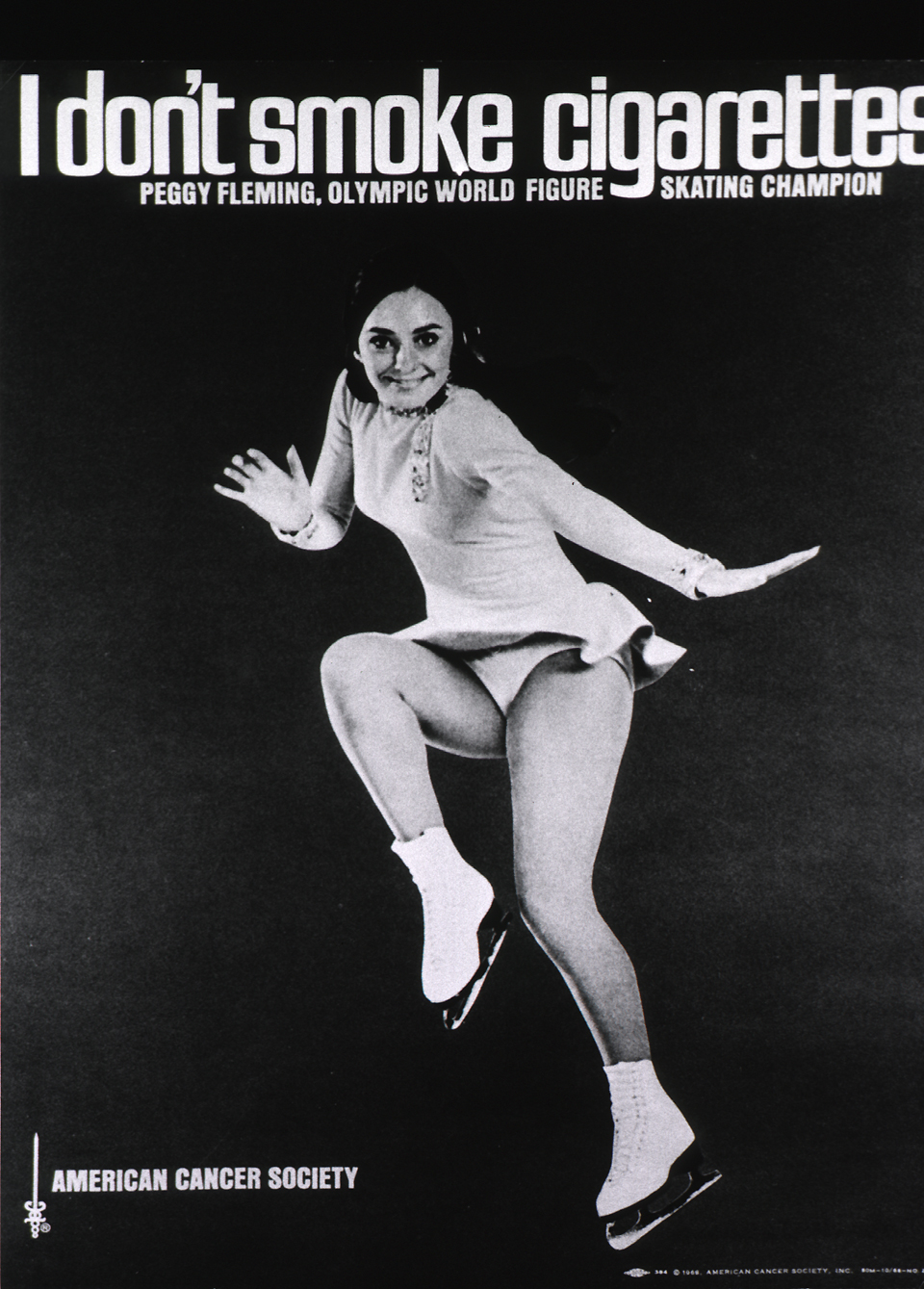
ACS, anti-smoking ad 1968
The shift in focus from cancer treatment to cancer prevention has generally been a useful approach. For example, smoking was once a major contributor to cancer, but anti-smoking campaigns starting in the late 1960's have successfully reduced the number of new lung cancer cases. Obesity is another major contributor, but solving this health problem has been less straightforward. Viruses like human papilloma virus (HPV) and hepatitis are also common causes for cancers; these viruses are now decreasing in incidence with vaccines for both viruses available. Approximately 40% of cancers are due to unknown causes. Epidemiology focuses on determining a causal link between cancers and environmental factors (e.g., pollution, occupation, cell phones), but the connections are often difficult to prove (as was discussed in Toms River.) Overall, the combination of prevention, early detection, and targeted therapies has decreased the cancer mortality rate 20% in the US over the last two decades.


For me, the most interesting part of the this episode was about cancer immunotherapy. Cellular immunotherapy takes immune cells from a patient's blood, activates these cells, and then gives them back to the patient; this approach boosts the immune system by enriching for T cells. Some researchers have suggested that the immune system is held back from attacking cancer because it is the patient's own cells. In 1992, the FDA approved a therapy using interleukin-2 (IL-2), a protein produced by white blood cells during the immune response. Increasing IL-2 leads to increased T cell response, making T cells more likely to recognize and attack cancer cells. After that initial success, there were few breakthroughs, but some recent developments have increased interest in the field. For example, in 2011 the FDA approved Yervoy (ipilimumab), which binds and blocks CTLA-4, a checkpoint protein that prevents T-cell activation to keep cells from attacking healthy tissue. Thus, when CTLA-4 is blocked, T cells can attack tumors. Both Yervoy and IL-2 treatment show long-lasting responses, but only in a small percentage of patients; serious side effects are also common. The newest weapon in the immunotherapy arsenal is an inhibitor of PD-1, called Opdivo (nivolumab). PD-1 is another checkpoint protein, which some cancers use to disable the T cells in the area surrounding the tumor. PD-1's specificity to cancer cells suggests that Opdivo could be more powerful and less toxic than existing therapies. Based on these exciting developments, this is likely an area to watch in the coming years. 

--------------------------------------------
** You can read more about cancer immunotherapy in this feature in Nature, this Nature review by Ira Mellman, or the April 2015 special issue of Cancer Cell focused on immunotherapy in cancer.

Saturday, June 27, 2015

Armand Leroi's Mutants: where the Mutter Museum meets Geek Love

Mutants: On Genetic Variety and the Human Body by Armand Marie Leroi explores the genetic and developmental reasons for variations in the human form. I thought this book would be a good follow up from Inheritance, which focuses on rare genetic disorders that often have a relatively minor physical abnormality, such as eyes that are widely space (hypertelorism). Based on the cover and title, I expected the book to be a bit of a carnivalesque spectacle– part Mutter Museum, part Geek Love. In fact, the text treated these "mutants" respectfully and with due scientific diligence. The focus was generally on the developmental pathways that were altered in the mutations observed, but there was some exploration of the toll these mutations took on their bearer.

The book begins with the historical observations of mutants and the explanations for why these mutations arose. In the beginning, "monsters" were thought to be caused by the wrath of God. Eventually, scientists began to understand the developmental causes for these variations. In a chapter called "A Perfect Join", Leroi writes about conjoined twins, specifically how they form. Interestingly, conjoined twins are more likely to have a condition called situs inversus, where the internal organs are inverted on the left-right axis. In fact, the rare singleton birth with this condition has been useful in teaching us why our organs are oriented the way they are. Situs inversus is one symptom of Kartagener's syndrome, which is caused by a mutation in one of the proteins (dynein's outer arm) that control the movement of cilia (tiny projections on the surface of many different cell types). The other symptoms are chronic bronchitis (cilia are important for clearing the lung and nasal passages) and sterility in males (the same proteins are required for the movement of sperm). I always find it amazing how a small mutation in one protein can have such profound consequences. My favorite lines from the book describe how scientists study gene function: "It is actually quite hard to prove that a gene...does what one supposes. One way...is to eliminate the gene and watch what happens. This is rather like removing a car part...to see why it's there. Sometimes only a rear-view mirror falls off, but sometimes the car dies."

A funny story arises in the explanation of the Hox genes, which essentially control the pattern of embryonic development such that Hox1 makes a head, Hox2 makes a torso, etc. Mutations in Hox genes can lead to abnormal body plans, even changes in the number of vertebrae and ribs. About one in every ten adults has an extra pair of ribs, an abnormality that was first observed in a woman, leading the doctors on the case to conclude that it was evidence of the truth of Adam and Eve. In reality, the physiological variation occurs at equal rates in men and women.

The chapter on skin color explores the mutations that lead to albinism, piebaldism, and even red hair. Dozens of different mutations in MC1R (melanocortin 1 receptor), a protein that helps control pigmentation, have been described in red heads. (Because my house has three different types of red heads, I really fell into an Internet rabbit hole on this subject. I think I will write something more about this later.) The genetics of skin color are also complex and have been difficult to study due to the complicated social issues surrounding the subject. Leroi tells the story of a white woman living in Apartheid-era South Africa. Following a diagnosis with Cushing's disease, her adrenal glands were removed, which led to hyperpigmentation due to an abundance of the hormone melanotrophin. As her skin darkened, her social status and living conditions quickly changed. To me, the story highlights the problem with thinking that we can biologically define race. (A Troublesome Inheritance was released recently and covers this very topic, so watch this space for my review.)

Leroi also discusses the genetic basis for aging; in the simplest terms, aging is due to the "inability of natural selection to act against the mutations that cause disease in the very old." This hypothesis explains why dominant mutations like Huntington's can fix in the population. An experiment in fruit flies explored what would happen if only aged flies were reproducing; the effect should be an increase in genetic changes that promote longevity and fertility at an advanced age. After ten generations, the longevity of these flies increased by 30%; after fifty generations, life expectancy doubled. The flies were generally hardier, but the increased life expectancy came at a cost: the fruit flies were less active in their youth as they needed to preserve themselves to ensure survival and mating. This experiment supports the idea that aging comes at the expense of vitality in youth.

Overall, Mutants was quite readable; it had a nice balance of the science behind the mutations and the descriptions of the lives of the people who were affected with these mutations. I should note that the book was released in 2003, so some of the science is a bit out of date. For me, a good read is one that teaches me new science and spurs me to read and write more. Mutants definitely fits the bill in that regard.