Showing posts with label Amy Stewart. Show all posts

Sunday, January 11, 2015

Poisons and venoms - deadly consequences and therapeutic benefits

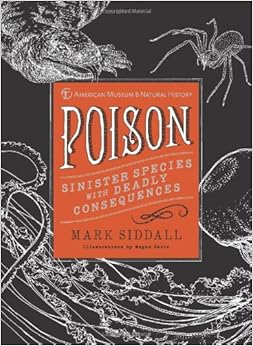
I picked up Poison - Sinister Species with Deadly Consequences by Mark Siddall from the new release shelf at my local branch of the Boston Public Library. It was a whim, but it paid off. Poison has many similarities to Amy Stewart's Wicked Bugs, including the small format and the detailed pen-and-ink scientific illustrations. The subject matter also has a good amount of overlap. Siddall, a curator for the American Natural History Museum, wrote the book in connection with an exhibit by the same name. The book was immensely readable with many fascinating vignettes, which makes me sad that I missed the exhibit (although the ANHM website suggests that it is traveling). If you want to get a sense of the style of the book, check out Siddall's piece in IFLScience.

Siddall explores a few of the many different ways that plants and animals can kill or at least send you writhing in pain. The most surprising fact of the book: platypodes are venomous! The male platypus has spurs on its hind limbs, which can deliver venom. The venom, produced only during mating season as a defense against competing males, is actually strong enough to cause mild paralysis in humans. Another incredible story concerned two vastly different organisms (pitohui birds and phyllobatid frogs) that produce the exact same toxin (batrachotoxin) despite being separated by more than 10,000 miles and millions of years of evolution. It seems that the birds and frogs both eat a particular species of flower beetle that produces this chemically unique toxin. Both species have evolved a tolerance to the poison in the beetle and can use the toxin to protect themselves from predators.

Reading the book reminded me of all the amazing things that scientists are learning about the therapeutic potential of these naturally occurring poisons. As a Scientific Editor, I read papers that examine the components of venoms from a variety of organisms. Venoms have evolved over millions of years, so they are essentially drugs designed by nature; one review article describes them as a "billion-year drug discovery program with unlimited resources" (Vetter et al., 2010). Because venoms come from such diverse species, they provide a large array of chemical and pharmacological novelty. Strikingly, venom toxins from different organisms often target common cellular pathways (e.g., ion channels, cell receptors) and use similar mechanisms to exert their effects.

Sample venomics work flow; Warrell et al., 2013
Venoms are comprised of a complicated mixture of proteins and peptides, thus, venoms can elicit complex physiological responses in the target organism. Generally speaking, venoms are classified as cardiotoxic or neurotoxic, as they can affect the heart or the nervous system, respectively. Toxins that show cardiotoxic properties can prevent blood clotting and lower blood pressure. Neurotoxic venoms show potential as pain relievers and as therapeutics in the treatment of neurological diseases. To identify drug candidates, scientists use venom extracts as a starting place (Harvey and Stöcklin, 2011). High-throughput screening techniques can be used to find venom components with an activity of interest. Then, chemists create synthetic analogues, which can be modified to enhance the pharmacological properties (e.g., binding affinity or specificity) and decrease possible side effects. Recent technological developments have improved the ability to screen and characterize the components of even small quantities of venom; this relatively new field, called venomics, is unlocking the therapeutic potential of venom compounds (Vetter  et al., 2010).

Tubocurarine was the first venom toxin to be used in a clinical setting; in 1942, it was introduced as a muscle relaxant. However, native South Americans were using a crude extract created from the bark of a climbing vine; the resulting curare served as an arrowhead poison for hunting animals. Similarly, the drug Captopril was developed from the active compound from pit viper venom, which was also originally used as an arrowhead poison. Because this compound can lower blood pressure, it is used to treat hypertension and heart failure.

Cone snail uses a harpoon to attack prey (from PBS.org)
Cone snails were once highly sought after for their beautifully patterned shells; the Glory of the Sea variety was worth thousands of dollars due to its rare and unusual shell. Recently, the value of the cone snail is due to its unique pharmacology. This predatory snail uses a harpoon-like appendage to attack its prey and inject a paralyzing neurotoxin. When scientists analyzed the components of cone snail venom, they found several compounds that were useful pain relievers. One of which, ziconotide was approved in 2004 under the trade name Prialt for the treatment of chronic pain. Prialt works by blocking calcium ion channels (membrane proteins that create channels for the selective passage of calcium) that are involved in the transmission of neuronal signals, thereby inhibiting the transmission of pain signals.

Many different venomous animals have evolved toxins that target ion channels, likely due to their conservation in many organisms. For example, sea anemone venom was the source for stichodactyla toxin, or ShK, which blocks potassium ion channels. One analog, ShK186, is currently in phase I clinical trials for the treatment of rheumatoid arthritis and multiple sclerosis. Interestingly, insects express only one type of sodium ion channel, which makes them very sensitive to ion channel inhibitors. Various species of spiders exploit this weakness by using venoms that target ion channels. Thus, these spider venoms could be sources for novel insecticides (Klint et al., 2012). Many of the ion channel inhibitors identified from venoms have also become useful tools for studying the cellular function of ion channels in the laboratory.

There are many more examples of useful therapeutics coming surprising sources. For instance, the saliva of the Gila monster was the source of Exenatide (trade name Byetta), which is used to control glucose for the treatment of type II diabetes. As screening technology and drug design methods continue to improve, scientists will be able to unlock the full economic and therapeutic potential of venom toxins.

Sources:

Review article: Venomics: a new paradigm for natural products-based drug discovery (open access)
Review article: Spider Venom peptides that target voltage-gated sodium channels: pharmacological tools and potential therapeutics leads (from a Toxicon Special Issue: Advancing in Basic and Translational Venomics)
Introduction: From venoms to drugs and Review article: From snake venom toxins to therapeutics: cardiovascular examples and (from a Toxicon Special Issue: From Venoms to Drugs) 
From Venoms to Drugs - blog
The Scientist: From Toxins to Therapeutics

Wednesday, January 29, 2014

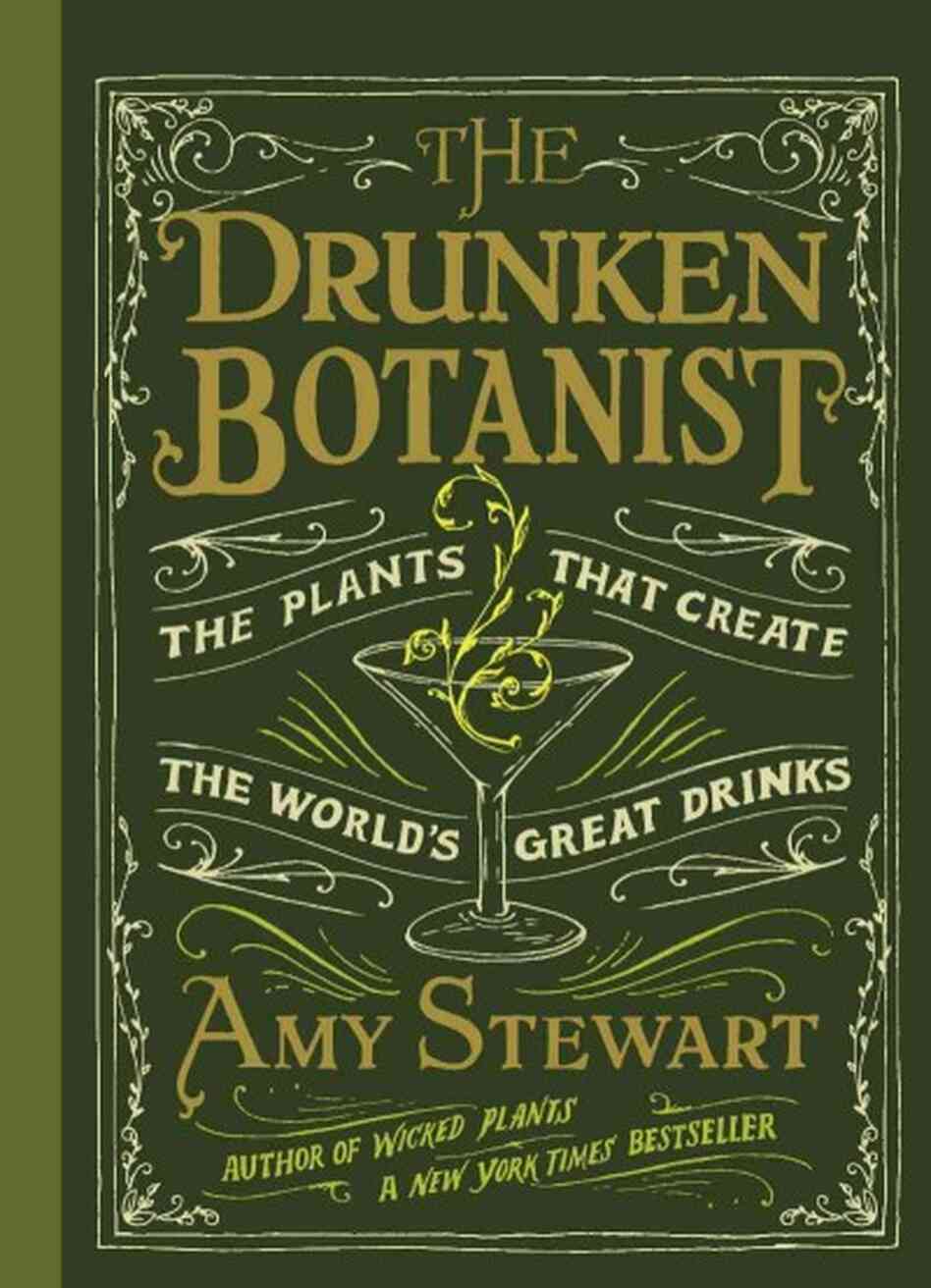
The Drunken Botanist - lessons from Amy Stewart's exploration of the plants that intoxicate

I love a good cocktail. The rise in the popularity of cocktail culture and craft cocktails has made me very happy. As with professional chefs, I find it amazing that people can still come up with unique creations. Our last dinner out included the Nasturtium (citrus vodka, St. Germain, and aperol - served down) for me and an Algonquin (rosemary-infused rye, fresh pineapple, dolin dry vermouth, and orange bitters - served up) for my husband. I admit that I rarely know much about the particulars of these beverages that have become an integral element of dining out. Thinking that it might be fun to learn more about the components that create these little glasses of deliciousness, I picked up The Drunken Botanist: The Plants That Create the World's Great Drinks from my local library. 
Like Wicked Bugs, The Drunken Botanist is written as a compendium of sorts with accompanying pen and ink illustrations of the plants described. Here, Stewart focuses on the plants that people have used throughout history to create alcoholic beverages. There is good coverage of both the classic ingredients (e.g., rye, wheat, hops, and grapes) and the plants used for the mixers and garnishes that are essential to create the perfect cocktail. In the spirit of the book, here is a litany of things that I learned:


  • The invention of the Moscow Mule highlights the kind of story I love. The drink was first created in 1941 through the collaboration of a vodka distributor, who hoped to introduce Americans to vodka, and a bartender, who had extra ginger beer in stock. Because the bartender's girlfriend owned a company that manufactured copper mugs, these became an element in the recipe. A recent rise in the cocktail's popularity has led to an increase in thefts of the distinctive copper mugs. (In the course of my research, I noticed that Wikipedia has a slightly different version of the story of the invention of the drink, which is to be expected.)
  • The distinctive smell of the dentist office is caused by the use of clove extract as a dental anesthetic.
  • The fragrance of jasmine flowers is due to several compounds, including phenyl-acetic acid. Based on genetic differences, some people find that jasmine flowers smell like honey, while others compare the scent to urine. This is similar to the small genetic differences that cause some people to perceive a horrible smell in urine after eating asparagus or to find that cilantro tastes like soap (Julia Child and I share that one).
  • Some figs must be pollinated by a wasp in order to reproduce. The wasp then lays its eggs inside the fig and dies there. Those figs would contain little bits of wasp carcass. Most figs in use today can bear fruit without pollination. This tidbit makes me love figs just a little bit more.
  • I was surprised by the number of stories about the link between alcoholic beverages and scurvy. For example, in the 1500s, the British navy included beer in their fleet's rations, both because water would spoil at sea and to keep the sailors happy. Unfortunately, beer also went bad on longer voyages, which led to the use of grog (rum mixed with water, lime juice, and sugar). The lime juice was initially added to make the drink palatable, but it had the indirect result of improving the sailors' health. In some cases, the vitamin C deficiency was combated with spruce beer; spruce trees produce ascorbic acid to help them survive the cold. Spanish explorers used bitter orange as a treatment for scurvy.  In the course of their travels, they left seeds on an island called Curaçao, where the bitter oranges are the ingredient in the eponymous liqueur.
  • Initial attempts to make wine from grapes grown in America were abject failures; both native and imported vines were unsuccessful. One problem was an aphid called phylloxera; the American grapevines were resistant to the pest, but European vines were not. Unfortunately, Americans sent infected grapevines to France, where the aphids quickly devastated the wine industry there. The solution: grafting American vines onto old European vines. The second problem was that the American grapes had undergone natural selection by birds, while the European vines had been subjected to hundreds of years of artificial selection by humans. Even today, researchers are working on making palatable wines from the grape vines native to America. 
  • There were numerous mentions of the Dogfish Brewery, who are resurrecting old approaches to making beer. In collaboration with a molecular archeologist, they have recreated several ancient beers based on the discoveries at dig sites.
There are probably other fascinating stories that I am missing, but I think I need to go make a cocktail.

Sunday, August 11, 2013

Amy Stewart's Wicked Bugs, Lyme disease, and me (or my lousy summer has really ticked me off)

I had Lyme disease this summer. I was very lucky to catch it early, so the treatment was effective and the issues resolved quickly. The symptoms that I had were different each day and included the standard flu-like presentation as well as some very violent thoughts that nearly provoked me to punch someone on the subway. In my defense, the person probably was talking too loudly on the phone or taking up several seats. (It is a testament to how sick I was that I was riding the subway to work rather than biking.) Needless to say, it was a strange trip. Once the antibiotics started to work and the misery started to fade, I became more interested in the bug, as well as the bacteria, that caused all the trouble in the first place. 


Thus, I picked up Wicked Bugs by Amy Stewart. Two aesthetic things that I really liked about the book: the design of the cover and the illustrations. This is Stewart's second book in the Wicked series and both books have the same pocket size and general cover design. The unusual size of the book makes me wonder the intention (if any) of the book design. The illustrations, such as the one of a deer tick on the right, are so detailed and lovely; it makes you forget some of the more ick-inducing details about the bugs in question.

The book covered a large variety of interesting bugs. My only complaint was that there was not more narrative. Instead, the book read like a compendium of interesting factoids about bugs. Surprisingly, this made it very easy to read in small bites. The louse mentioned in the subtitle of the book (The Louse That Conquered Napoleon's Army) was actually one of the less interesting stories in the book. It seems that Napoleon's army was decimated by typhus caused by body lice; in addition, Napoleon also had scabies for a good portion of his life.

According to Stewart, termites were an important factor is the destruction of New Orleans in the wake of hurricane Katrina (more information can be found here). Both the foundations of buildings in the city and the levees themselves were affected by the bugs, which compromise structural stability with their webs of tunnels through wood. The seams of the flood walls were sealed with bagasse, which is the pulp of the sugarcane leftover after the extraction of sugar. As you can imagine, bugs love that. Thus, termites may have played a role in the failure of the levees. In the aftermath of the storm, the mass exodus of residents meant that fewer people were keeping up with pest control, which led to increases in the populations of termites and further damage to the buildings, which were already ravaged by the storm. To my surprise, she doesn't mention the most interesting thing about termites: termites rely on a symbiotic bacteria in their gut to digest the cellulose. Those bacteria, in turn, rely on another symbiont to produce some of the digestive enzymes required for this process.

Like many of the insects covered in this book, deer ticks have a strange life cycle, which can involve three hosts. The larvae feed on rats, mice, or birds; as nymphs, they feed on small rodents or humans; and as adults that feed on deer. Sometimes, at the larval stage, ticks are infected by the bacteria that causes Lyme disease, a spirochete called Borrelia burgdorferi. Interestingly, Lyme disease was noted in medical writings dating as far back as 1550 BC, when it was called the "tick fever". In the northeast United States, cases have shown continual increases over the past decade. Climate change and loss of predators are thought to be the cause of these increases.

A chapter entitled "Zombies" focused on some other curious life cycles in insects. This section is certainly not for the squeamish. In fact, some of these stories make my skin crawl. Generally, these insects all seem to have a similar M.O.: they sting another insect and take control of it, typically to lays their eggs inside the poor victim. In the case of the emerald cockroach wasp, the wasps deliver a sting directly into its victim's (a cockroach) brain. At this point, the wasp can have total control of the cockroach. The cockroach will serve as a nest, a source of food, and eventually a cocoon for the wasp's offspring. The adult wasp will emerge from the cockroach, leaving only a shell of the former insect behind. These stories are all so unusual. How would something this devious evolve? What is inside that sting that can be such a powerful paralytic? These are some follow up questions I will have to research. One thing is certain, these stories make me hope that reincarnation is not real.

While Wicked Bugs wasn't the best book I read this year, I will be adding Wicked Plants to my reading list.

Enjoy this video from the author, Amy Stewart.