Showing posts with label The Violinist's Thumb. Show all posts

Wednesday, December 13, 2017

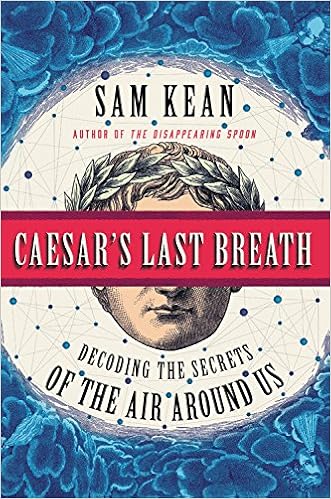
Caesar's Last Breath: Sam Kean brings his keen eye for storytelling to explore the air around us

I just finished reading Sam Kean's new book Caesar's Last Breath: Decoding the secrets of the air around us. I wasn't planning to write a review, but when I realized my blog has covered every other book by Sam Kean (including Dueling Neurosurgeons and The Violinist's Thumb), I felt like it deserved some attention.

The theme of the book is understanding the molecules that make up our air. Each chapter is devoted to a component or two that is found in the air we breathe. This approach means there is some overlap with Kean's brilliant debut, The Disappearing Spoon. Luckily, the overlap seems only to include the best stories in the history of chemistry and Kean is able to explore the stories further. For example, we get more background on the German chemist Fritz Haber inventor of the process to make ammonia from nitrogen and hydrogen, thus spurring the development of agriculture and chemical weapons. I don't want to spoil it, but if you want a taste, you can check out Kean discussing the story on Radiolab.

Not all of the stories are as serious as Haber's. For example, Kean's chapter on methane allows a moment of silliness in the details of the life of the French performer Le Pétomane, a man who trained himself to fart at will. At his peak, he was the highest paid performer in France, bringing bigger crowds to the Moulin Rouge than even Sarah Bernhardt. 

It is difficult to choose a favorite among the chapters, but if I had to pick just one, it would probably be "Controlled Chaos", which focuses on water and its role in the Industrial Revolution, through the work of James Watt and others to develop steam power and the work of Alfred Nobel to make explosives. Nobel's legacy now is pretty securely tied to the prizes bearing his name. However, during his life time, Nobel's work cost many lives and left him in poor health, guilty and haunted by his reputation as a merchant of death. In fact, this guilt was the impetus for his starting the Nobel prize, much to the chagrin of his family who fought to inherit the wealth.

Because I read so many science books, I often have a sense of déjà vu when reading. However, Caesar's Last Breath included lots of new and interesting tidbits, like the surprising connection between Albert Einstein and refrigerators and the strange history of the manipulation of the weather. Perhaps my only complaint with the book would concern the final chapter on the air on other planets, which felt a bit disconnected both in subject and style.

I highly recommend Caesar's Last Breath for people interested in chemistry or the periodic table as well as those interested in the history of science.

Friday, November 25, 2016

Herding Hemingway's Cats: the perfect primer in genetics for a novice and a fun read for an expert

Herding Hemingway's Cats: Understanding How Our Genes Work has been on my reading list for a few months. When I saw the author Kat Arney tweet that the Kindle price was only $1.99, I took advantage of the price drop and downloaded it right away. I was glad I did, but I do feel a little guilty that I didn't pay full price because it really would have been worth it!

I have reviewed many books on the subject of genetics (I  particularly enjoyed The Violinist's Thumb, Junk DNA, and Inheritance). Nonetheless, I found Hemingway's Cats to have a refreshing take on some well-covered topics; of course, it also taught me some new things and discussed the most recent research. Thus, I recommend this book as an excellent introduction to genetics because it would be suitable for people with little knowledge of genetics; it would also be great for someone who knows the field, but wants to expand or refresh their knowledge.

It seems that one requirement for a book about genetics is an extended analogy for the genome. Sometimes these are clever and useful, but run their course rather quickly (e.g., Matt Ridley's Genome talks about the genome as a book with 23 chapters/chromosomes). Here, Arney makes the occasional comparison between the genome and a set of recipe books. The collection contains thousands of recipes for cake, soups, and casseroles. In her analogy, the librarian never lets the recipes out of her sight, so you have to copy the recipe in the library (the nucleus) and then export the recipe to make it in your kitchen. Sometimes, you need lots of one thinglike a large batch of cupcakes for a bake sale, but other times you just make a single serving. Arney revisits this analogy over the course of the book and it always seems to fit perfectly and it doesn't get overused.

At the start of the Human Genome Project, a  betting pool began among the scientific community to guess the number of proteinencoding genes in the complete human genome (the winner was Lee Rowen, who bet on 25,947, the actual number was 24, 847). Of course, the amount of our genome that is actually of use and the reason humans have so much extra DNA is still a matter of debate. Humans (owing perhaps to our inflated sense of self) figured that the size of the genome would correlate with the complexity of the organism. This turned out to be false for example, "water fleas the size of a grain of rice have 30,000 genes." One hypothesis to explain all that extra DNA is that some of it protects the important parts of our genomes from mutationsthe biological equivalent of bubble wrap. Here, she makes some great comparisons with moving house, making cookies, and television programming. This is a strength throughout the book, which is peppered with fun and useful analogies that help clarify the scientific concepts.  

Arney also hits new and hot topics, like epigenetics/epigenomics, imprinting, CRISPR, and the ever-expanding list of RNAs. In addition, she covers some of the "wow science" one would expect from a popular science book. She describes why the eponymous polydactyl cats have extra toes (mis-regulation of the Sonic Hedgehog gene) and writes about the newest large-scale genome sequencing project (The 100,000 Genomes Project), which aims to sequence the exomes from cancer patients and children with rare diseases and to expand the geographical representation of genomes sequenced thus far. She also speculates on what the future of genetics might be, in particular she focuses on the next dimension of genome sequencing: time. By sequencing the genome of the same individual over time, in combination with the very specific data that can now easily be collected by a smart watch, we might be able to understand how the genome changes as we age and in the context of our lifestyle. It is an exciting time in the field of genetics and molecular biology, and we are particularly lucky to have a writer like Kat Arney to help us understand all the cool things that are happening.

Sunday, May 22, 2016

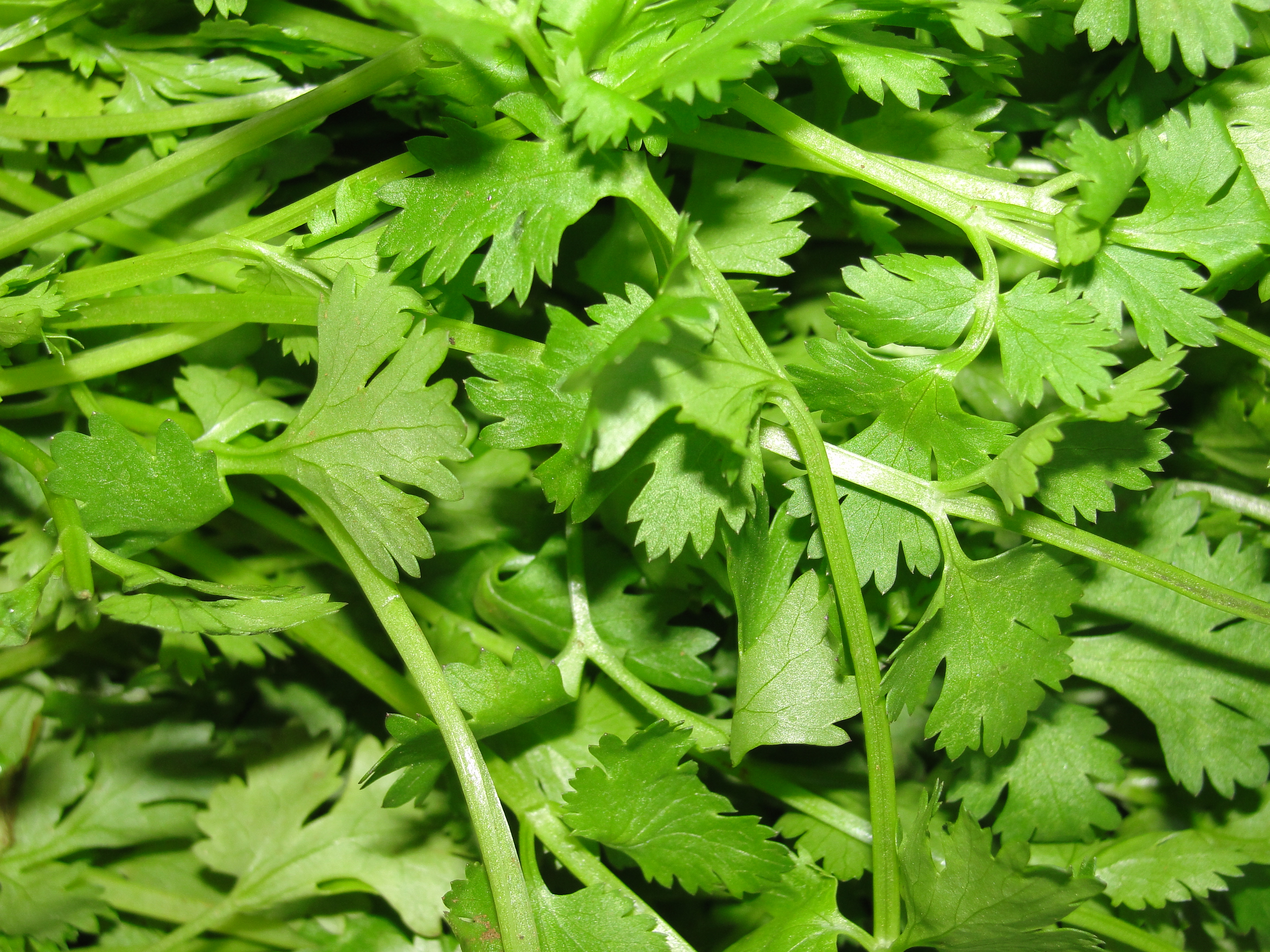
Using cilantro's foul flavor to teach my son about human genetics

We are struggling to incorporate variety into the diet of our seven year old, who is not interested in having anything green on his plate. My husband, the cook of the house, has found some ingenious ways to sneak extra veg into dishes (e.g., finely chopped cauliflower disguises itself as meat in chili con carne). My contribution to this effort has been to tackle the problem with a little home-based scientific investigation. (I guess my scientific training is helping my parenting skills as well as my baking skills.) How random genetic variations can affect taste perception was one of the many interesting topics in both Sharon Moalem's Inheritance and Sam Kean's The Violinist's Thumb. Like most couples, my husband and I have some major differences in how some foods taste. This gave me the idea of using these genetic variations to our advantage to talk to our son about human genetics and genetic diversity.

Thamizhpparithi Maari (CC-BY-SA) Wikimedia Commons
I had previously introduced my son to the concept of DNA with Have a Nice DNA, a fun book from Cold Spring Harbor Laboratory Press suitable for elementary-aged children. This set the table for the first experiment: cilantro (or coriander). I find that cilantro tastes a bit soapy, but my husband thinks it tastes great. Before our dinner of black beans and rice with raw cilantro sprinkled on top, I told our son about the differences in how his father and I perceive the taste of this herb. I told him that he would be part of an important experiment to determine whose genes he had inherited. In the spirit of the good nerd we are raising, he was fascinated and curious. The experiment revealed that our son had not inherited my taste perceptions of cilantro. In fact, it made him laugh to hear that I thought it tasted like soap (kids love to see their parents suffer), especially since it was so different from what he thought it tasted like.

Once we learned the outcome, I wanted to teach him more about the genetic basis of this difference. Lucky for me, cilantro is a hot topic on the internet. The prevalence of dislike ranges from 3-21% depending on the ethnic group (21% of east Asians, 17% of Caucasians, 4% Hispanics, and 3% Middle Easterners). While in the minority, the group is quite vociferous in their hatred of the herb. The consumer genetics company 23andme looked at DNA sequence data for ~30,000 users who were asked about their preference for cilantro. Variations in a gene called OR6A2 were linked to differences in cilantro preference. This gene encodes an olfactory receptor that recognizes certain aldehydes, which happen to be the molecular basis of cilantro's smell. Aldehydes are also present in soap. Thus, people with the genetic variant are more likely to sense cilantro's soap-like aldehydes; the sense of smell is a major player in how we perceive flavor. Two other studies found two different explanations for the soapy phenotype (one showed a connection to a different olfactory receptor and the other to a bitter taste receptor); these differences in results could be due to the large variation in the phenotype. My literature searches did not find any more recent stuies in the genetics of cilantro taste perception, suggesting that the work is difficult to fund.

I think my favorite find in my exploration of cilantro was the Gastropodcast, which examined the science behind these differences. Another interesting piece was from New York Times food science writer Harold McGee, who explored the evolutionary basis for taste perceptions. He also discussed how changing the preparation of cilantro can change its flavor; one study showed that crushing cilantro speeds the rate at which plant enzymes break down aldehydes. As a result, fine chopping of cilantro or cooking it a bit can get rid of the soapy flavor for some (this definitely works for me). Based on the success of the cilantro experiment, we will definitely be searching for future food science to explore during family dinners.

Wednesday, July 24, 2013

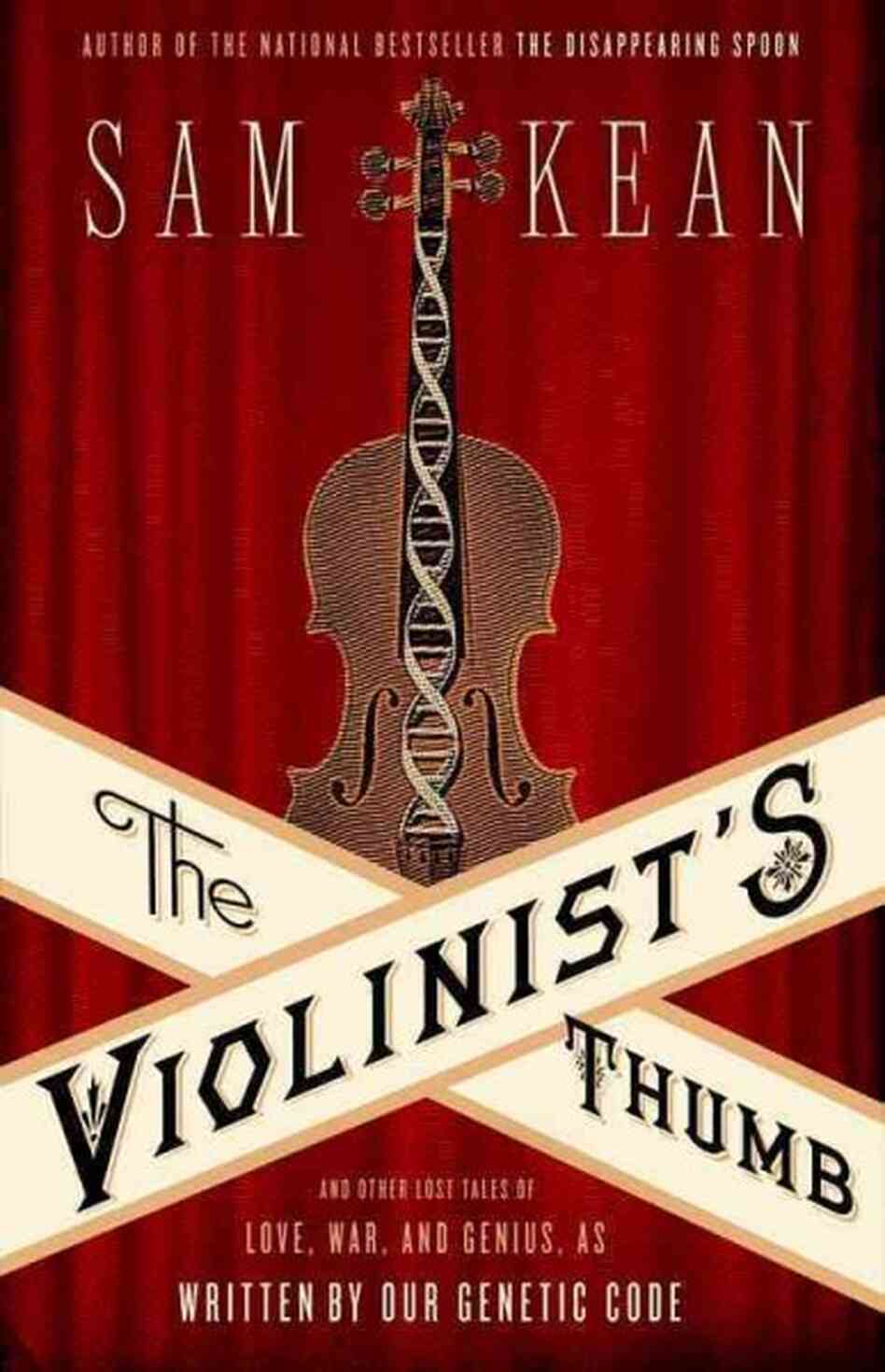
Another great read from Sam Kean - The Violinist's Thumb

Because I enjoyed Sam Kean's Disappearing Spoon, I was excited to start the Violinist's Thumb. This book did not disappoint. I have to admit that I finished this book some time ago and now it is really overdue at the library. Thus, I present some rather unconnected thoughts.

Much like The Disappearing Spoon, this book has lots of fascinating stories. There were several parts of the book that really stuck with me. By far, my favorite was the history of the discovery of DNA. Kean discusses the story of Watson and Crick and all the good stuff (e.g., infighting, competition, and other assorted nastiness) you may have read or seen in The Double Helix, but the book also delves into some other very interesting characters that had major roles in unraveling the function and structure of DNA. One of the many things I loved about being in the lab was the plethora of unusual people that are attracted to that particular line of work. The lab of Thomas Hunt Morgan at Columbia around 1907 certainly attracted its fair share. The so-called "Fly Room" was a very small space with many large personalities that bred fruit flies as well as revolutionary science. Eventually, Morgan's lab lead to major contributions towards our understanding about mutations and heredity as well as sex-linked traits. Of course, his other contribution was the introduction of the fruit fly as a model organism.

The book also focuses on several other important scientists who were integral to our understanding to DNA and inheritance. These scientists included Sister Miriam Michael Stimson, who (like Gregor Mendel) performed science while in service to the church, Lynn Margulis and Barbara McClintock. This chapter, entitled "DNA Vindication", was centered on the important findings that each of these women made. This chapter was also very character-driven; each of these scientists was very much about going against the grain. In the end, I found these stories to be insightful not just about the results, but also about the restrictions on and expectations of women in science. I was glad that not only Rosalind Franklin (the Sylvia Plath of molecular biology) got coverage here!   

Sam Kean has talked about several of the stories in this book on the Radiolab podcast. In the episode entitled Double Blasted, we hear the story of a man who was present in both Hiroshima and Nagasaki when the atomic bombs were dropped. In the episode Inheritance, he discusses some spurious results with midwife toads that led to the downfall of the scientist behind the work, Paul Kammerer. In the same episode, they discuss some really interesting stories about epigenetic modifications, which has completely changed the way we look at genetics. Now it is no longer simply what genes you are passing down to your child. Rather, it can also be about the environmental effects that your ancestors experienced generations ago.

Here are some other highlights:
  • The titular story concerns the violinist Paganini, who was allegedly blessed/cursed with a rare joint disease that allowed him to have much great flexibility in this fingers. This allowed him to accomplish feats that other violinists would deem impossible. 
  • The chapter about post-mortem diagnosis of historical figures is quite good. There were lots of great stories about the possible genetic disorders of Toulouse-Lautrec, King Tut, and Abraham Lincoln. I had never heard before that John F. Kennedy had Addison's Disease, a condition of the adrenal glands that depletes the body of cortisol. One common side effect of Addison's is the bronze skin, which served JFK well in his debate against the pasty Dick Nixon in 1960.  
Of course, there were lots of these interesting tidbits peppered throughout the book. Overall, the book was organized in an interesting and logical way. I like that Kean is about telling the story of science with the scientists being the main characters and the results being the major plot points.