Tuesday, February 24, 2015

The Fly Room: a new film about Thomas Hunt Morgan's genetics laboratory

I just discovered the website for the new movie The Fly Room. I could not be more excited to see this film as it combines two of my favorite things: science and cinema. The film is set in Thomas Hunt Morgan's genetics lab at Columbia University. From 1911-1928, Morgan's lab, nicknamed the Fly Room, pioneered the use of fruit flies as a model organism to understand genetics. The lab made several major contributions towards understanding mutations, heredity, and sex-linked traits. Morgan's Fly Room has a unique combination that make it a great subject for a film: an unusual lab space, memorable scientists, and cutting-edge science. (Sam Kean's The Violinist's Thumb does an excellent job of telling this fascinating story in a way that highlights all of these features.)

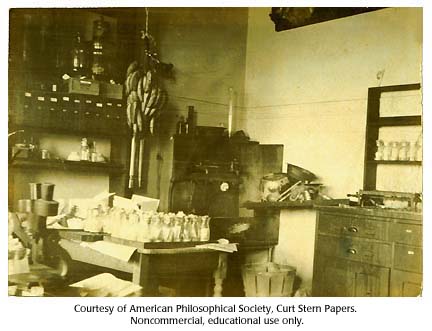
The lab space has been described as being not much bigger than a broom closet. Archival photos, such as the one above, show benches covered with old milk bottles filled with fruit flies and stuffed with gauze. The lab used bananas to feed the flies, which caused a characteristic fetid odor. It seemed like fruit flies were everywhere, an impression made worse by the small space. Of course, Morgan's habit of squishing non-mutant fruit flies on any available space helped contribute to the mess. The Space Revisited section of the website includes some great movies and details about the process of recreating the unique space for the movie.

The Fly Room at Columbia University - Restored to Its Original State from Imaginal Disc on Vimeo.


The lab also hosted an amazing array of characters. One of these scientists was Calvin Bridges, a handsome genius with an appetite for both science and women. Calvin Bridges was a brilliant scientist, but his philandering damaged his career (Morgan disapproved of his behavior and would not promote him) and cut short his life (Calvin died of syphilis at age 41). After his death, his lab mates burned his personal diaries to protect his reputation.


Alexis Gambis, the film's writer and director, became fascinated with the story of the Fly Room during his PhD in molecular biology at the Rockefeller University. Based on his interest in the story of Calvin Bridges, Gambis sought out Betsey Bridges, the late scientist's daughter. Exchanging stories with Betsey gave Gambis a new way to tell the story of the Morgan lab. The film uses Betsey's visit to the Fly Room as a young girl to explore the girl's relationship with her father as well as the science at the heart of the Morgan lab.

As evidenced by the recent films The Imitation Game and The Theory of Everything, casting scientists as characters in the story of science can create a useful narrative tool. While the focus of these films has been entertainment (indeed, all of these films have taken some degree of poetic license), they also serve as a tool to elucidate the scientific process and inform the public about the importance of basic research. The critical reception of The Fly Room has been very good. I am confident it will show in Boston soon, so I will be sure to update this post when I get to see the film.


More information:
Here is a great story on The Week: Exploring The Fly Room
You can follow The Fly Room on Twitter to see where it is showing next. 

Sources:
Sam Kean's The Violinist's Thumb
Cold Spring Harbor Laboratory library: Morgan's lab

Sunday, January 11, 2015

Poisons and venoms - deadly consequences and therapeutic benefits

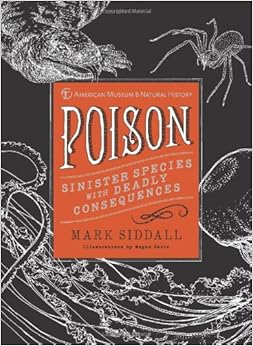
I picked up Poison - Sinister Species with Deadly Consequences by Mark Siddall from the new release shelf at my local branch of the Boston Public Library. It was a whim, but it paid off. Poison has many similarities to Amy Stewart's Wicked Bugs, including the small format and the detailed pen-and-ink scientific illustrations. The subject matter also has a good amount of overlap. Siddall, a curator for the American Natural History Museum, wrote the book in connection with an exhibit by the same name. The book was immensely readable with many fascinating vignettes, which makes me sad that I missed the exhibit (although the ANHM website suggests that it is traveling). If you want to get a sense of the style of the book, check out Siddall's piece in IFLScience.

Siddall explores a few of the many different ways that plants and animals can kill or at least send you writhing in pain. The most surprising fact of the book: platypodes are venomous! The male platypus has spurs on its hind limbs, which can deliver venom. The venom, produced only during mating season as a defense against competing males, is actually strong enough to cause mild paralysis in humans. Another incredible story concerned two vastly different organisms (pitohui birds and phyllobatid frogs) that produce the exact same toxin (batrachotoxin) despite being separated by more than 10,000 miles and millions of years of evolution. It seems that the birds and frogs both eat a particular species of flower beetle that produces this chemically unique toxin. Both species have evolved a tolerance to the poison in the beetle and can use the toxin to protect themselves from predators.

Reading the book reminded me of all the amazing things that scientists are learning about the therapeutic potential of these naturally occurring poisons. As a Scientific Editor, I read papers that examine the components of venoms from a variety of organisms. Venoms have evolved over millions of years, so they are essentially drugs designed by nature; one review article describes them as a "billion-year drug discovery program with unlimited resources" (Vetter et al., 2010). Because venoms come from such diverse species, they provide a large array of chemical and pharmacological novelty. Strikingly, venom toxins from different organisms often target common cellular pathways (e.g., ion channels, cell receptors) and use similar mechanisms to exert their effects.

Sample venomics work flow; Warrell et al., 2013
Venoms are comprised of a complicated mixture of proteins and peptides, thus, venoms can elicit complex physiological responses in the target organism. Generally speaking, venoms are classified as cardiotoxic or neurotoxic, as they can affect the heart or the nervous system, respectively. Toxins that show cardiotoxic properties can prevent blood clotting and lower blood pressure. Neurotoxic venoms show potential as pain relievers and as therapeutics in the treatment of neurological diseases. To identify drug candidates, scientists use venom extracts as a starting place (Harvey and Stöcklin, 2011). High-throughput screening techniques can be used to find venom components with an activity of interest. Then, chemists create synthetic analogues, which can be modified to enhance the pharmacological properties (e.g., binding affinity or specificity) and decrease possible side effects. Recent technological developments have improved the ability to screen and characterize the components of even small quantities of venom; this relatively new field, called venomics, is unlocking the therapeutic potential of venom compounds (Vetter  et al., 2010).

Tubocurarine was the first venom toxin to be used in a clinical setting; in 1942, it was introduced as a muscle relaxant. However, native South Americans were using a crude extract created from the bark of a climbing vine; the resulting curare served as an arrowhead poison for hunting animals. Similarly, the drug Captopril was developed from the active compound from pit viper venom, which was also originally used as an arrowhead poison. Because this compound can lower blood pressure, it is used to treat hypertension and heart failure.

Cone snail uses a harpoon to attack prey (from PBS.org)
Cone snails were once highly sought after for their beautifully patterned shells; the Glory of the Sea variety was worth thousands of dollars due to its rare and unusual shell. Recently, the value of the cone snail is due to its unique pharmacology. This predatory snail uses a harpoon-like appendage to attack its prey and inject a paralyzing neurotoxin. When scientists analyzed the components of cone snail venom, they found several compounds that were useful pain relievers. One of which, ziconotide was approved in 2004 under the trade name Prialt for the treatment of chronic pain. Prialt works by blocking calcium ion channels (membrane proteins that create channels for the selective passage of calcium) that are involved in the transmission of neuronal signals, thereby inhibiting the transmission of pain signals.

Many different venomous animals have evolved toxins that target ion channels, likely due to their conservation in many organisms. For example, sea anemone venom was the source for stichodactyla toxin, or ShK, which blocks potassium ion channels. One analog, ShK186, is currently in phase I clinical trials for the treatment of rheumatoid arthritis and multiple sclerosis. Interestingly, insects express only one type of sodium ion channel, which makes them very sensitive to ion channel inhibitors. Various species of spiders exploit this weakness by using venoms that target ion channels. Thus, these spider venoms could be sources for novel insecticides (Klint et al., 2012). Many of the ion channel inhibitors identified from venoms have also become useful tools for studying the cellular function of ion channels in the laboratory.

There are many more examples of useful therapeutics coming surprising sources. For instance, the saliva of the Gila monster was the source of Exenatide (trade name Byetta), which is used to control glucose for the treatment of type II diabetes. As screening technology and drug design methods continue to improve, scientists will be able to unlock the full economic and therapeutic potential of venom toxins.

Sources:

Review article: Venomics: a new paradigm for natural products-based drug discovery (open access)
Review article: Spider Venom peptides that target voltage-gated sodium channels: pharmacological tools and potential therapeutics leads (from a Toxicon Special Issue: Advancing in Basic and Translational Venomics)
Introduction: From venoms to drugs and Review article: From snake venom toxins to therapeutics: cardiovascular examples and (from a Toxicon Special Issue: From Venoms to Drugs) 
From Venoms to Drugs - blog
The Scientist: From Toxins to Therapeutics
Friday, December 19, 2014

What ever happened to Brontosaurus?

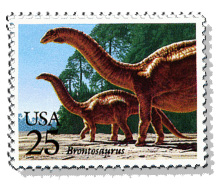
I have only recently realized that Brontosaurus is no longer a dinosaur. All of my son's books about dinosaurs had the longed-necked sauropod labeled as Apatosaurus, suggesting that something is very different from when I was a kid. Luckily, Brian Switek's book My Beloved Brontosaurus: on the road with old bones, new science, and our favorite dinosaurs explains what happened. Briefly: in 1877, Yale paleontologist O.C. Marsh discovered a partial skeleton of a young dinosaur that he named Apatosaurus; two years later when he found a similar skeleton, he called it Brontosaurus. In 1903, another paleontologist (Elmer Riggs) argued that the differences between the two skeletons were not great enough to warrant two different species. Because Apatosaurus was named first, it had priority for the scientific name. For some unknown reason, this development did not filter down to popular culture or even museums. According to Switek, the changes weren't made until the late eighties. Even after that, it was hard for people to adapt to the change. Switek compares the sadness we experienced at the loss of Brontosaurus with the news that Pluto was no longer a planet.

Brontosaurus stamp from 1989
Switek, a lifelong dinosaur freak, uses what he learned about dinosaurs as a child to illustrate how much our understanding of dinosaurs has changed. In the case of dinosaurs like Apatosaurus, everything we were taught was incorrect: they are no longer considered to be slow creatures, dragging their tails through a semi-aquatic environment. Another major change in our picture of dinosaurs is that they were not scaly like alligators; scientists now think that most, if not all, dinosaurs had feathers. As the connection between dinosaurs and birds is strengthened, scientists have started to consider that the prehistoric creatures may have even been brightly colored like birds. This is another case where the general public is likely to have a tough time adapting its image of Tyrannosaurus rex as a furry rather than a scaly lizard.

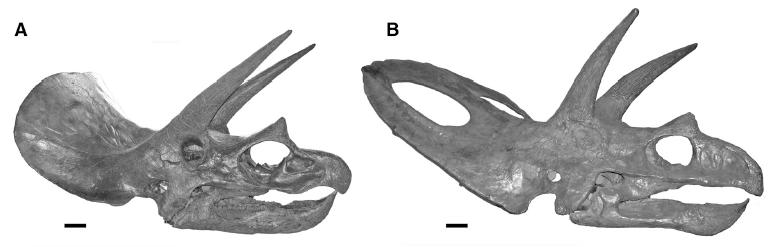
Young adult (left) and adult Triceratops skull
Switek also highlights some of the major unanswered questions about dinosaurs, including what sort of developmental changes dinosaurs went through. Interestingly, the well-known Triceratops shows how much dinosaurs may change in their lifetime. The skull on the left is consistent with what we think of as a Triceratops. The skull on the right is also a Triceratops (although for a while it was called a Torosaurus); the difference may simply be age. (Switek digs further into this story for Smithsonian.) Of course, the big question still is: what caused the extinction of the dinosaurs? The author treats this question fairly, discussing where scientists are landing on this issue (most agree that a very large meteor was to blame). Along the way, he also discusses how dinosaurs were not immune to the "slings and arrows of life". Many fossilized dinosaur remains have been diagnosed with pathogens of varying sorts, as well as cancer (as I learned in reading The Cancer Chronicles).

It is a great time to be a dinosaur lover. There have been some really amazing dinosaur finds in the past few years. For instance, for more than fifty years, the 8-foot-long set of arms shown on the right spurred the curiosity of many dinosaur fanatics; in October, researchers published their discovery of a full Deinocheirus skeleton, which was almost as weird as you might have imagined looking at those crazy arms (coverage by Ed Yong). The gigantic sauropod (and not so close relative of the Brontosaurus) called Dreadnaughtus was found in southern Argentina also made headlines due to its great size. Amazingly, this is not the end of the size spectrum for sauropods; size was clearly a huge advantage for these beasts.

The stories of these amazing creatures that dominated the Earth for millions of years are fascinating. Switek's book has inspired me to visit some of the great museums and dig sites in the states.

Sunday, November 23, 2014

LabLit: books about scientists and the realities of life in the lab

While exploring the Internet, I recently found the LabLit List, a frequently updated list of books that have scientists as central characters. In contrast to science fiction, these books occur in realistic settings. Lab lit books include some science to contribute to the plot. Because most lab lit is written by non-scientists, the science is not always very detailed. However, there are a few novelists who trained as scientists, including Carl Djerassi, Ann Lingard, and Jennifer Rohn (Rohn's book The Honest Look is next on my reading list). The lab lit books that I have read really capture the intensity of life in the lab, showing both the camaraderie and the competitiveness. So if you left the lab, but still fondly remember your days as a lab rat, this is likely a good genre for you. Below, I have written short reviews of three representative lab lit books that I have enjoyed.


Antisense by Richard Marshall

Principal investigator Daniel Hayden is a neuroscientist studying the molecular basis of aggressive behavior in mice. The beginning of Antisense is firmly planted in the lab, but quickly veers into the personal life of Hayden. I enjoyed some of the science bon mots; for example, when explaining blotting techniques Marshall writes, "we ran out of things to blot before we could head east." By the middle of the book, I worried that the plot would be the common male midlife meltdown, but the story generally redeemed itself. The science was interesting, but not very detailed. I was frustrated when Hayden started making grand conclusions based on a single experiment, but soon realized that this was likely the author's way of showing the PI's changing mental state. Likewise, the title was a clever choice, which was appropriate for the science as well as the character's journey.


Intuition by Allegra Goodman


Allegra Goodman's 2006 novel Intuition is set in a high-stakes, ultra-competitive lab at a fictional cancer research institute in Boston's Longwood Medical Area. (Coincidentally, I was working at a similar institute when I read the book in 2007.) Intuition explores why the stakes are so high and what can happen when scientists succumb to the pressure. Goodman spent time in several labs to understand the lab environment. As a result, the book successfully captures many of the typical lab characters and accurately paints the daily life of a researcher. However, the science is not very detailed. Rather, the story focuses more on interpersonal dynamics in the lab and the possibly fraudulent data of one researcher. In light of some of the recent, high profile retractions (e.g., STAP stem cells) and the growing concerns about reproducibility in science, Intuition is increasingly relevant.


Life by Gwyneth Jones


Life tells the story of Anna Senoz, a mid-career scientist who makes an amazing discovery about the X and Y chromosomes: her sequencing data suggest that the Y chromosome is slowly being transferred to the X chromosome. Senoz studies the transferred Y story in secret, as she fears the implications and consequences of her results. The author chose the topic of sex chromosome balance as a way to discuss gender discrimination. (Here is a fascinating essay from Gwyneth Jones on her intentions for this novel.) Senoz suffers both major events (e.g., sexual assault) and minor slights (e.g., senior scientists referring to Senoz as a "good girl"), which affect Senoz's career and personality. The science in the book was well detailed, but did not feel realistic. Perhaps the book could have focused on an authentic scientific phenomenon, like intragenomic conflict in sex chromosomes (some discussion of the topic here). For me, this was the most successful of the many lab lit books I have read. However, it feels a bit more like science fiction than the other titles. Indeed, Life won the Philip K. Dick award in 2005. 

Saturday, October 25, 2014

The Cancer Chronicles - George Johnson's personal exploration of cancer, its origins, and treatments

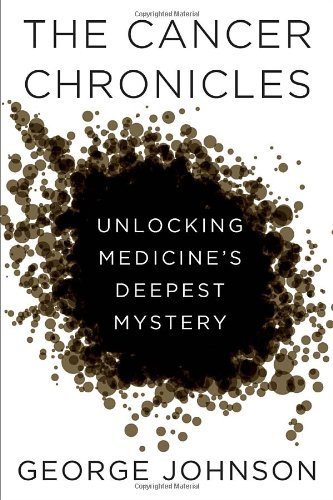
I have recently reviewed books about the discovery and treatment (The Philadelphia Chromosome) and the causes of cancer (Toms River). So the subject matter in George Johnson's The Cancer Chronicles is quite familiar to me. Johnson does have a unique angle – his wife was diagnosed with uterine cancer, which led him to use his expertise as a science writer to learn more about the disease. This perspective helps create a personal element to the book, but does not distract from the science.

Several of the stories were previously covered in other books that I have reviewed: Boveri's prescient hypothesis linking chromosomal aberrations with cancer (The Philadelphia Chromosome), Thomas Hunt Morgan's mutant fruit flies (The Violinist's Thumb), scrotal cancer in chimney sweeps (Toms River), and the Radium girls (The Poisoner's Handbook). Johnson covers new ground in the chapter called "Jurassic Cancer", which examines the other animals in which cancers have been found. In fact, most animals get cancer; the one exception is naked mole rats. Surprisingly, various types of malignancies have even been identified in dinosaur fossils. Another chapter examines how far back in human populations cancers have been described. Johnson writes, "There were signs of cancer in an Iron Age man in Switzerland and a fifth century Visigoth from Spain" (p 49). In both animals and humans, it is difficult to know the exact frequency of the disease, but it is clear that cancer is not strictly linked to industrialization or environmental factors. 

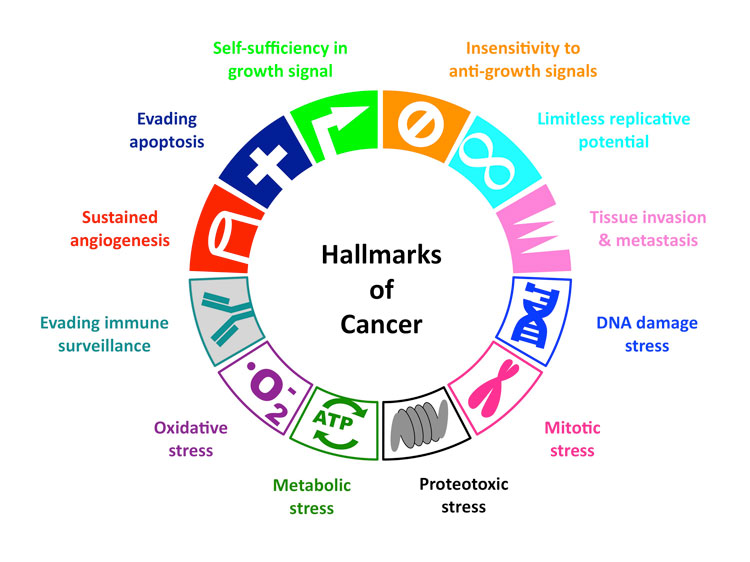
Hanahan and Weinberg, 2000.
Rather, it seems that cancer is inevitable. The landmark review "The Hallmarks of Cancer" (and its update in 2011) states that cancer is basically caused by the accumulation of several mutations. The review's author Robert Weinberg estimates that every second four million cells are replicating in a human body. Each time a cell replicates, there is a chance for error. While there are many error correction mechanisms, mistakes do get through. This genetic variability is the fodder for evolution by natural selection. It is also the source for cancer. Thus, it makes sense that cancer is generally seen throughout the animal kingdom and throughout time. Johnson concludes that it is comforting to know that cancer has always been with us.

Johnson also discusses cancer cell evolution, which is a topic of intense interest in scientific research. Cancer cells are constantly changing to evade the body's defense mechanisms. During treatment, some cancer cells can develop resistance to chemotherapeutics. Understanding how chemoresistant cancers can be treated is a major unanswered question. In the case of Gleevec/imatinib-resistant cancer, a single mutation is responsible for Gleevec-resistance, which allowed the development of a second drug (nilotinib) to kill cells with the imatinib-resistant mutation. Unfortunately, and as is to be expected with a complex disease such as cancer, most chemo-resistant cancers are not as clear cut. 

Overall, the book is quite easy to read and covers many important topics, albeit not at the depth of other, more focused books on the topic of cancer. I will definitely be adding The Emperor of All Maladies to my reading list to give this topic another perspective.


** Post script: Johnson's book was short-listed for the 2014 Royal Society Winton Prize for Science books. 

Saturday, October 4, 2014

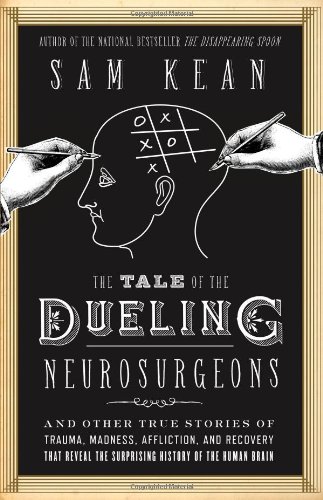
The Tale of the Dueling Neurosurgeons - more weird science from Sam Kean

I normally don't get very excited for a book release because I always seem to have lots of books on my reading list. Since I enjoyed the previous books from Sam Kean (The Disappearing Spoon and The Violinist's Thumb) so much, I actually set my calendar to remind me about the release of The Tale of the Dueling Neurosurgeons. I don't know much about neuroscience, so I knew that Kean would teach me something new. As usual, Kean finds the most fascinating stories to keep you in awe of how the brain works and highlight the numerous ways in which the brain can malfunction.

Phineas Gage and his tamping rod


The theme of the book is that neuroscience is unique in that most of the early lessons about the function of the brain came from observing the behavior of people with damage to a particular region of the brain. This is still the case; a recent story about a young woman without a cerebellum demonstrates the plasticity of the brain and its ability to compensate for problems in even the most seemingly critical parts. The book includes lots of case studies and stories of strange behavior. The final chapter presents the tale of Phineas Gage, who is a bit of a legend in the field of  neuroscience. Sam Kean wrote a piece for Slate about Phineas Gage; I recommend reading it if you want to get a quick idea of whether or not you will like the Dueling Neurosurgeons.

Perhaps the most fascinating tidbit concerned Teddy Roosevelt and his treatment by neurologist Silas Weir Mitchell, whose "West cure" for men included a variety of rugged outdoor pursuits. Before seeking the cure in the 1880s, Roosevelt had been compared to Oscar Wilde for his effeminate voice and foppish mannerisms. As you would expect for the time, Mitchell's cure for women was very different; women suffering from "hysteria" were prescribed long term, isolated bed rest with massages and fatty foods. Many women suffered through this treatment, including Virginia Woolf. (You can read more about the gender-biased treatments of Silas Mitchell here.) Silas Mitchell built his reputation on his work in the area of phantom limb, the phenomenon where an amputee may feel an itch or pain in the limb that has been removed. Radiolab had an excellent story on this topic, which covered the innovative but simple approaches used to treat this strange problem. 

When you hear about people who taste colors or see smells, they are typically exhibiting synesthesia. The most common forms of synesthesia are people who see sounds in certain colors or hear sounds in connection with particular letters or numbers. Physicist Richard Feynman and author Vladimir Nabokov both experienced these sensory combinations (the internet tells me that Lady Gaga was also born this way). The reason that these particular combinations are more common is likely due to brain geography: the regions that analyze sounds, colors, and letters are close together. Interestingly, sixty different types of synesthesia exist, but it is not completely clear what causes this jumbled wiring. It is becoming clear that this commingling of the senses could be a benefit. Some synesthetes have an excellent memory, which they attribute to their unusual perception of the five senses. This correlation suggests that training your brain to link colors and letters, for example, could improve cognitive function. Some synesthetes have links between their sense of smell or taste and the other senses. This causes them to experience sounds or colors associated with some flavors. As you could imagine, this might expand their palate, as described in this NPR story about the benefits of being a synesthete in the food and beverage industry.

Dueling Neurosurgeons was another excellent outing for Sam Kean, who continues to amaze me with stories of weird science. I also loved the rebus puzzles that Kean added at the start of each chapter. Like the DNA acrostic in The Violinist's Thumb, Kean has found a novel way to engage his readers.

Wednesday, September 10, 2014

Advice from a Scientific Editor

As a Scientific Editor for BBA for the past two years, I have read lots of manuscripts (you can learn more about my job here). This gives me a good sense of what helps a paper make a good first impression. Here are my tips that should help your paper be judged based on the science.**

Write a great abstract

Your abstract is the first thing that an editor or reviewer will see; it serves as your elevator pitch and it is the most important place to make a good first impression. The abstract should clearly say what your paper is about and why that matters. In the simplest terms, your abstract should succinctly state the following: what are the knowns, what are the unknowns, what novel information your paper brings to the topic, and what the significance of the work is. Be sure to get several opinions (e.g., from scientists both inside and outside your field) on your abstract; it doesn't take long to read an abstract, so your colleagues would likely be willing to help.

Learn the proper structure for a scientific paper

When I was a graduate student How to Write and Publish a Scientific Paper was a useful resource. It outlines exactly what each section of the paper should include and what the purpose of the section is.  This information is critical to guide the writing of a manuscript. Most journals include the guidelines for the structure of a manuscript in their guide for authors. The best way to learn the structure of a paper is to read published papers, especially those written by well-established investigators in your field. Organizational issues (e.g., the discussion is simply a re-iteration of the results; the figure legends are too similar to the materials and methods) are a common complaint of reviewers. While this alone might not be a reason to reject a paper, it is best to ensure that the writing and organization of a manuscript does not give editors or reviewers a bad impression.

Find the right journal and know what that journal is looking for

With so many options available, choosing the right journal can be a daunting task. There are two tools that I use to see where similar papers are published: JANE (Journal, Author, Name Estimator) and Journal Finder (this is for Elsevier journals). Both use the title and abstract of your paper to find similar articles and where they were published. Of course, the more standard approach is to check your references. A properly referenced paper should give a clear idea of where the related papers have been published. Alternatively, you can use the related papers feature on Scopus or PubMed; if you look at the results for papers related to your work, you can determine where the majority of papers on the topic have been published. Once you have a list of potential journals, investigate those journals carefully to determine if the scope fits your manuscript. You should also learn what the journal is looking for (e.g., mechanism, animal model). These facts can be found on the journal's website in their description of scope and/or the guide for authors. Please see the additional resources below for other useful links.

Review papers

A great way to know what journals publish is to review papers. Once you go behind the curtain, it becomes clear what a journal is looking for. From my point of view, it's quite simple: something nicely executed that people will be interested in reading. For young investigators, it can be difficult to get experience reviewing, as many of the invitations go to more established scientists. You could consider asking established investigators that you know to mention your name if they decline to review. Once you establish yourself as a competent reviewer, you can also generate a name recognition with a journal. Thus, even if you don't "get credit" publicly for your reviewing, it can help you get to know the journal better and have the journal editors know you.

Talk to editors

If you attend large conferences in your field, it is likely that journal editors (both professional and academic) will also be in attendance. Some journals even list the meetings where you can meet their editors on the journals' web page. Alternatively, many journals and publishers host seminars about submitting your manuscript. These seminars can include the general (e.g., write a good abstract) and the specific (e.g., procedures for a particular journal). The more you can learn about the process, the easier the process will become.

Recommend useful reviewers

Most editors would probably not put this on their list, but this is a personal pet peeve. If you expect me to evaluate your work seriously, the reviewers that you suggest should have the credentials necessary to review your paper. In addition, the reviewers should not have recently co-authored papers with the authors on your paper (different journals have varying standards for this issue). If you know that the journal you will submit to relies on the Editorial Board for reviewing, then suggest useful members. This is another subtle way that you can convince journal editors that you know what you are doing.

Craft an artful response to reviewers

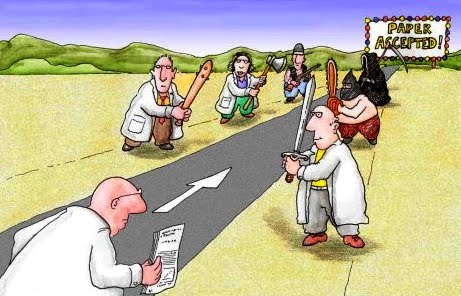
Cartoonist Nick Kim's take on peer review
In your response to reviewers, be sure to include the reviewers' original comments as well as your reply. It is also helpful to the reviewer to include a marked copy of your manuscript or to direct the reviewer to where your reply can be found (the specific requirements for these items vary from journal to journal). Such things will not necessarily ensure that your manuscript will be accepted, but it may engender some good will from reviewers, who are likely busy and will appreciate the ability to judge the revised manuscript quickly. You should also remember that you don't have to do everything the reviewers ask of you. If it is outside the scope of the paper or would not be necessary for the journal to which you are submitting, feel free to make that argument, just remember to keep a courteous tone.

While the peer review process can be daunting and tiring, it is important to remember that the point of peer review is to ensure that the paper is as good as it can be.


Additional Resources: 

Here the Senior Editor for Cell Reports offers advice on publishing your paper

Journal Finders: Journal Selector (in development); Journal finder tool

Tips from publishing pros on choosing the right journal

**Disclaimer: These suggestions are based on my experience and do not guarantee acceptance of your manuscript in any given journal. These opinions are my own and do not necessarily represent the opinions of my journal as a whole.