Sunday, January 8, 2017

My data, myself: My fitness tracker helps motivate me to exercise, but clinical research suggests your mileage may vary

It is the beginning of a new year, which for me means calculating my yearly mileage and thinking about next year's goals. I have been obsessed with tracking my performance in fitness since I started running in 2000. It started in a very low-tech way, writing down my mileage each day in a calendar and then adding it up each month and then at the end of the year. With the advent of the app MapMyRun, I became even more enthusiastic about tracking my running, which helped me to run more consistently.

Last Christmas, I got a new Garmin VivoActive smart watch, which has really changed the way I look at my activity levels. Like most smart watches, this one can track my exercise, steps, and sleep cycles. It also buzzes me if I have been inactive for too long. This is particularly useful when you have an office job. In a completely unsurprising Pavlovian response, I have now started to anticipate when the watch will buzz, so I get up and take a few laps around the office until the "move bar cleared" buzz comes in. The watch also gives me a little fireworks display when I reach my daily step goal (or multiples thereof, which are particularly edifying). When I sync my watch, the Garmin website will analyze the data, so I can see how I am doing for the week, month, or year. To some people, this may sound exhausting, but as a runner, bike commuter, and science nerd, I love all the charts and graphs.
2016 distance totals
I always thought that my obsession with my fitness data was some vestigial interest in analyzing data due to my background in science, but it seems that many people find fitness tracking to be motivating and fun. My data analysis has been fairly simple; I have only looked at trends over time (e.g., my running increased during the stress of grad school and decreased around the time of my pregnancy). It's amazing to see how other people have quantified their lives so thoroughly. Quantified Self has some great examples of people data mining their own lives to understand and improve themselves, one woman has analyzed more than two decades worth of data about her fitness, diet, and weight.
Based on my experience, I would think that fitness tracking apps and wearables can help people to stay motivated. However, the results of some of the published clinical trials suggest that it isn't clear if fitness trackers can help everyone achieve better health (as measured by activity levels, weight, and metabolic variables). There are currently 21 clinical trials using fitness trackers registered on Clinical Trials.gov, so more information about their effectiveness should be available soon. In September 2016, a study published in The Journal of the American Medical Association received a lot of buzz for reporting the results of a trial that compared the weight loss with the standard regimen (i.e., calorie restriction and physical activity) versus the standard regimen plus fitness tracking. They found that the fitness tracking group lost less weight than the control group, suggesting that wearables may not help people lose more weight, especially in the long term (excellent coverage of this study in STAT). There are some variables that can make activity trackers improve fitness; one study showed that cash incentives led to some increase in activity levels. However, this increased activity did not continue once the cash rewards were gone. An earlier study, sponsored by Fitbit and using an opt in approach to recruit people for the wearable group, found that people who use Fitbits for more than a year have larger decreases in insurance costs than non-users. Another randomized control study in postmenopausal women confirmed that the use of the Fitbit increased activity levels, but they did not collect data on weight loss or fitness levels. A major problem with fitness trackers is abandonment: about a third of people stop wearing their fitness tracker after 6 months.
Distance totals 1999-2016

These results suggest that, for most people, wearable devices will not encourage them to exercise or lose weight. Indeed, I would expect that it would be a very particular personality type that would be motivated by a watch's fireworks display or an online competition. It remains to be seen if people who already have a strong exercise pattern are more motivated by fitness apps and trackers. The challenge for fitness tracker designers and doctors alike is how to motivate people to make changes for their health.

Perhaps more interesting is the potential for the usage of wearables in the future. According to Kat Arney in Herding Hemingway's Cats and here in shorter form for BBC science, the data from our smart watches could ultimately be combined with the data from our personal genome sequences: "Combining the power of modern genetic analysis with bio-monitoring" could improve care, save lives, and revolutionize genetics. Larry Smarr, profiled in The Guardian, has been tracking his life for 15 years following more than 150 variables. Such complex bio-monitoring generates a lot of data and turning that data into usable information is the challenge. This is one reason why tech companies are getting into the health data market. A recent editorial from Nature warns that there could be unforeseen problems with sharing our health data, particularly in terms of personal privacy. In addition, they speculate that it could widen existing inequities and biases. In addition, it is not yet clear what benefit (if any) these data-driven approaches will have.

I don't expect to abandon my GPS watch anytime soon. Instead, I imagine the future me using a multi-function tracker that combines data from my metabolic profile with my genomic data to make recommendations on exercise, fitness goals, and vitamins. I may be living in a science fiction fantasy, but 15 years ago when I started tracking my miles with gmaps pedometer and a calendar, I would never think I would have a watch that could do all that for me.

Sunday, December 4, 2016

These children's books on engineering and inventing can help kids learn about the engineering process

In my previous posts about science books for kids, I focused on some of the books about science and scientists that I have read with my son. Along the way, I also found several books that have strong themes for teaching engineering. I read these with my eight-year-old son, but the books are generally appropriate for elementary age children. 

The Boy Who Harnessed The Wind tells the story of a young boy from Malawi named William Kamkwamba, who grew up during a severe drought and famine. These conditions, in combination with his interest in understanding the workings of car engines, led the fourteen-year-old William to design and build a windmill for his village. People were amazed when the young boy was able to power a light bulb with wind power. Now, William is a student at Dartmouth College, where he is studying to be an engineer. The book highlights how solving problems is central to the process of engineering.


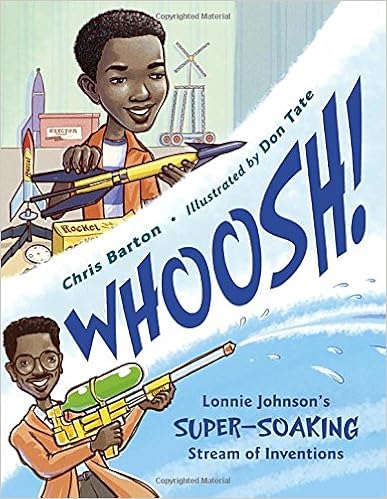
Whoosh: Lonnie Johnson's Super Soaking Stream of Inventions was a fun story about the man who invented the Super Soaker water gun. I chose this one because my son loves water guns and Nerf guns, and I thought he would like to learn more about the process of inventing these toys. Lonnie Johnson started inventing at a young age; he loved building rockets, which served him well in his job at NASA's Jet Propulsion Lab, where he helped missions for like the Galileo orbiter. In his spare time, Lonnie, who was always building and experimenting, stumbled upon a pump action water gun that would later become the Super Soaker. The story emphasizes the importance of both serendipity and hard work in the engineering process.

Papa's Mechanical Fish is loosely based on the story of Lodner Phillips, who created one of the first modern submarines. The book includes beautiful illustrations to help tell the story of an eccentric father as he tinkers in his backyard workshop to build something new and wonderful. This book highlights the need for problem solving and the process of iterative re-design. Of course, the reaction that people have to Papa's inventions also reminds us that inventors and engineers are often so ahead of their time that they are perceived as a bit mad.


The Glorious Flight Across the Channel with Louis Bleriot: This Caldecott award winner includes lovely paintings that evoke the turn of the 20th century in France. The story follows Louis Bleriot as he builds, tests, and re-builds a variety of airplanes, which he names successively (e.g., Bleiot I, Bleiot II). In 1909, the Bleriot XI flies across the English Channel. Like Papa's Mechanical Fish, this book shows how the engineering process really works, namely how there are more failures than successes.


Electrical Wizard: How Nikola Tesla Lit up the World tells the story of Serbian-born Nikola Tesla, whose curious mind and interest in electricity led him to discover and design systems to use alternating current electricity. However, Thomas Edison's direct current was the dominant system at the time. This led to a feud between the two inventors and the War of Currents, which culminated in Tesla's lighting up the World's Fair in 1893. Like most of the internet, I side with Tesla in this feud, viewing Tesla as the generous, unsung hero and Edison as the monopolist inventor. In the interest of fairness, I also read Young Thomas Edison with my son. The book details Edison's hard work and cleverness, not really getting into the ugly business with Tesla at all. As a pair, these books underscore the importance of curiosity and perseverance in the process of inventing. 

Friday, November 25, 2016

Herding Hemingway's Cats: the perfect primer in genetics for a novice and a fun read for an expert

Herding Hemingway's Cats: Understanding How Our Genes Work has been on my reading list for a few months. When I saw the author Kat Arney tweet that the Kindle price was only $1.99, I took advantage of the price drop and downloaded it right away. I was glad I did, but I do feel a little guilty that I didn't pay full price because it really would have been worth it!

I have reviewed many books on the subject of genetics (I  particularly enjoyed The Violinist's Thumb, Junk DNA, and Inheritance). Nonetheless, I found Hemingway's Cats to have a refreshing take on some well-covered topics; of course, it also taught me some new things and discussed the most recent research. Thus, I recommend this book as an excellent introduction to genetics because it would be suitable for people with little knowledge of genetics; it would also be great for someone who knows the field, but wants to expand or refresh their knowledge.

It seems that one requirement for a book about genetics is an extended analogy for the genome. Sometimes these are clever and useful, but run their course rather quickly (e.g., Matt Ridley's Genome talks about the genome as a book with 23 chapters/chromosomes). Here, Arney makes the occasional comparison between the genome and a set of recipe books. The collection contains thousands of recipes for cake, soups, and casseroles. In her analogy, the librarian never lets the recipes out of her sight, so you have to copy the recipe in the library (the nucleus) and then export the recipe to make it in your kitchen. Sometimes, you need lots of one thing– like a large batch of cupcakes for a bake sale, but other times you just make a single serving. Arney revisits this analogy over the course of the book and it always seems to fit perfectly and it doesn't get overused.

At the start of the Human Genome Project, a  betting pool began among the scientific community to guess the number of protein–encoding genes in the complete human genome (the winner was Lee Rowen, who bet on 25,947, the actual number was 24, 847). Of course, the amount of our genome that is actually of use and the reason humans have so much extra DNA is still a matter of debate. Humans (owing perhaps to our inflated sense of self) figured that the size of the genome would correlate with the complexity of the organism. This turned out to be false – for example, "water fleas the size of a grain of rice have 30,000 genes." One hypothesis to explain all that extra DNA is that some of it protects the important parts of our genomes from mutations–the biological equivalent of bubble wrap. Here, she makes some great comparisons with moving house, making cookies, and television programming. This is a strength throughout the book, which is peppered with fun and useful analogies that help clarify the scientific concepts.  

Arney also hits new and hot topics, like epigenetics/epigenomics, imprinting, CRISPR, and the ever-expanding list of RNAs. In addition, she covers some of the "wow science" one would expect from a popular science book. She describes why the eponymous polydactyl cats have extra toes (mis-regulation of the Sonic Hedgehog gene) and writes about the newest large-scale genome sequencing project (The 100,000 Genomes Project), which aims to sequence the exomes from cancer patients and children with rare diseases and to expand the geographical representation of genomes sequenced thus far. She also speculates on what the future of genetics might be, in particular she focuses on the next dimension of genome sequencing: time. By sequencing the genome of the same individual over time, in combination with the very specific data that can now easily be collected by a smart watch, we might be able to understand how the genome changes as we age and in the context of our lifestyle. It is an exciting time in the field of genetics and molecular biology, and we are particularly lucky to have a writer like Kat Arney to help us understand all the cool things that are happening.

Wednesday, October 12, 2016

Share your love of science with these children's books about science and the scientific process

I missed many, many great children's books about science in my previous post, so I decided to re-visit the topic with my son. Here, I have chosen books that highlight the most important traits to nourish in budding scientists: asking questions, making observations, forming hypotheses, and remaining persistent.

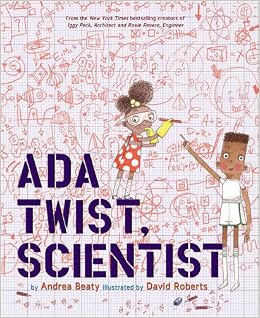
Ada Twist, Scientist: I had enjoyed Andrea Beatty's previous books so much that I decided to treat myself to this book (usually I borrow children's books from the Boston Public Library to save money and shelf space). We both found this book worth the purchase. The main character, Ada Marie Twist (named after Ada Lovelace and Marie Curie) is a young girl with an insatiable curiosity. Like her predecessor, Rosie Revere Engineer, who taught kids about the importance of persistence and troubleshooting in engineering, Ada teaches kids about the value of asking questions. I love that Ada's parents are totally game for her questioning and give her space to explore- definitely a vital trait for good science parents.


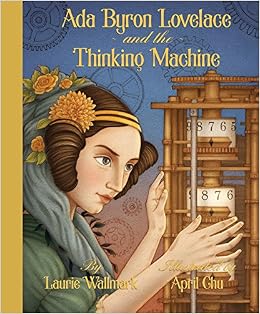
Ada Byron Lovelace and the Thinking Machine: Another great find! This book details the life and work of Ada Byron Lovelace. Abandoned by her father, the poet Lord Byron, Ada was lucky to have a mother with the financial means to encourage her interest in math. An early bout with measles left Ada paralyzed for some time (confusingly, the book never clarifies what happened here and left me with the impression that Ada was paralyzed for life). Ada's tutors opened her to a world inaccessible to most young women of her time. In her early twenties, her tutor Mary Somerville introduced Ada to Charles Babbage. Ada collaborated with Babbage on several projects, eventually putting together notes that outlined the first computer and computer program. I admit that I have not read that much about Ada Lovelace, so this book was a revelation for me. For me, Ada was uniquely positioned to enter the realm of science and math because her family had the means to encourage her interests. Surprisingly, the income barrier in science persists, even while other fields have become more accessible.

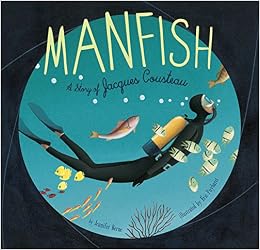
Manfish: A Story of Jacques Cousteau: My introduction to science as a child relied on a healthy dose of Jacques Cousteau (as well as Carl Sagan and Mr. Wizard, of course). I loved how this book captured the magic of the world of the ocean as seen through the eyes of Cousteau. Manfish focuses on the need for asking questions and the importance of imagination and hard work. In particular, we learn how Cousteau and his partner Emilie Gagnan invented scuba tanks and gear to enable Cousteau to explore the ocean as never before. Cousteau also loved filmmaking from an early age, which proved critical for his success as a science educator and conservation activist.

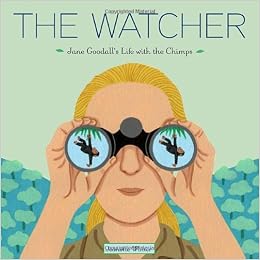
The Watcher: Jane Goodall: As a child, Jane Goodall loved to watch animals, she dreamed that she could talk to animals like Dr. Doolittle. After graduation, Jane saved up her money to travel to Kenya, where she wanted to work with animals. She was lucky enough to meet Louis Leakey, who gave her a job watching and studying chimps. Despite her lack of scientific training, Goodall revolutionized how ecologist studied their subjects, using an approach that involved long and careful watching and note taking without disturbing the subjects. The book highlights the importance of observation and patience for a scientist.


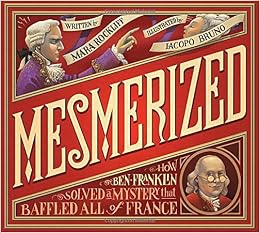
Mesmerized: How Ben Franklin Solved the Mystery that Baffled all of France was a book that we both enjoyed more than expected! The book details how Ben Franklin, while in France negotiating with Louis XVI for support of the American Revolution, did some scientific investigation of the Mesmer phenomenon. Because our son is presently obsessed with Hamilton, he was excited for some additional details about Lafayette and the French support of the Revolution. We both enjoyed getting some new information about Ben Franklin's fascinating life (he wore a fur hat to cover his bald spot and was a minor celebrity due to his kite experiment). Mesmer had most of France under his spell, until Ben Franklin used the scientific method to investigate. (Critique for the author: the final step in the scientific method should be "make conclusions" not "support your hypothesis"; we need to ensure that future scientists are not cherry pickers that are only interested in positive results!) Interestingly, the Mesmer phenomenon revealed the placebo effect and Franklin's approach to the problem formed the basis for later drug trial designs.


The Elements:A Visual Exploration of Every Known Atom in the Universe was recommended in a post about great science books for kids. It is a great reference book for a wide range of ages; whether your kids are just learning about the periodic table or if they want to learn more. This picture book includes a variety of photos associated with each elements as well as fun and interesting trivia. The author, who is an element collector, shares his love of the elements in a novel way. This one is also available as an iPad app, which is on my list to check out.


Wednesday, September 28, 2016

Ten Great Science Articles and Blog Posts From Across the Internet

Some websites do a weekly best of the web and, frankly, I wish I were that well read or that ambitious. In lieu of such lofty ambitions, I will share a listicle of some of my favorite science articles and blog posts. Enjoy! 

The Man with the Golden Blood: This Mosaic Science piece explores the market for rare blood; easily one of the best long reads I have found. This makes a good compliment to the Radiolab episode on Blood.

Brazil's Cancer Curse: Title aside, this is a great story by Sue Armstrong, whose book about p53 I recently reviewed. She digs deep into a Brazilian cancer cluster and how the doctors made the link to p53 mutations. The best part is the speculations about where this mutation arose and how it fixed in the population.

He Thinks He's Untouchable: Yes, this is BuzzFeed and yes, it is worthy of this list. This is one of many well researched and frankly exasperating stories about sexual harassment in academia. I have read too many of these stories, this one is definitely the most extreme of them all.

The Unique Merger That Made Ewe, You and You: A list of great science reporting would not be complete without something from Ed Yong. Frankly, it's difficult to choose just one. This one is a favorite simply because it addresses a subject dear to my heart: endosymbiotic evolution. 

Lessons of Immortality and Mortality From My Father, Carl Sagan: A bit far adrift for science articles, but this story from Carl Sagan's daughter was published at the perfect time in my parenting life–after the death of a close friend of the family. It helped me find a way to frame life and death in a way consistent with my perspective as a scientist and a way that was understandable to a young child.

Medical Research: Cell Division: A title that doesn't really capture the awesomeness at the heart of this story. In the vein of Rebecca Skloot's HeLa cell book, this story captures the ethical issues surrounding the Leonard Hayflick's creation of the WI-38 cell line from an aborted fetus. The author, Meredith Wadman, has a book related to this topic coming out in early 2017.


He may have invented one of neuroscience’s biggest advances. But you’ve never heard of him: Another title I hate hiding a story I love from STAT news. This one surrounds the invention of optogenetics in neuroscience. For me, it highlights the need for researchers to be sure readers and editors understand the implications of their work.
 
How Elizabeth Holmes's House of Cards Came Tumbling Down: Again, this story is not in my usual wheelhouse, but I have been following the story of the Theranos company with great fascination. This Vanity Fair piece gets into how Holmes was able to convince everyone around her that this idea was the next Unicorn and that it was scientifically sound, even though she neglected to get the scientists and clinicians on board from the beginning.

Who was Phineas Gage?:This piece from Sam Kean gives you a great sense of what his book The Dueling Neurosurgeons is about. This may be one of the weirdest stories in science, so it makes sense that it was likely the start of Kean's book about the brain.

How Your Cat is Making you Crazy:  I should be embarrassed to admit how many times I have shared this story from 2012, but I find it oddly compelling read about the strange effects of Toxoplasmosis (that stuff in cat poo) on the brains of humans and mice. It has all the things necessary for a good science article: cats, weird scientists, and unexpected results.

Monday, September 19, 2016

p53: The gene that cracked the cancer code - a review

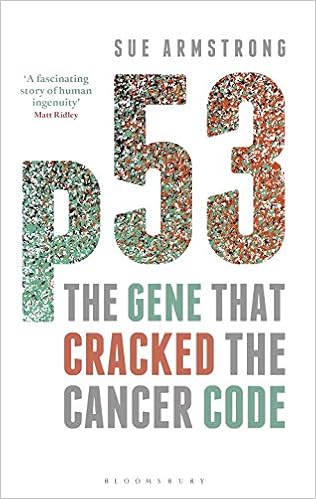
I wouldn't think that an entire popular science book could be written about one protein, unless that protein is p53. As of this writing, a PubMed search reveals 82,179 scholarly articles about p53. Thus, p53 The Gene That Cracked the Cancer Code by Sue Armstrong has an abundance of source material. Even with the all that information to cover, the author does an excellent job explaining the relevant research in a clear and concise way, using a chronological structure with the main source being interviews with the scientists that did the original research. Unlike many popular science books, Armstrong relies more on the direct quotes from the primary source, ensuring that she gets everything right.

Briefly, p53 (named because the protein is about 53 kilodaltons on a protein gel–a naming convention that swept through some circles of scientific research, but has since been eclipsed by more colorful naming styles) was discovered in 1979. While David Lane is typically credited first, Arnold Levine, Lloyd Old, and Pierre May also deserve acknowledgement for the discovery. Considered to be a tumor suppressor, p53 has cellular roles in genome stability, DNA repair, apoptosis/cell death, and cell metabolism. This book primarily focuses on p53's role as the "guardian of the genome", a term penned to describe that ability of p53 to keep the cell's DNA free of mutations. This role is the primary connection of p53 to cancer: normally, p53 induces cellular suicide (apoptosis/cell death) in cells with DNA damage. p53 is the most commonly mutated gene in cancer and when p53 is mutated, it loses its ability to protect from DNA damage, which can lead to excessive cell growth, a hallmark of tumorigenesis.

Like so many of the books on cancer that I have covered before, this book hit many of the key topics in the area of cancer research. What is unique about this book is that it leads the reader through the sometimes winding roads of scientific research. This includes an in-depth discussion of the p53 mutation database, which collects all the mutations in p53 that have been linked to a variety of cancers. This database has been a rich source of information for researchers over the years. For example, in 1996 researchers showed that lung cancer cases showed p53 mutations in a particular hotspot on the p53 gene. Interestingly, these same mutations were shown by the Pfeifer lab to be induced by the carcinogenic substance in cigarette smoke, benzopyrene diol epoxide (BPDE). This publication was a major win for the 1998 class action lawsuit against Big Tobacco.

Map of p53 mutations and their frequency.
The p53 database has also helped reveal the link between liver cancer, Hepatitis B, and aflatoxin, a poison produced by a fungus that grows on peanuts and other grains when they are stored without adequate ventilation. Typically, HepB causes liver cancer only after many years. However, in places like Asia and Africa, the risk is compounded by the exposure to aflatoxin, a carcinogen known to cause DNA damage. Aflatoxin can induce a mutation in p53 (at codon 2449), which can essentially turn p53 from a tumor suppressor into an oncogene.

The book delves into several of the most damaging p53 mutations. For example, Li-Frameni syndrome (LFS) is a genetic disordered characterized by the early and frequent acquisition of cancer at "every conceivable site in the body". The disease was first described in the early 1980s, but the connection to p53 was not established until the 1990s. A variety of mutations in p53 have been associated with LFS, but the most common hotspot connected to LFS is involved in p53's ability to bind to DNA.

Perhaps the most interesting story in the book describes the cancer clusters in Brazil. Sue Armstrong contributed the story of "Brazil's Cancer Curse" to Mosaic Science; it is a fascinating story and gives a great sense of her writing style. As discussed in the book Toms River, cancer clusters are typically assumed to be caused by a pollutant. Likewise, the Brazilian doctors wondered if that might be the case. However, the research about LFS was starting to garner attention, leading Brazilian clinicians to suspect p53 was also be responsible in the Brazilian cancer cluster. Indeed, sequencing of the p53 gene in affected individuals reveals a mutation at codon 337 to be the most common. Where the story gets really interesting is when scientists attempt to understand how an uncommon mutation fixed in the population at such high frequency. While the source is still debatable, the p53 mutation is now thought to be the result of a founder effect and bottleneck (as described for BRCA mutations in The Wandering Gene).

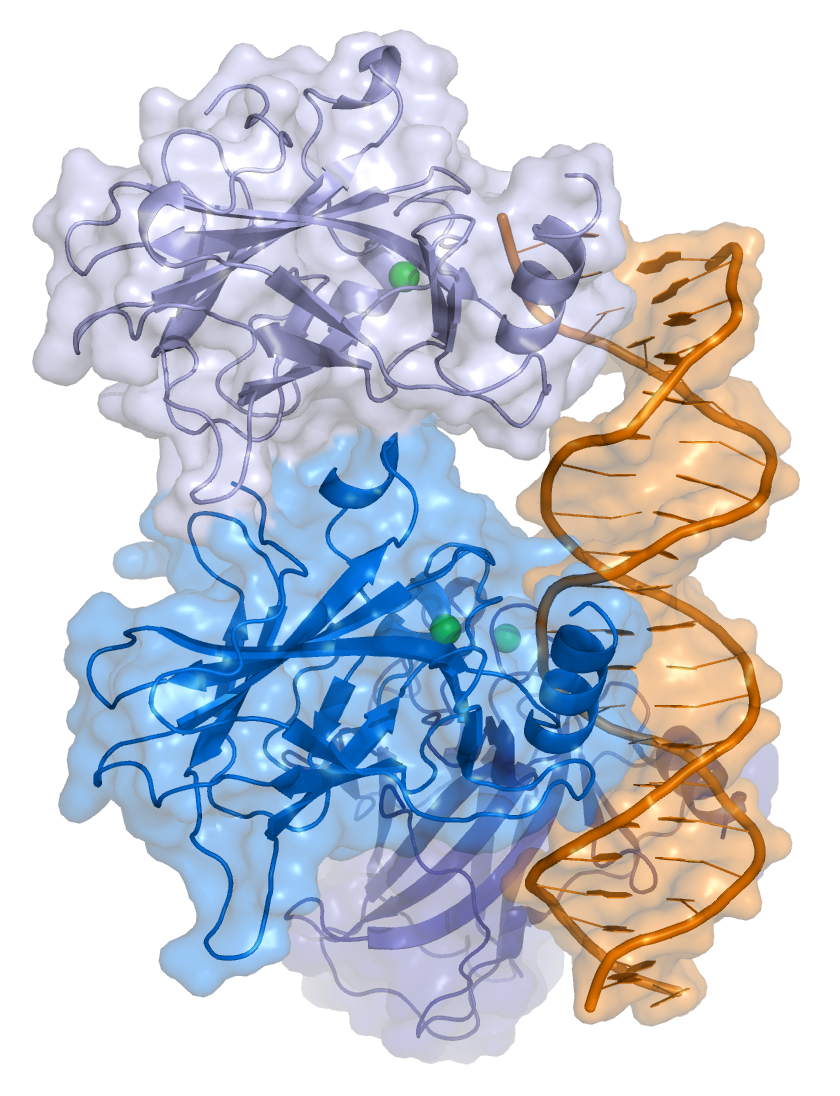
p53 structure (Wikipedia)
I think I learned the most in the section about the clinical approaches to treating p53 mutations. Here, Armstrong has done a deep dive into the literature about the latest drugs and trials connected to p53 function and dysfunction. Thus, the book is up to date on the available p53-related drugs (as of its publication in November 2014). Armstrong describes several different approaches to treating p53-related cancers, including drugs like Advexin, which uses a viral vector to induce cells to express wild type p53. For reasons that are unclear, Advexin has had mixed success in the US and is still awaiting FDA approval. Perhaps more interesting, is the research on PRIMA-1 (an acronym for p53 re-activation and induction of mass apoptosis), a drug designed to work on mutants of p53 that no longer bind DNA. Essentially, PRIMA-1 induces mutant p53 into its wild type shape, allowing it to re-activate and bind DNA. Thus, PRIMA-1 should target a wide range of p53 conformation mutants and leave wild type p53 alone. Both of these have been major roadblocks in the deisng of previous p53 therapies, especially since p53 is at the center of so many regulatory pathways. The drug is currently in Phase 2 trials. (Here, Armstrong takes a tangent into the history of chemotherapy, specifically its connection to the German use of mustard gas in WWII. This was a fascinating story that I recommend reading more about, for example here or here.) 

Sue Armstrong's p53 book distills a large amount of scientific literature into an interesting and readable book. I don't think I would recommend this as the first book to read if you are just starting to learn about cancer research. To me, the best starting place would be The Philadelphia Chromosome (some might recommend Mukherjee's The Emperor of All Maladies). However, this is an excellent book for those familiar with cancer and looking for the next level of science writing on the topic.

Wednesday, August 17, 2016

Share your love of science with these six children's books about scientists

At the library one day, I stumbled upon a children's book about Gregor Mendel. This gave me the idea to read a collection of books about scientists with my seven-year-old boy. The books highlight the importance of curiosity, perseverance, and troubleshooting in the scientific process.

Gregor Mendel - The Friar Who Grew Peas: Like many on this list, the book begins with Mendel's youth, with a focus on his curiosity and his thirst for knowledge. His parents could not afford secondary school for Mendel, so he payed his own way by tutoring other students. He joined a monastery so he could focus on learning and not worry about making a living. While there, he began his famous experiments with pea plants; over the course of eight years, he grew close to 28,000 pea plants. This book was a great stimulus for conversations about genetic, which followed on our discussion from the cilantro experiment. I even learned something about the specifics of his experimental methods and the novelty of his approach of using mathematics to explain his results.


Rosie Revere, Engineer: This was definitely my favorite of the science books we read. Rosie Revere is a second grader who loves tinkering and building inventions. She aims to be an engineer, but is frustrated by the failures of her creations. Luckily, her great Aunt and namesake Rose (formerly known as Rosie the Riveter) helps young Rosie learn that the most important part of engineering is trouble shooting the problems that arise when you build, an important lesson for budding scientists and engineers. I am really looking forward to the author's next book, Ada Twist, Scientist, due out in September 2016.

Snowflake Bentley: This Caldecott Award winner is a beautiful picture book with woodcuts reminiscent of scenes by Currier and Ives. The style is appropriate for the story of Vermonter Wilson Bentley (b. 1865) whose fascination with snow led him to become an early DIY scientist, setting up a microscope and camera in his parents' barn. I first heard about Bentley on an episode of Radiolab about snowflakes and subsequently found this book during a particularly long visit to the public library during Boston's winter from hell. Like others on this list, the book highlights the importance for scientists to think differently and pursue questions tenaciously.

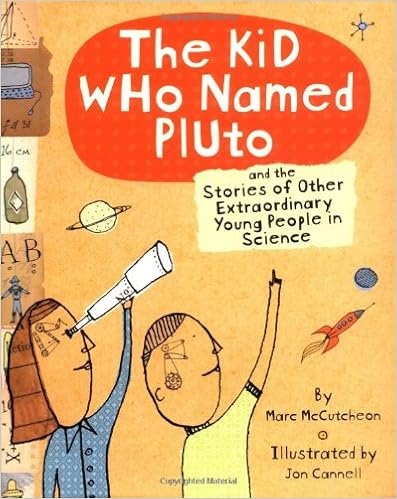
The Kid Who Named Pluto: This collection of stories about kids contributing to science was a mixed bag. While most stories fit the bill, some were tenuous in their connection to the theme. The highlights for us were the story of 11-year-old Venetia Burney, who suggested the name Pluto for our dwarf planet, and the story of Mary Anning, who supported her family by hunting and selling fossils near her home in Lyme Regis, England. Anning had many great finds in her lifetime, including several ichthyosaurs and a pterodactyl. (Shortly after reading this story, I came across this fascinating post about how Mary Anning may be the basis for the She sells seashells tongue twister; always great to see the Baader-Meinhof Phenomenon in action.) I think we will have to find some books that focus on Mary Anning for our next project!

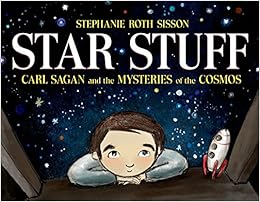
Star Stuff: Carl Sagan and the Mysteries of the Cosmos: Like most Gen X science types, I loved the first Cosmos series as a kid. I later re-discovered Carl Sagan in my early forays into science writing (his book The Shadows of Forgotten Ancestors is on my great science reads list); he made me want to be a science writer myself. Star Stuff book begins with Sagan in elementary school, where his interest in space was spurred in part by science fiction novels. It then details how Sagan started the Cosmos series to share his excitement about learning about the universe. Finally, his role in the U.S. space program, in particular his contribution to the Golden Record on the Voyager spaceships, is described. While we enjoyed this book, I felt it didn't capture the beauty and poetry of Sagan's language.

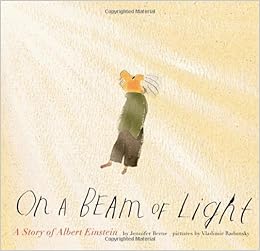
On a Beam of Light - A Story of Albert Einstein: For reasons unclear to me, my son is obsessed with Albert Einstein; I think it might be their mutual love of science and math and a dislike of hair brushes and socks. As most children's books about Einstein, On a Beam of Light begins with his parents worrying about his lack of speech, even at three years of age. When he finally does start talking, he is full of questions, much to the chagrin of his school teachers. The book highlights the importance of curiosity and how asking simple questions can lead to truly profound results.This was a favorite for both of us; I thought it captured the eccentricity of Einstein as well as the practical elements of his personality that made him successful (hardworking and thoughtful).

------------------------------------------------------------------------------

** For more recommendations on books to spark your child's interest in science, check out this post from the CrossTalk blog.