Wednesday, June 18, 2014

The Philadelphia Chromosome by Jessica Wapner: a story of scientific discovery from the bench to the clinic

The Philadelphia Chromosome by Jessica Wapner focuses on the development of the drug Gleevec for the treatment of leukemia. Wapner really hits the sweet spot of science writing: she explains complex processes completely such that an experienced scientist would be interested and yet simply enough that a layman would also understand. The book's primary source material consists of interviews with scientists. This gives the reader details not found in published articles and makes the book very readable, as the story of scientific discovery becomes about the scientists doing the research. The Philadelphia Chromosome highlights how understanding basic biology can lead to significant advances in the clinic.

Reciprocal translocation of chr. 22with chr. 9. Image by
Peter Lowell
The link between cancer and chromosomal rearrangements had been hypothesized since the work of Theodor Boveri in 1902. However, it was not until the mid-20th century that scientists had the right tools to investigate this connection. By arresting and staining cells during cell division, scientists were able to reliably count chromosomes. (As I learned in The Violinist's Thumb, this was one reason that it took so long to learn how many chromosomes humans actually had.) In the 1950s, Nowell and Hungerford used this staining technique to look for chromosomal rearrangements in patients with chronic myelogenous leukemia (CML). They noticed that chromosome 22 was shorter than it should be, suggesting that part of the chromosome was deleted. The shortened chromosome 22 was termed the Philadelphia chromosome for the city in which it was discovered.

Adapted from Montgomery et al., 2004.
In 1973, Janet Rowley, using an improved technique to stain chromosomes from CML patients, noticed that the missing part of chromosome 22 had migrated to the end of chromosome 9 and vice versa (see image above). Today, chromosomes are frequently imaged using spectral karyotyping (example on right), where each chromosome is fluorescently labeled with a unique color, making the identification of chromosomal abnormalities much simpler. Rowley's work showed that the Philadelphia chromosome was the result of a reciprocal translocation, referred to as t(9:22). In simple terms, if you imagine the genome is like a book with each chromosome being a chapter (yes, I am borrowing from Matt Ridley's book), then the Philadelphia chromosome would result from the switching of pages from the end of Chapter 22 with the later part of Chapter 9. A book with such an error would read very differently than the original version of the book.

The Philadelphia chromosome creates
a Bcr-Abl fusion protein.


The next question: how does the Philadelphia translocation change the DNA sequence on the two effected chromosomes? At the time, this proved to be a challenge because DNA cloning was still in its infancy. In 1978, Heisterkamp and Groffen started to investigate the location of the abl oncogene gene in the human genome. They developed an abl probe, which showed that the gene was on chromosome 9. This result raised the question: was the abl oncogene connected to CML and the Philadelphia chromosome? Amazingly, when the abl probe was used in cells from CML patients with the Philadelphia chromosome (Ph+ CML), the probe could be found both on the Philadelphia chromosome as well as the normal copy of chromosome 9. Next, they had to determine what gene was located next to the abl insertion. Looking at the sequence of chromosome 22 from Ph+ CML patients, they found the "breakpoint cluster region" or bcr next to abl. Thus, the Philadelphia chromosome results in a fusion of the bcr-abl genes (see figure above). Later research from the Baltimore lab demonstrated that introducing a bcr-abl fusion gene in mice could cause CML and CML-like symptoms.

Normally, abl encodes a protein tyrosine kinase. Kinases play an important role in cells: turning on target proteins. To ensure that proteins are activated only as needed, kinase activity must be carefully regulated. The Bcr/Abl fusion protein has unregulated kinase activity, which means that all of the target proteins are activated at higher than normal levels. In the case of CML, this leads to unfettered cell growth and proliferation, particularly in white blood cells. This result suggested that being able to turn off the kinase activity could stop the out of control growth of white blood cells in Ph+ CML patients.

The Bcr-Abl fusion protein (green)
is inhibited by STI-571/imatinib (red)
(from Wikipedia commons).
Around this time, increasing numbers of kinases were being linked to disease, especially cancers, which are typically due to unrestricted cell growth. This coincidence grabbed the attention of chemists at the Swiss pharmaceutical company Ciba-Geigy (now known as Novartis); they hypothesized that kinases could be excellent drug targets. This relatively new approach, called "rational drug design", would target the specific cause of a specific cancer, creating a drone strike as opposed to the "carpet bombing" tactic of most chemotherapeutics (p. 108). For the treatment of CML, scientists would need to design a compound to specifically inhibit the Abl kinase, which many doubted would be possible due to the large number of kinases in the cell. After six years of development, the Ciba-Geigy team identified a compound that selectively and specifically inhibited Abl kinase activity. Eventually, this compound landed in the hands of Brian Druker, who found that the Abl inhibitor (called STI-571 or imatinib) could specifically kill cells derived from Ph+ CML patients as well as from mice engineered to express the Bcr-Abl fusion protein.

Much of this section of the book focuses on the conflict between Druker and Ciba-Geigy, who were hesitant to devote resources to a drug for a relatively rare disease. However, the Orphan Drug Act helped tip the scales in Druker's favor. The approval of STI-571 as an orphan drug ensured that the company would have a fast track for FDA approval as well as a longer term for copyright protection. (Interesting side note: Botox was originally approved as an orphan drug to treat a rare muscle disease. Its later approval as a wrinkle smoother meant that the drug company benefited greatly from that status.) In 2001, after very successful phase I clinical trials, the FDA approved STI-571 under the trade name Gleevec. This caused a paradigm shift in cancer research; the new goal was to find driver mutations for each type of cancer. Today, more than 15 tyrosine kinase inhibitors are available for cancer treatment (e.g, erlotinib for lung cancer and lapatinib for breast cancer). Unfortunately, none of the drugs have been as successful as Gleevec; rather, these drugs give incremental improvements in survival rates. Another confounding factor is that diseases, particularly cancers, are rarely caused by single mutations. However, the advent of large scale genome sequencing projects (as covered in my review of Genome) is improving the chances of connecting diseases with specific mutations.

If I had one complaint about the book, it would be that the focus on Druker's career and personal life, while useful in terms of creating a narrative arc, sometimes distracted from other important elements of the story. The book highlights how basic scientific research is an important starting point for successful clinical outcomes. This lesson is critical to remember when funding for basic scientific research is decreasing and the focus on clinically and translationally relevant research is increasingly important for funding.

Wednesday, May 7, 2014

Post collapse fiction versus reality - The World Without Us by Alan Weisman

I love post-collapse science fiction in any form, so it is no surprise that I have been binging on the genre of late. Most recently, I finished Children of Men, the basis for an excellent movie, and Margaret Atwood's MaddAddam, the final book in the eponymous trilogy that includes Oryx and Crake and Year of the Flood. MaddAddam struck me with some of the details and descriptions of the post-collapse environment. It reminded me of The World Without Us by Alan Weisman, which I decided to re-visit due to my recent obsession with apocalyptic fiction. The book is something of a thought experiment to address the question of how the world would look without humans; it is definitely on my great science reads list.


I am Legend's image of New York City without us
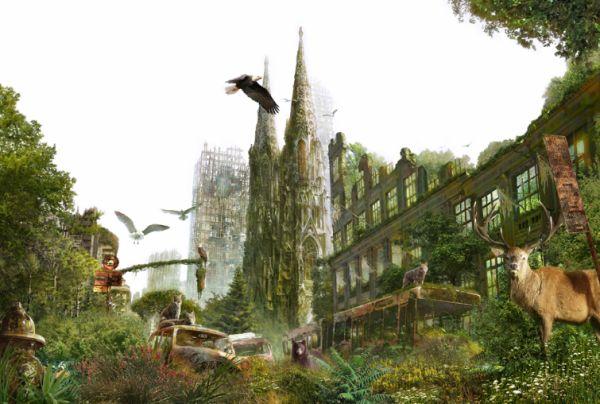
My original vision of a post-collapse world was a paradise where plants and animals take over the newly vacated cities. The traces of our civilization would be quickly covered in kudzu and dust, as seen in The Walking Dead or I am Legend. However, Weisman's book changed this view; his book suggests that while some vestiges of our existence would disappear rather quickly, other elements would persist long after we are gone.

A crumbling Brooklyn Bridge five years after us (K. Brown)
My favorite chapter is "The City Without Us". The author spoke with a variety of experts (e.g., engineers, chemists, geologists) to discover how New York City would change after humans disappear. During the development of Manhattan, various environmental engineering projects transformed the island from a tidal 
500 years after humans: New York City becomes a forest
marsh filled with rivers and streams to the metropolis we know today. All of this water, currently trickling unseen under the city, would be a major force for change after humans are gone. The subway tunnels would fill with water only a few days after the power turns off. As the water seeps through the subway system, it would cause weaknesses in the roads and sidewalks. In combination with seasonal changes in temperature, bridges and roads would collapse quite quickly. Without people around to maintain the infrastructure, roads and bridges would likely be crumbling after just five years. In about 500 years, Weisman predicts that the city would be a forest, with a unexpected array of animals, including deer, moose, bears, and coyotes. The images on the right are from the author's website, where you can find more amazing visions of New York City without humans.

Abandoned bumper cars in Pripyat, Ukraine, the site of Chernobyl
Within days of our disappearance, power plants would go offline, causing meltdowns at nuclear plants. Chemical and industrial plants would catch fire without maintenance, making the initial landscape rather hellish. While the fires would eventually extinguish, the chemical and nuclear wastes would persist. These pollutants would then become a force for adaptive change. The city of Pripyat, the site of the 1986 Chernobyl meltdown, can serve as an example of how the landscape changes without us. The fallout from the disaster is estimated to irradiate the environment nearby until at least 2135. The Exclusion Zone (a 30 km radius evacuated around the plant) has highlighted how adaptable nature can be. Weisman discusses how the biodiversity in the Exclusion Zone has improved; in fact, the zone has become home to an increasing number of animals (e.g., moose, voles, rabbits, birds). Surprisingly, it is unclear whether these animals are experiencing an increased mutation rate (primary article with coverage on ScienceBlogs). The inner reactor core has proven to be a unique niche for evolution: scientists discovered a  radiotrophic fungi as a black slime on the inner reactor core; this fungus converts gamma rays into energy for growth. Other published articles have described how plants have adapted in the highly radioactive environment.

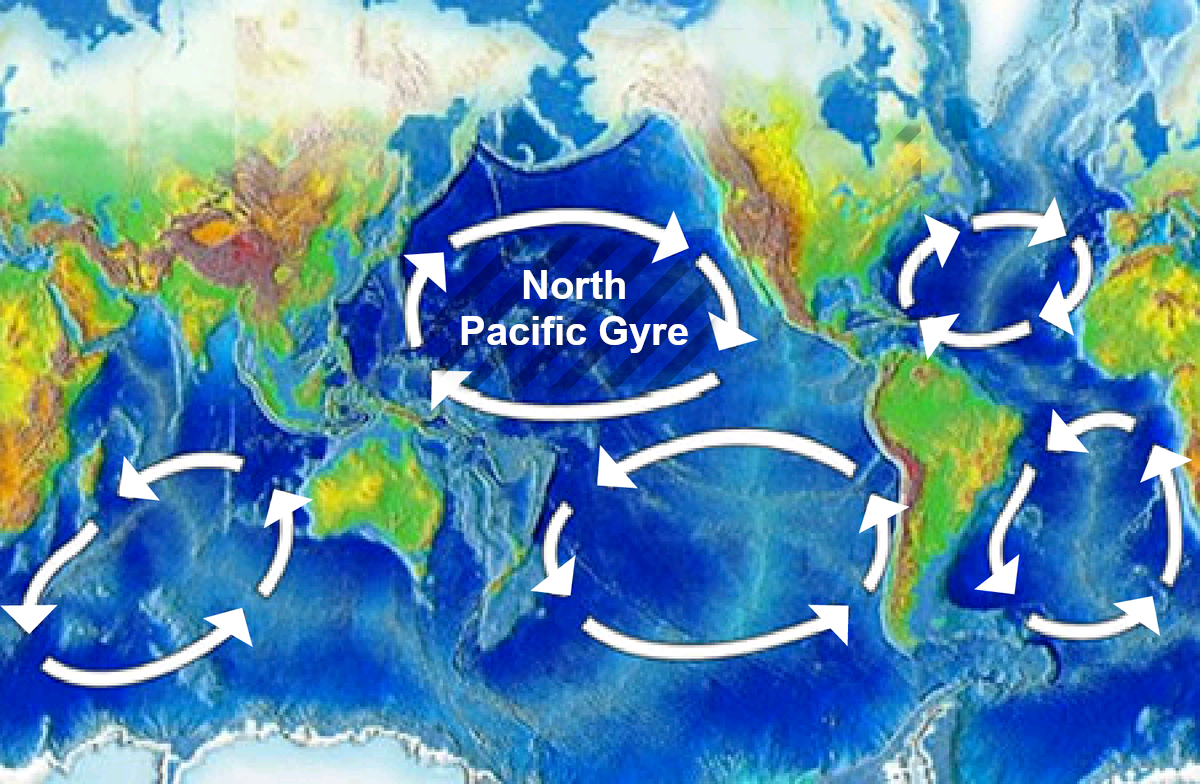
One vestige of human existence that would persist without us: plastics. Weisman thoroughly discusses the issue of plastics pollution, including the North Pacific Subtropical Gyre, more commonly known as the Pacific garbage patch. Like the four other oceanic gyres, this area of the ocean has become a sink for plastics in varying states of decay; plastic debris is reduced to smaller and smaller sizes by the action of waves and the sun. The majority of the plastic wastes in these gyres is in the form of microplastics. Because plastics have only been in use for about 60 years, scientists are only starting to understand the ramifications and possible outcomes of the life cycle of plastics. Likewise, this relatively short time frame means that microbes have not yet evolved to degrade them. Despite the gloomy information in this chapter, the author keeps a positive tone, suggesting that while we do not know how long it will take for plastics to degrade, there is hope on the geological timescale: "Like trees buried in bogs a long time ago....were changed into oil and coal," maybe plastics will degrade when microbes evolve to degrade them or when something else changes them altogether (p. 128). This geological view from the book's website may also help keep things in perspective. 

The World Without Us informs the reader of the knowns and spurs the imagination of the unknowns. In this way, it captures the things about post-collapse fiction that I find appealing: that initial sadness at the loss of our humanity, the imaginings of what kind of place the world will become without us, and the hope that the world could be better.

More links: 

* The author also discusses the Mannahatta project, which has done extensive research to chronicle what Manhattan looked like before Henry Hudson landed. I am adding the book about the project to my ever-growing book list.

* To get some ideas for this post, I read a lot of opinions on why human are so obsessed with the apocalypse. I did not find a really satisfying answer, but this piece was the best of the relevant articles.

* If you enjoy the pictures here, be sure to check out the AbandonedPorn (SFW) Subreddit.

                                                  Talking Heads' (Nothing but) Flowers.

Thursday, March 13, 2014

My Favorite Science Reads - updated

Here is a running list of my favorite science reads (in no particular order), which I will attempt to keep updated. I have included links to the Amazon page as well as the related post from my blog.


The Immortal Life of Henriette Lacks - Rebecca Skloot (my post here)

The Violinist's Thumb - Sam Kean (my post here); The Disappearing Spoon was also excellent (my post)

The Philadelphia Chromosome - Jessica Wapner (my post

Lab Girl - Hope Jahren (my post at CrossTalk)

Inheritance: How Our Genes Change Our Lives and Our Lives Change Our Genes - Sharon Moalem (my post)

The Panda's Thumb - Stephen Jay Gould (all the books I have read by Gould have been excellent)

The Shadows of Forgotten Ancestors -  Carl Sagan and Ann Druyan

The Selfish Gene - Richard Dawkins (The Blind Watchmaker is also great)

Radioactive - Laura Redniss (my post

Blueprint for a Cell - Christian DeDuve 

The World Without Us - Alan Wiesman (my post here)

Stiff - Mary Roach (I review Packing for Mars here, but it wasn't as good)

Tuesday, March 4, 2014

Matt Ridley's Genome - 14 years later

Genome - The Autobiography of a Species in 23 Chapters  by Matt Ridley came highly recommended on Amazon. Despite the fact that the book was published in 2000, I decided to read it. The structure of the book is rather clever: each chapter focuses on one chromosome. This format allows Ridley to expand the metaphor that the human genome is a book: each chromosome is a chapter; the genes are the sentences; the codons (the three letter DNA sequences that the cellular machinery reads) are the words; and the DNA nucleotides are the letters. This kind of metaphor can help non-scientists visualize and remember the organization of the genome. Unfortunately, Ridley eschews the proper scientific terminology, calling codons "words" and nucleotides "letters". Science writing should teach people more about the subject matter; to eliminate the use of fundamental terminology seems a folly.

In each chapter, the author highlights one gene of interest on the chromosome. For example, the chapter on chromosome 13 introduces BRCA2. Like the Jeff Wheelwright book I reviewed previously, Ridley discusses the population genetics of BRCA2. In some chapters, he writes about genetic lessons from a particular chromosome. In some cases, the conceit works brilliantly (e.g., the chapter on the X and Y chromosomes examines sexually antagonistic genes), but other times, it was not as successful. Ridley uses Chapter 21 to discuss eugenics. While the history of the topic is interesting, the connection to chromosome 21 seems a bit tenuous. Parents are increasingly using prenatal screening to detect chromosomal abnormalities, the most common of which is Down syndrome, which is caused by an extra copy of chromosome 21. I found the book worked best when there was an obvious candidate gene to discuss on the chromosome.


It is amazing to consider how much the field of genomics has changed since the publication of Ridley's book (February 2000). In June of that year, the initial rough draft of the human genome was published. When the sequence was officially completed in April 2003, the final cost was estimated to be $2.7 billion; the project took more than a decade. Today, we are approaching the benchmark of the $1000 genome (discussed here and here). The next step is to improve the speed and portability of sequencing equipment as well as the ability to process and analyze the data.

The human genome project has been considered a success in terms of yields for basic research. However, there has been some disappointment that the completion of the project hasn't led to more clinical applications (for more specifics, see these editorials from Francis Collins and Craig Venter, the heads of the Human Genome Project). One problem is that very few diseases are caused by a single gene. Another confounding factor is that there is 1-3% difference between any two individuals' genome sequences. These variations can complicate genomic analyses. To perform a genomic study of a population with a genetic condition, knowing the differences that are normally present in the genome can help narrow down the possible regions that are linked to the condition of interest. Thus, having more complete sequences available will allow scientists to connect DNA sequences with genetic conditions. The 1000 Genomes Project plans to identify all the genetic variations present in the human population. The initial phase of this project was completed in just over four years with the publication of 1,092 complete human genome sequences from 14 populations across the globe. In the coming years, the project plans to complete a total of 2,500 genome sequences to improve the representation of various human populations across the globe. 

Another major change in the genomic landscape is the advent of personal genomics, such as 23andme. These companies offer DNA analysis service that supplies information on your possible ancestry as well as information about other genetic markers. These markers include both the innocuous ones, like whether you can detect a terrible smell in your urine after eating asparagus, and genes linked to possible health risks (e.g., BRCA, Huntington's disease). After intervention by the FDA, the service is now limited solely to ancestry. Scientific American had a fascinating piece about why we should really be concerned about companies like 23andme (TLDR: they are collecting and storing your most personal data
your DNA).

I would not recommend this book to a non-scientist. If you want to learn more about the human genome and DNA, look elsewhere. I highly recommend The Violinist's Thumb by Sam Kean; the recently updated Double Helix by James Watson and the newest book from Craig Venter are likely to be good reads. 

--------------------------------------------------------------------------------------------------------

Want read more?  
* The Human Genome at 10 Special Issue in Nature covers the changes in the genomics landscape with editorials and articles by a number of major players in the field.
* There is also abundant information on other "big science" approaches to genomics, such as  the HapMap, the ENCODE project, and The Cancer Genome Atlas [TCGA]. I have not explored these for the sake of brevity.

Wednesday, January 29, 2014

The Drunken Botanist - lessons from Amy Stewart's exploration of the plants that intoxicate

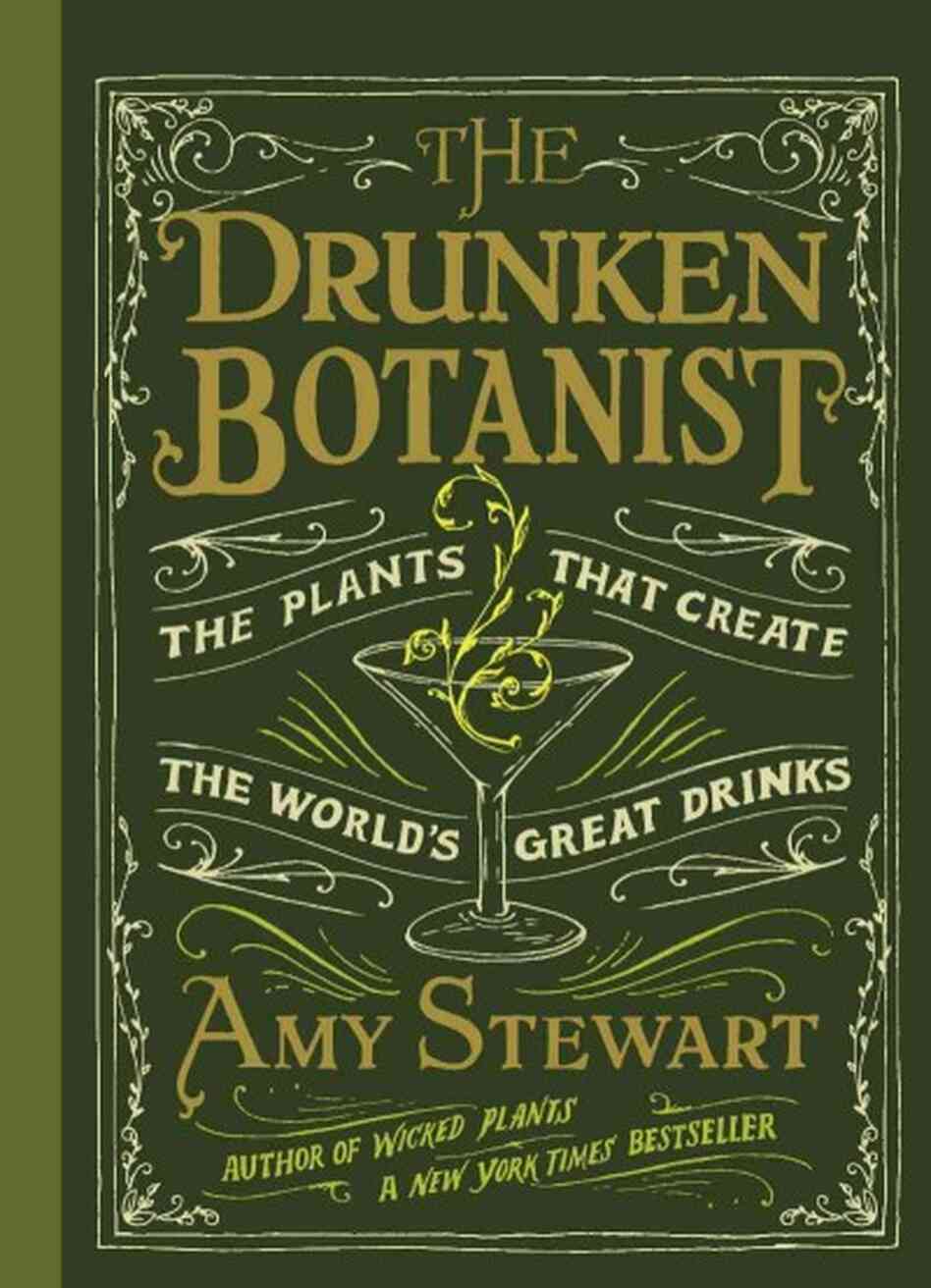
I love a good cocktail. The rise in the popularity of cocktail culture and craft cocktails has made me very happy. As with professional chefs, I find it amazing that people can still come up with unique creations. Our last dinner out included the Nasturtium (citrus vodka, St. Germain, and aperol - served down) for me and an Algonquin (rosemary-infused rye, fresh pineapple, dolin dry vermouth, and orange bitters - served up) for my husband. I admit that I rarely know much about the particulars of these beverages that have become an integral element of dining out. Thinking that it might be fun to learn more about the components that create these little glasses of deliciousness, I picked up The Drunken Botanist: The Plants That Create the World's Great Drinks from my local library. 
Like Wicked Bugs, The Drunken Botanist is written as a compendium of sorts with accompanying pen and ink illustrations of the plants described. Here, Stewart focuses on the plants that people have used throughout history to create alcoholic beverages. There is good coverage of both the classic ingredients (e.g., rye, wheat, hops, and grapes) and the plants used for the mixers and garnishes that are essential to create the perfect cocktail. In the spirit of the book, here is a litany of things that I learned:


  • The invention of the Moscow Mule highlights the kind of story I love. The drink was first created in 1941 through the collaboration of a vodka distributor, who hoped to introduce Americans to vodka, and a bartender, who had extra ginger beer in stock. Because the bartender's girlfriend owned a company that manufactured copper mugs, these became an element in the recipe. A recent rise in the cocktail's popularity has led to an increase in thefts of the distinctive copper mugs. (In the course of my research, I noticed that Wikipedia has a slightly different version of the story of the invention of the drink, which is to be expected.)
  • The distinctive smell of the dentist office is caused by the use of clove extract as a dental anesthetic.
  • The fragrance of jasmine flowers is due to several compounds, including phenyl-acetic acid. Based on genetic differences, some people find that jasmine flowers smell like honey, while others compare the scent to urine. This is similar to the small genetic differences that cause some people to perceive a horrible smell in urine after eating asparagus or to find that cilantro tastes like soap (Julia Child and I share that one).
  • Some figs must be pollinated by a wasp in order to reproduce. The wasp then lays its eggs inside the fig and dies there. Those figs would contain little bits of wasp carcass. Most figs in use today can bear fruit without pollination. This tidbit makes me love figs just a little bit more.
  • I was surprised by the number of stories about the link between alcoholic beverages and scurvy. For example, in the 1500s, the British navy included beer in their fleet's rations, both because water would spoil at sea and to keep the sailors happy. Unfortunately, beer also went bad on longer voyages, which led to the use of grog (rum mixed with water, lime juice, and sugar). The lime juice was initially added to make the drink palatable, but it had the indirect result of improving the sailors' health. In some cases, the vitamin C deficiency was combated with spruce beer; spruce trees produce ascorbic acid to help them survive the cold. Spanish explorers used bitter orange as a treatment for scurvy.  In the course of their travels, they left seeds on an island called Curaçao, where the bitter oranges are the ingredient in the eponymous liqueur.
  • Initial attempts to make wine from grapes grown in America were abject failures; both native and imported vines were unsuccessful. One problem was an aphid called phylloxera; the American grapevines were resistant to the pest, but European vines were not. Unfortunately, Americans sent infected grapevines to France, where the aphids quickly devastated the wine industry there. The solution: grafting American vines onto old European vines. The second problem was that the American grapes had undergone natural selection by birds, while the European vines had been subjected to hundreds of years of artificial selection by humans. Even today, researchers are working on making palatable wines from the grape vines native to America. 
  • There were numerous mentions of the Dogfish Brewery, who are resurrecting old approaches to making beer. In collaboration with a molecular archeologist, they have recreated several ancient beers based on the discoveries at dig sites.
There are probably other fascinating stories that I am missing, but I think I need to go make a cocktail.

Wednesday, January 15, 2014

Why I can't go to SeaWorld again: a comment on the movie Blackfish

Growing up in Florida, my interest in science was spurred by my love of the ocean. I decided I wanted to be a marine biologist at a very young age. Later, I thought that becoming a trainer at SeaWorld would be the perfect job. My subsequent interest in animal rights and environmentalism made me lose my fondness for SeaWorld.


My dolphin encounter.
When I visited my family in Florida in 2012, my mother suggested that we go to SeaWorld. I figured it was a good compromise as I certainly did not want to go to Disney and I did feel some obligation to let my son experience the place that once brought me such joy. We had a nice day in the park. I touched a dolphin for the first time and got so excited that I flashed back to my younger self. At the end of the day, we went to see the orca show. In past visits, this was always my favorite part, but it had been the better part of 20 years since my last trip to SeaWorld. During the show, I started crying; I eventually realized that I was crying for these poor whales, who were stuck inside this relatively small tank in an overly warm tourist attraction. After that experience, I concluded that I would probably not come back to Sea World.

Last week I watched Blackfish on Netflix, which solidified my opinion. The documentary explores the story of the killer whale Tilikum, who has been linked to the deaths of three individuals during his time in captivity. The documentary is based primarily on interviews with former SeaWorld trainers as well as killer whale experts. The main complaint against SeaWorld Orlando (SWO) in the film is that they did not accurately represent the threat that Tilikum, who had killed one trainer before arriving in Orlando in 1992, might pose to the trainers there. According to the trainers interviewed in the film, SWO never made that history or the incidents that may have precipitated that event known to the trainers. Later, Tilikum was involved in the strange death of a tourist who allegedly wandered into the tank. SWO claimed that hypothermia killed the man, rather than by an attack by the killer whale.


In February 2010, trainer Dawn Brancheau was killed by Tilikum. SWO claims that Brancheau's death was due to trainer error. The other trainers in the film argue that this was not the case. A lawsuit by OSHA eventually forced SeaWorld to remove the trainers from the tanks with the animals. SWO isolated Tilikum and kept him from performing, as least until until 2011. However, Tilikum is not likely to leave the park as he has been incredibly profitable as a breeder: the bull orca has sired 21 offspring during his time in captivity. According to the film, Tilikum is frequently found nearly immobile for hours at a time in his tank. They speculate that his large size and his treatment while in the Sealand park in British Columbia may be the reason for his erratic behavior. 

In addition, the film charges that SeaWorld does not accurately present scientific facts about killer whales. Science education and species preservation has always been a strong defensive point for the park. However, comparing the talking points of the former and current trainers and tour guides with the facts, it seems that teaching people the science of killer whales is not a priority for the park, especially if the facts can make the organization look bad. For example, whales in captivity frequently have a dorsal fin that is flopped over. SeaWorld claims that this is common in the wild as well. However, the killer whale expert interviewed states that this is only observed in about 1% of whales in the wild. The park also claims that the whales in captivity have a similar lifespan to those in the wild; in fact, captive whales live 30-50 years while those in the wild live 50-90 years. In the end, the film confirmed my view that SeaWorld is just another theme park, which puts its own interests above both those of its animals and its workers.

The film ends with a powerful scene, as the former trainers go on a whale watching cruise; they all seem emotional as they observe a pod of killer whales in their natural habitat, jumping and swimming in the open ocean with their family intact. The film succeeded in making its case against the capture and captivity of whales. It convinced me that I should never go back to SeaWorld. Now I just have to break the news to my mom.

Sunday, December 1, 2013

The Wandering Gene: BRCA1 mutations and population genetics

For some time I have been searching for a book similar to Rebecca Skloot's book about Henrietta Lacks. After some searching on Amazon, I found The Wandering Gene and the Indian Princess: Race, Religion, and DNA, which a number of review suggested was just as good. Because it was on the shelves of my local library, I picked it up immediately. Jeff Wheelwright's book examines the population genetics of a particular BRCA1 mutation. The BRCA1 and BRCA2 (breast cancer 1 and 2) genes were first linked to heritable breast and ovarian cancer (HBOC) in the early nineties. Since the initial discovery of the genes, scientists have identified many mutations in BRCA1 and 2 that are linked with HBOC as well as other cancers.

When functioning properly, the BRCA tumor suppressor genes produce proteins (breast cancer type 1/2 susceptibility protein) that are primarily involved in DNA repair. These proteins ensure that cells with errors in their DNA sequence either fix the mistakes or are destroyed. When a BRCA mutation is present, there is still a wild type ("normal") copy of the BRCA gene on the matching chromosome. Thus, the presence of a BRCA mutation is not necessarily an assurance of getting cancer (cancer risk rates for BRCA mutation carriers range from 35-80%, depending on the study and the type of cancer). If something occurs to alter the function of the wild type copy of the gene, then the cell is left with no functional BRCA1 or 2. Thus, DNA errors become more prevalent, which makes it more likely that a healthy cell will become a cancer cell. BRCA mutations account for only 10% of breast cancers; the majority of cancers are sporadic, caused by random rather than inherited mutations.  

The Wandering Gene focuses on the BRCA1 185delAG mutation; this mutation is due to the deletion (del) of two DNA residues (A and G, or adenine and guanine) at position 185, which results in a frame shift (or misreading) in the DNA sequence and ultimately the sequence of the protein that the DNA encodes**. This particular BRCA1 mutation has been linked to Ashkenazi or Eastern European Jews. Here, the author meets the Medinas, an Hispano family from New Mexico, as they receive genetic counseling and testing for the 185delAG mutation. The family is descendants of Native Americans and Spanish Catholics; thus, they were surprised to learn that they carry a mutation that has been linked to Ashkenazim. Geneticists and historians think that the 185delAG mutation in this group likely arose from a population of Jews from Spain, who were persecuted during the inquisition, converted to Catholicism, and then established themselves in the Americas.


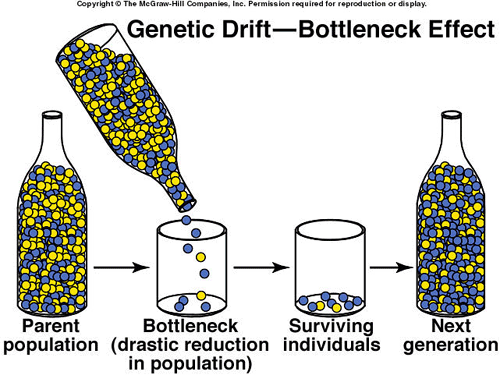
The most interesting element of the book examines where the 185delAG mutation arose and how it became fixed in one particular population. There is evidence that a 2500-year-old Jewish founder could be the source of the mutation. Two particular characteristics of Jewish history (the cultural isolation and the large losses of population, such as from pogroms, forced relocation, and mass murders) led to frequent genetic bottlenecks. Bottlenecks occur due to the loss of genetic variability in a population; dramatic losses of population size can cause deleterious mutations (such as the BRCA1 mutation) to become fixed in a group. The founder effect can also explain the presence of other heritable diseases that are linked to the Jewish population, such as Tay-Sachs disease (carried by one in 25 Ashkenazim) and more than forty other genetic disorders.  It is important to note here that Jews are not more susceptible to genetic mutations; it is simply that, for a variety of reasons, they have been studied more thoroughly than other population groups. There are other examples of founder effects in small, isolated populations, including the Amish and fundamentalist Mormons.

The book also discusses the rise in genetic screening in certain populations where BRCA mutations are more common. Interestingly, such large-scale screening programs began in an effort to control Tay-Sachs disease as early as the 1980s. A group called Dor Yeshorim  screens Orthodox Jews for the most common genetic disorders and informs couples looking to wed whether or not they are a good genetic match. This approach has decreased the incidence of Tay-Sachs disease. The blood samples from Dor Yeshorim were useful for determining the prevalence of the 185delAG mutation in the Jewish population (1%). A recent story in the New York Times highlights the efforts in Israel, where one in 40 women carry a mutation in BRCA (compared to one in 100 women in the population as a whole), to begin universal screening for the mutations. The June 2013 Supreme Court decision, which ruled that naturally occurring human genes and mutations cannot be patented, should decrease the cost of the test in the United States. Prior to that decision, Myriad Genetics held patents on BRCA1 and 2, which led to high costs (more than $3000) for the test.

The subtitle of the book is definitely a good representation of what is inside; each of these topics seemed to get equal treatment. When the focus was on the DNA or race, the book held my interest. However, when the focus was more on religion, I found myself skipping pages. I didn't see how the history and beliefs of the Jehovah's witnesses helped the reader understand the genetics of this mutation. There were some surface similarities with Rebecca Skloot's book, as both have a very strong human angle. The book was a quick read, it taught me some new things about population genetics and BRCA mutations, and it served as an excellent jumping-off point for me to learn more.


**Footnote: If you imagine DNA as a sequence of three letter words, the phrase "The fat cat has the hat" becomes a very different sentence if two letters (at of cat) are eliminated and the spacing stays the same: "The fat cha sth eha t".